The recent relief rally that lifted crypto from last week’s lows is now fading, alongside declines in tech stocks and gold, as traders position ahead of U.S. inflation data and expectations that the Federal Reserve under Kevin Warsh may remain hawkish.
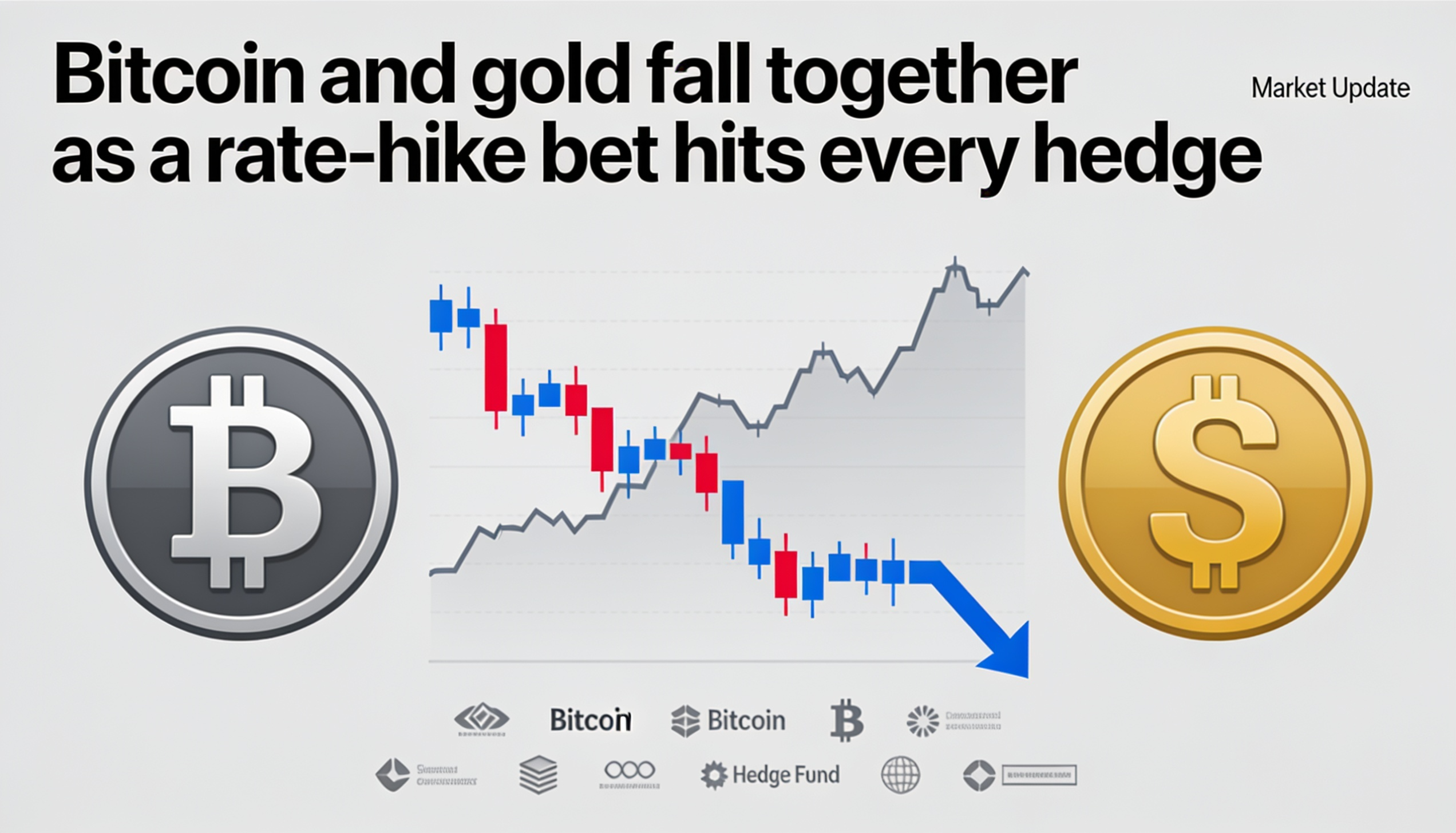
Bitcoin’s rebound from last week’s bottom is losing momentum, with BTC and gold moving lower together.
Bitcoin last traded at $61,233, down 3% in the past 24 hours and 6.9% for the week. Gold also slipped about 2%, falling below $4,200 per ounce. Markets are increasingly pricing in higher interest rates, which typically pressure non-yielding assets such as Bitcoin and other cryptocurrencies.
Ethereum dropped 3.4% to $1,625, while Solana fell 4.1% to $64.24. XRP declined 4.3% to $1.12, and both BNB and Dogecoin eased by under 3%. Hyperliquid’s HYPE token led losses among majors, down 10.2% on the day and 21.3% on the week, reflecting its higher volatility profile.
Equities also weakened. South Korea’s KOSPI, heavily exposed to AI and semiconductor stocks, dropped 6.3%, helping drag MSCI’s Asia-Pacific index down 2.5% for a fourth decline in five sessions. Nasdaq 100 futures also traded lower, down 0.8% after a volatile session. Brent crude hovered near $92 per barrel amid renewed U.S. strikes on Iran, while the 10-year Treasury yield rose to 4.54%.
Gold and Bitcoin rarely move in tandem, but both are now under pressure as rising rate expectations reduce demand for assets that don’t yield income. Wednesday’s U.S. inflation release could reinforce that trend.
A hotter CPI print would strengthen expectations that Federal Reserve Chair nominee Kevin Warsh may keep rates higher for longer, tightening liquidity conditions that have historically supported risk assets.
The recent bounce was largely driven by a short squeeze rather than fresh spot demand, with more than $500 million in bearish positions liquidated—the largest such event since April.
However, some market participants say underlying demand has not meaningfully returned.
“Buyers have stepped in after the move lower, but spot demand has yet to return in a meaningful way,” said Diana Pires, chief business officer at sFOX, pointing to continued outflows from U.S. spot Bitcoin ETFs that are keeping institutional participation subdued. Without stronger inflows, she added, rallies are struggling to sustain.
Attention now turns to whether Bitcoin can hold its ground through the inflation data or continue tracking equities lower. If gold stabilizes while Bitcoin keeps falling, its role as a macro hedge could come under further scrutiny.