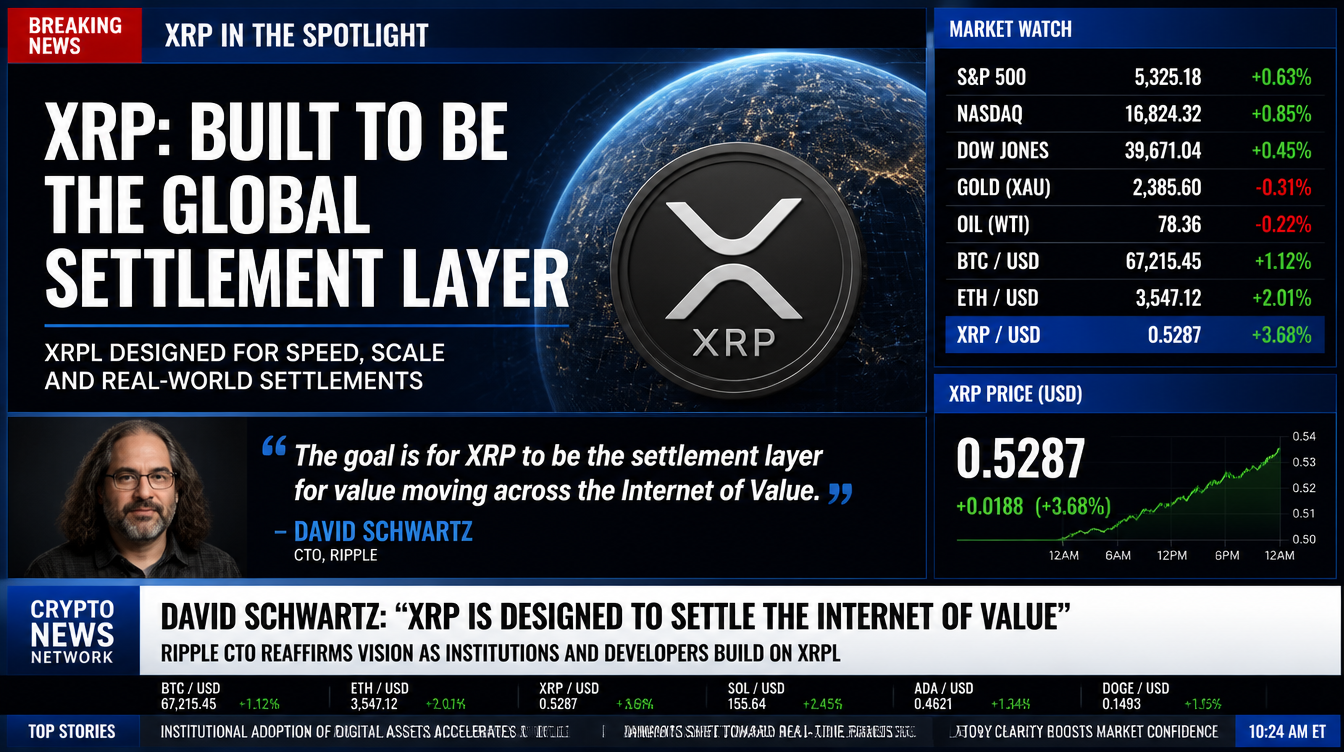
Ripple CTO Emeritus David Schwartz used a June 5 video segment to signal a strategic shift for the XRP Ledger (XRPL). He described it as evolving beyond a payments rail into a full-scale settlement and issuance layer for tokenized assets—spanning equities, money market funds, repos, and on-chain lending. The positioning adds fresh momentum to XRP’s bullish narrative.
The roadmap is defined, timelines are tight, and institutional participation is already in motion. The key question now is execution: what’s operational today, and what remains in the pipeline?
Discover: The Best Crypto to Diversify Your Portfolio
XRPL Right Now: Strong RWA Growth, Flagship Use Cases Still Pending
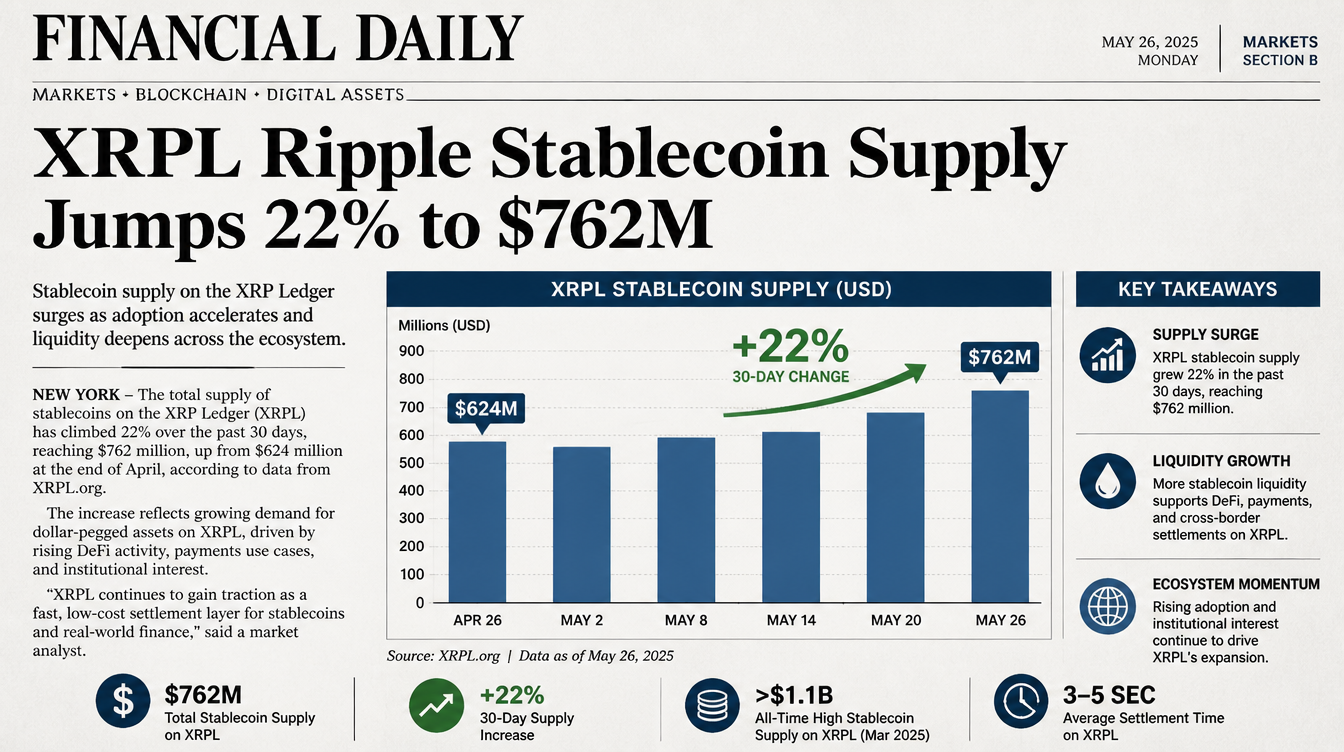
XRPL’s real-world asset (RWA) expansion is backed by hard data. Tokenized RWAs on the network surged from $24.7 million to $567.9 million خلال 2025—a 2,200% increase—and climbed further to around $2.325 billion by early 2026.
That growth places XRPL roughly 8th globally in tokenized RWAs, with about 1.53% market share.
Issuance is heavily concentrated, with VERT Capital, RLUSD, and OpenEden accounting for 85.5% of total value as of mid-2025. Ripple’s RLUSD stablecoin alone has scaled to a $1.3 billion market cap, ranking as the third-largest regulated stablecoin in the U.S.
That’s the live layer today. The growth is real. But how it translates into XRPL’s ambitions around tokenized equities and credit markets is still unclear.
On the infrastructure side, two pillars stand out. The Multi-Purpose Token (MPT) standard enables complex financial instruments—like bonds and funds—to be issued on-chain with built-in features such as maturity dates and transfer restrictions, without the need for custom smart contracts.
Alongside it, the XLS-66 lending protocol (part of XRPL Version 3.0.0) introduces fixed-term institutional lending with isolated vaults and automated repayments. A permissioned DEX, accessible only to KYC-verified participants, is already live with its first use case.
This is not theoretical—it’s infrastructure in motion. However, full activation of the lending layer still depends on securing an 80% validator supermajority under XLS-66.
Schwartz’s June 5 Message: A Clear Rollout Sequence
Schwartz’s framing in the “XRP in a Minute” segment was deliberate. He started by crediting Bitcoin with proving that public blockchains can enable value transfer, then positioned XRPL as the next layer—supporting both native digital assets and issued assets like stablecoins and tokenized financial instruments.
He outlined near-term priorities: tokenized securities and money market funds first, followed by tokenized stocks. On the credit side, he pointed to repos and loans. The sequence is intentional.
Securities and funds come first due to strong institutional demand and existing compliance frameworks on XRPL. Lending products follow, dependent on the full rollout of XLS-66.
Tokenized stocks, while highlighted, are not yet confirmed as live. However, Archax—a UK-regulated digital securities exchange—has committed to a $1 billion pipeline that includes equities and fund units.
The underlying infrastructure—MPT, permissioned DEX, and credential-gated order books—is already capable of supporting these assets. What’s missing is the launch of live products.
Schwartz’s broader thesis is straightforward: enterprise-driven, compliance-first financial products will fuel the next wave of adoption. In this framework, institutional infrastructure—not retail-driven speculation—becomes the primary engine of tokenization growth.
Discover: The Best Token Presales