BTC/USD is facing renewed selling pressure as several major macro forces converge. Escalating U.S.–Iran tensions following President Trump’s “proportional” strikes, combined with ongoing signals that a potential diplomatic deal could still be reached within days, have unsettled global risk sentiment. At the same time, U.S. CPI data is due today amid rising energy costs, adding an inflation shock risk to already fragile markets. The combination has driven more than $400 million in liquidations, pushing Bitcoin toward the $61,000 level. Meanwhile, the upcoming SpaceX IPO—expected within two days—is adding another layer of uncertainty as markets weigh potential liquidity rotation out of crypto.
Although Trump has suggested a deal may still be “days away,” market reactions have remained negative, with any brief stabilization quickly reversing. Liquidation pressure has been heavily concentrated in long positions, highlighting how overleveraged positioning has amplified the downside move.
Bitcoin Caught in a Macro and Liquidity Squeeze
Bitcoin is now trading in a vulnerable $61,000–$62,000 band as surging oil prices from geopolitical tensions intensify inflation concerns. While the overall crypto market cap remains near $2.2 trillion and Bitcoin dominance has slightly eased, sentiment continues to swing sharply with macro headlines.
The SpaceX IPO on June 12 is being closely watched as a potential liquidity stress test. Tom Lee, however, argues that any short-term weakness tied to the IPO will be temporary, suggesting capital rotation will ultimately support risk assets rather than drain them. He expects buyers to step back in after initial volatility.
Following his remarks, BitMine reportedly increased exposure by purchasing roughly 75,000 ETH worth about $123 million from Kraken and FalconX, bringing total Ethereum holdings to around 5.5 million ETH.
CPI Takes Center Stage
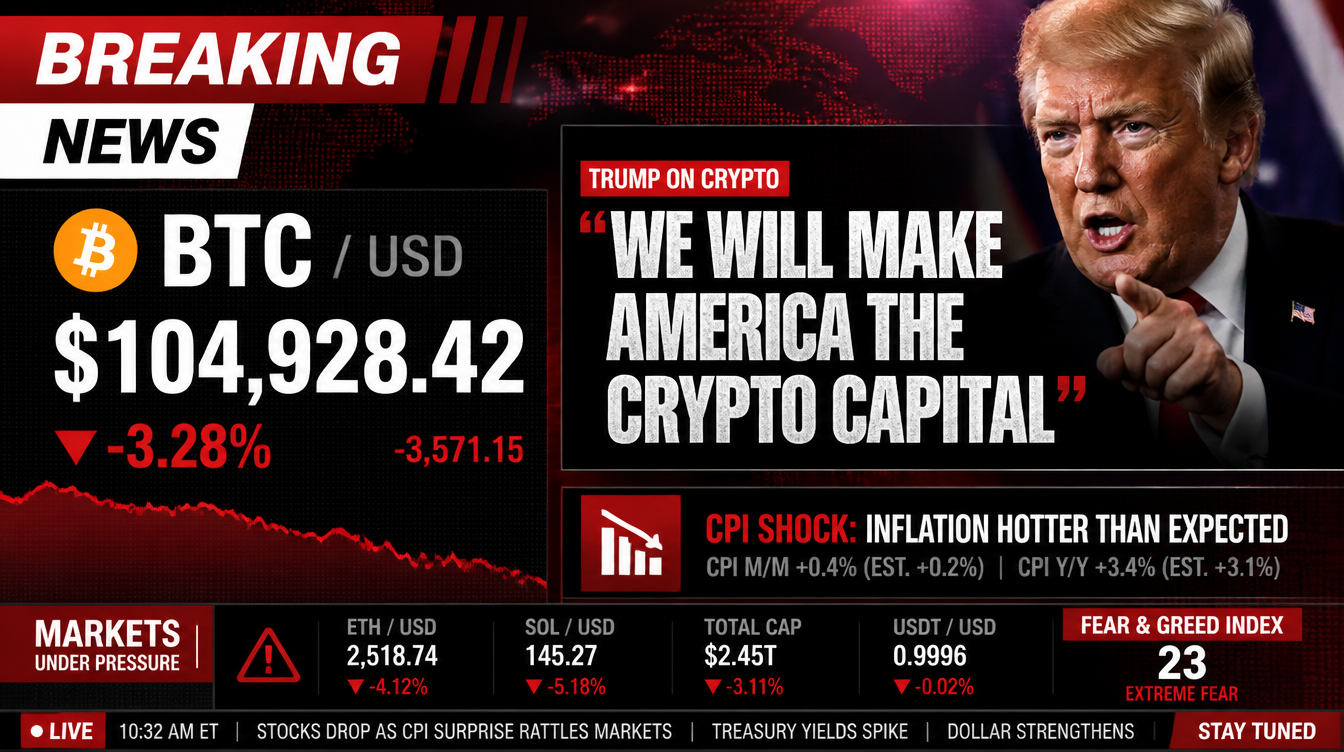
Markets are now focused on May CPI, expected near 4.2% year-over-year, roughly in line with or slightly above the prior reading. Rising energy prices tied to geopolitical disruption are a key inflation driver. The 12:30 UTC release has lifted expectations for tighter Fed policy, with markets pricing in around a 70% chance of additional rate hikes.
Bitcoin is consolidating in the $61,000–$62,000 range ahead of the data, with price action largely driven by positioning rather than conviction. Historically, pre-CPI moves often reverse once data is released. A hotter print could send BTC toward $60,000, while a softer reading may trigger a rebound toward $65,000. Additional pressure is coming from stronger Japanese PPI figures, which are tightening global liquidity conditions via carry trade channels.
Elsewhere, institutional adoption trends continue to build. Kraken has been named the official crypto exchange partner for the FIFA World Cup 2026, reinforcing ongoing mainstream integration. Investor Anthony Scaramucci remains bullish on Bitcoin’s long-term trajectory, projecting recovery into late 2026 or early 2027.
On the policy front, proposed U.S. crypto tax reforms are facing resistance in Congress, which could provide some near-term relief for digital assets.
Despite short-term volatility driven by geopolitics, inflation risk, and liquidity events such as the SpaceX IPO, analysts note that Bitcoin’s broader structural uptrend remains intact, supported by continued institutional accumulation.
If CPI surprises to the downside, markets could stage a relief rally toward $65,000 as rate expectations ease. A strong SpaceX IPO debut could also improve risk sentiment and support inflows into crypto markets.
Market Structure and Sentiment
Bitcoin has fallen below $62,000, down roughly 1.5%, as demand indicators weaken to multi-year lows. On-chain data shows combined spot and derivatives demand growth has turned sharply negative, a pattern historically associated with stressed market regimes.
Analysts also highlight that Bitcoin remains capped below the $65,000 resistance level, a key threshold for any sustained move toward the $72,000–$74,000 zone.
Broader discussions continue around XRP’s long-term underperformance relative to Bitcoin, with some attributing it to regulatory narratives and extended consolidation phases.
Separately, investor Tim Draper maintains a long-term bullish outlook, arguing that quantum computing poses a greater systemic risk to traditional banking systems than to decentralized networks like Bitcoin, which he believes are structurally more resilient.
Overall, markets remain in a fragile equilibrium, with near-term direction likely to be dictated by CPI data and evolving geopolitical developments.