Stablecoins are rapidly reshaping global liquidity flows, with their total market value now surpassing the foreign exchange reserves of most countries.
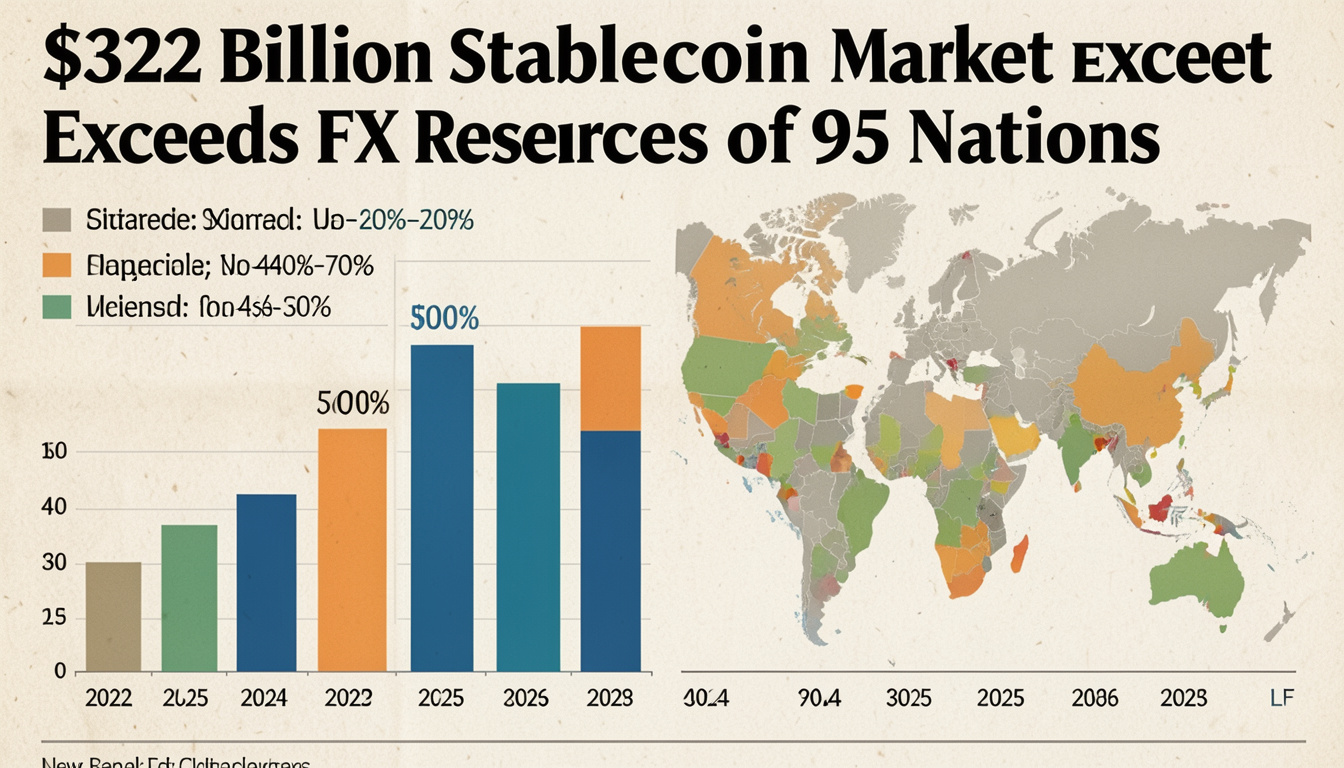
The sector’s combined capitalization has climbed to a record $322 billion, exceeding the FX reserves of 95 nations. This includes a mix of emerging and developed economies such as Poland, Thailand, Mexico, the United Kingdom, Canada, and even the United Arab Emirates.
The milestone highlights a growing shift of fiat-linked capital away from traditional banking systems and into blockchain-based infrastructure. In effect, more dollar-denominated value is now held in tokenized form by private users than in official reserve holdings across the majority of sovereign states.
Stablecoins are digital assets pegged to fiat currencies, typically maintaining a 1:1 value with the U.S. dollar, though alternatives linked to the euro, yen, and Swiss franc also exist. The market is largely dominated by dollar-backed tokens like Tether (USDT) and USD Coin (USDC), which underpin much of the activity across crypto markets.
Foreign exchange reserves, traditionally held by central banks in currencies and gold, serve as a financial safeguard—used to stabilize domestic currencies, meet external obligations, and finance imports. Despite the rapid rise of stablecoins, only a small group of countries—including China, Japan, Russia, India, Taiwan, and Germany—hold reserves exceeding the size of the entire stablecoin market.
Usage of stablecoins has expanded well beyond crypto trading. While they remain a key tool for moving between digital assets, they also function as core infrastructure in decentralized finance and are increasingly used for cross-border payments due to their speed and lower costs compared to legacy banking systems.
A recent report from the Bank for International Settlements notes that stablecoin adoption in international transfers has grown significantly, particularly in regions where traditional banking channels are inefficient or expensive. Activity has been especially strong in economies facing high inflation and currency volatility.
However, the same features that drive adoption also raise concerns. The ability to move funds quickly across borders introduces risks of capital outflows, particularly for countries with fragile external balances.
According to the BIS, rising stablecoin flows are often linked to weaker domestic currencies, distortions in exchange rate dynamics, and widening gaps between official and market-based rates. These trends suggest stablecoins may enable users to bypass capital controls, offering a relatively seamless way to shift wealth into dollar-denominated assets.
As the market continues to expand, stablecoins are becoming an increasingly influential force in global finance—offering efficiency gains while simultaneously challenging traditional monetary frameworks.