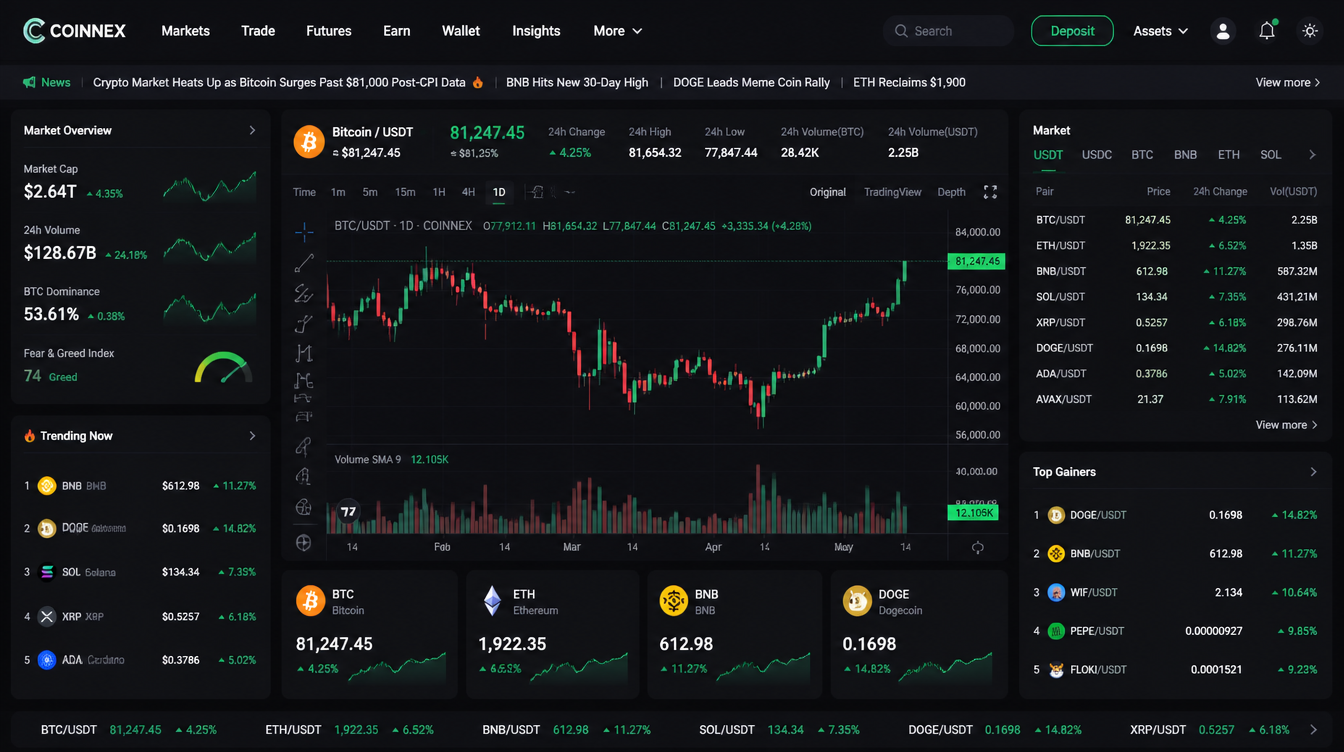
Bitcoin regained ground above $81,000 after a brief drop below $80,000 triggered by a hotter-than-expected U.S. inflation report, while BNB and dogecoin led gains among major cryptocurrencies amid strong fund inflows.
The world’s largest cryptocurrency fell to around $79,800 late Tuesday after April’s CPI surprised to the upside at 3.8% year-over-year, driven largely by rising energy costs linked to ongoing geopolitical tensions. The sell-off was short-lived, however, with buyers stepping in quickly to push bitcoin back to roughly $81,200 by the start of Asian trading, leaving it marginally higher over the past 24 hours.
In the broader market, BNB stood out with a gain of about 2.5%, while dogecoin advanced 1.3%. Ether continued to underperform, slipping on the day and extending its weekly losses. Solana and XRP also posted modest declines, reflecting mixed sentiment across major tokens.
Traditional markets reacted more negatively to the inflation data. U.S. equities edged lower, with technology stocks—particularly semiconductors—leading the decline after a period of strong performance.
Meanwhile, bond markets highlighted persistent inflation concerns. The U.S. two-year Treasury yield remained just under 4%, while Japan’s long-term yields climbed to levels not seen in decades, underscoring the global impact of elevated energy prices.
Despite macro headwinds, crypto investment flows remained robust. Data from CoinShares showed digital asset funds recorded $858 million in inflows last week, with bitcoin attracting the bulk of capital, followed by smaller inflows into ether, solana, and XRP.
A key development was the continued unwinding of bearish bets. Bitcoin short products saw $14 million in outflows, marking the largest weekly reduction in short positions this year. This suggests investors are scaling back downside expectations even as macro conditions remain uncertain.
Sentiment indicators, however, remain slightly cautious. Recent readings have hovered just below neutral, indicating that bearish pressure has not fully dissipated.
From a technical standpoint, bitcoin is still struggling to break above its 200-day moving average, a key resistance level. However, the relatively shallow pullback suggests the market may be consolidating rather than reversing trend.
Regulatory developments are also providing some support. The recent surge in inflows coincided with progress on stablecoin regulation under the proposed CLARITY Act, which is expected to be reviewed by U.S. lawmakers in the coming days. This has emerged as one of the few clear tailwinds for the market amid ongoing macro uncertainty.
For now, bitcoin’s ability to hold above $81,000 despite rising inflation and tighter financial conditions points to underlying demand. The next phase will likely depend on upcoming economic data and regulatory developments, which could determine whether the current recovery gains further traction.