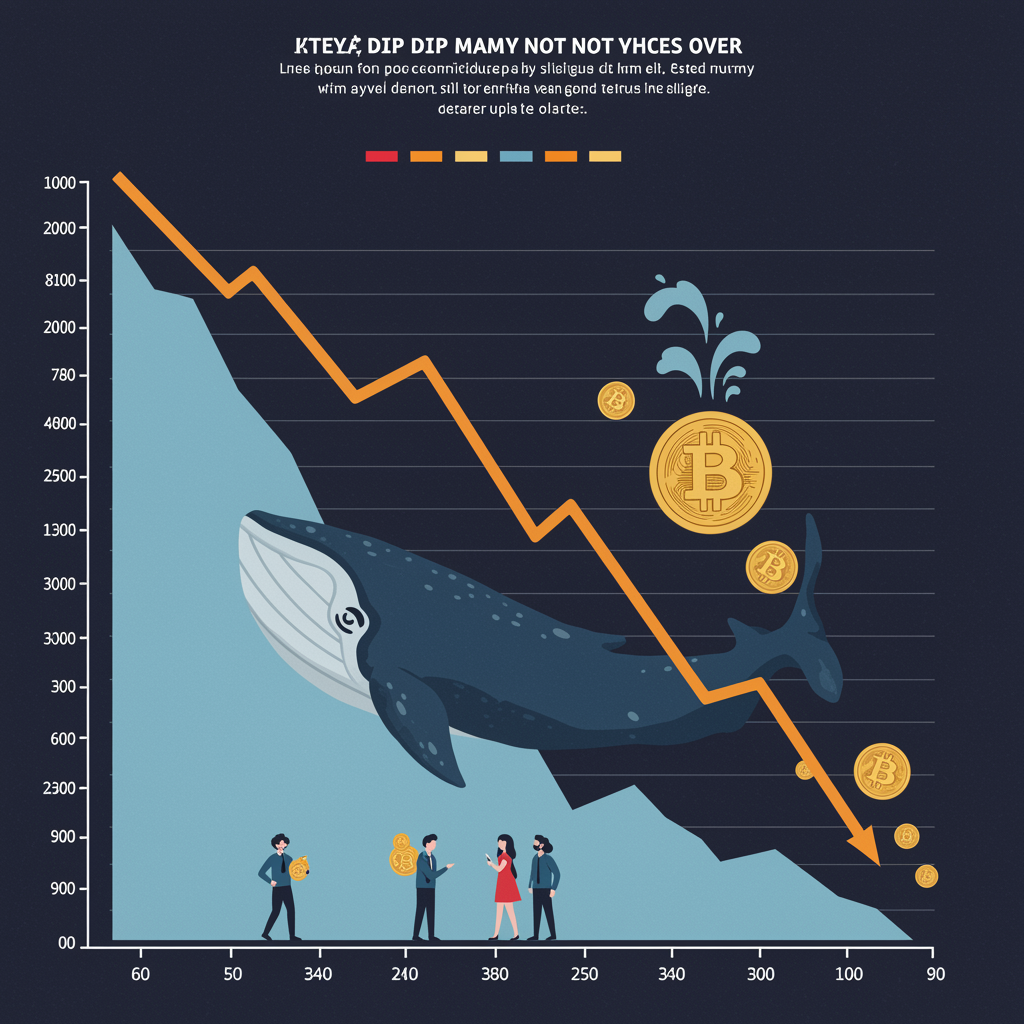
A widening gap between large and small holders of Bitcoin may suggest the market’s recent pullback is not yet finished. Historically, such divergence has often preceded additional downside. Investor sentiment has also weakened, with the Crypto Fear and Greed Index falling to 12 over the weekend—deep within “extreme fear” territory.
Data from on-chain analytics firm Santiment indicates that major holders, often referred to as whales, were actively buying during last week’s wave of panic selling. Wallets holding between 10 and 10,000 BTC accumulated heavily between Feb. 23 and March 3, a period when bitcoin was trading between roughly $62,900 and $69,600.
That buying activity coincided with the sharp market drop linked to geopolitical tensions involving Iran and the early phase of the market rebound that followed. However, once bitcoin surged to around $74,000 on Thursday, those same large wallets began locking in gains. Since then, whales have sold roughly two-thirds of the bitcoin they accumulated during the earlier dip.
Smaller investors, meanwhile, have been steadily adding to their holdings. Wallets containing less than 0.01 BTC increased their positions as bitcoin slipped back below $70,000 late Friday and into Saturday. According to Santiment, this pattern—retail investors buying while whales distribute holdings—has historically served as a bearish signal, suggesting the current correction may not yet be complete.
Additional insights from blockchain analytics firm Glassnode highlight further pressure on the market. About 43% of bitcoin’s circulating supply is currently sitting at a loss. That creates a persistent source of selling during rallies, as investors who have been underwater for weeks or months use price recoveries to exit positions near their break-even levels.
This dynamic appeared to play out when bitcoin’s rebound stalled near $74,000. The rally encountered heavy selling from both whales taking profits and holders looking to exit at their cost basis.
More broadly, the market has been marked by sharp volatility but limited overall progress. Bitcoin traded near $60,000 on Feb. 6 before climbing to roughly $74,000 on March 5. Yet the cryptocurrency is now hovering around $68,000—close to where it stood several weeks earlier.
Such price action reflects a market stuck in a cycle where rallies are met with selling pressure and dips attract retail buyers hoping for a quick rebound.
Eventually, that standoff will likely resolve in one of two ways. Either selling pressure fades and bitcoin breaks decisively above $74,000, or buying demand weakens, leading to a more meaningful test of support around $60,000.
Recent whale behavior suggests that many large holders may be preparing for the latter scenario.