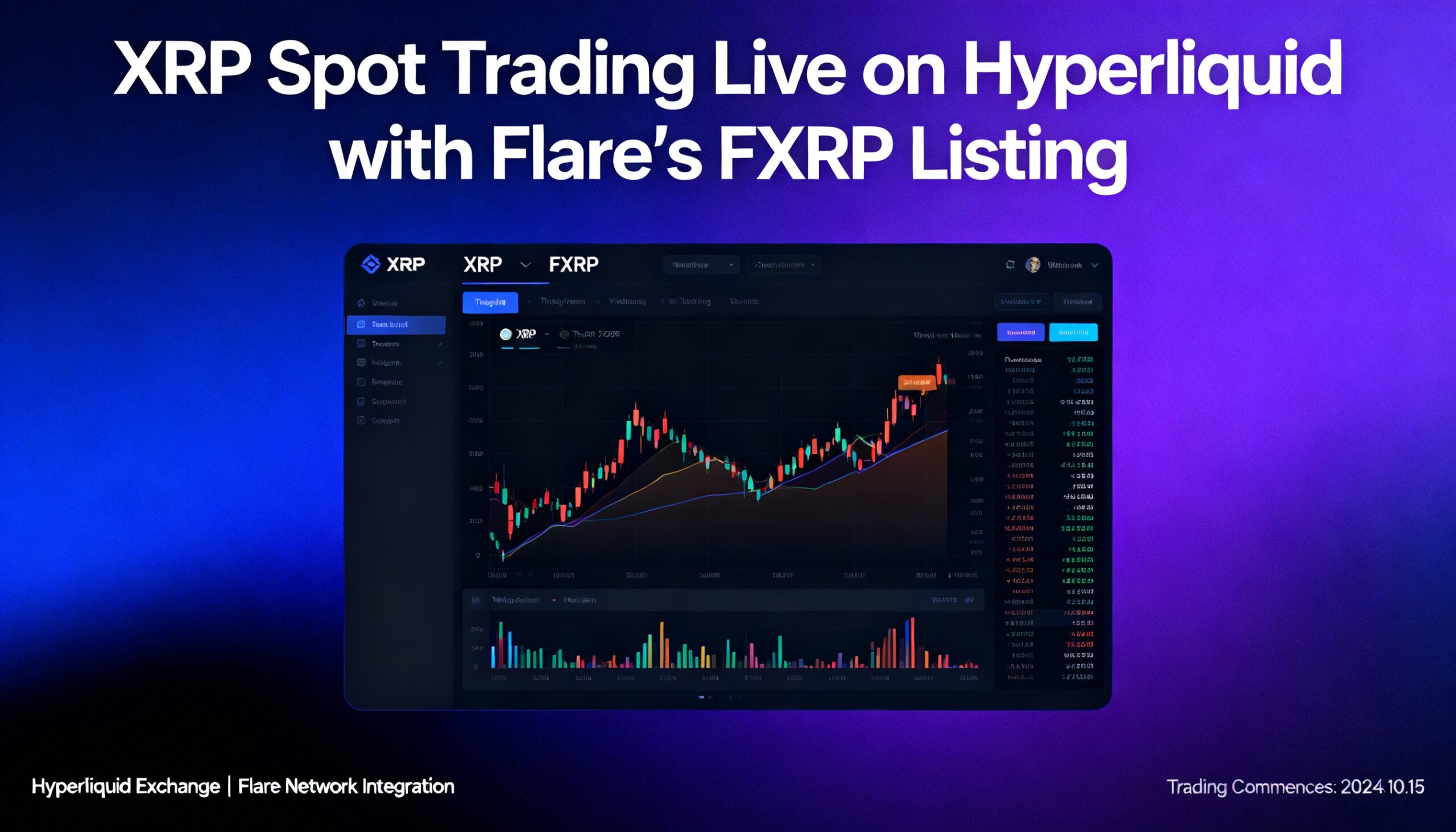
FXRP enables XRP to be traded directly on Hyperliquid’s onchain orderbook, with the ability to bridge assets back to the XRP Ledger following execution.
Interoperability network Flare said Wednesday it has introduced the first XRP spot market on Hyperliquid by listing FXRP, launching with an FXRP-USDC trading pair.
The listing gives traders their first opportunity to gain XRP spot exposure on Hyperliquid’s onchain orderbook, according to a statement shared with CoinDesk. Hyperliquid is an onchain trading venue operating on its own high-performance Layer-1 blockchain, with 24-hour trading volumes topping $185 million.
FXRP is an onchain representation of XRP created through Flare’s FAssets system and LayerZero’s omnichain token standard. The framework allows FXRP to move across blockchains, trade on Hyperliquid, and later be bridged back to the XRP Ledger through an onchain workflow.
Flare co-founder Hugo Philion said the launch is designed to extend XRP’s reach across decentralized finance without introducing offchain custody risk.
“By pairing Flare’s FAssets infrastructure with Hyperliquid’s orderbook, we’re expanding XRP’s role in DeFi while preserving the XRPL as the canonical settlement layer,” Philion said.
Hyperliquid differentiates itself from most DeFi platforms by using a traditional orderbook model rather than automated market maker pools. That structure can deliver tighter spreads and more consistent execution during periods of heavy trading, making spot markets particularly relevant for larger traders seeking to hedge derivatives exposure or manage risk across venues.
Flare said FXRP will be routed to Hyperliquid through its HyperEVM layer before entering HyperCore for spot trading. A dedicated bridge built using Flare Smart Accounts is expected to follow, enabling one-click withdrawals back to the XRP Ledger as native XRP.
For traders, the value proposition is clear: XRP holders gain access to a deep, onchain spot market with familiar execution tools, while Hyperliquid-native users can trade a major large-cap asset without relying on centralized custody or onboarding through another chain.
Flare added that FXRP can also be bridged back to its own network after trading to support XRPFi use cases such as lending and staking, keeping the full trading lifecycle onchain.