Bitcoin’s Record Underperformance Against Stocks Extends Into 2026
Bitcoin is finishing the first quarter on a steep decline, extending an unprecedented period of lag relative to U.S. equities.
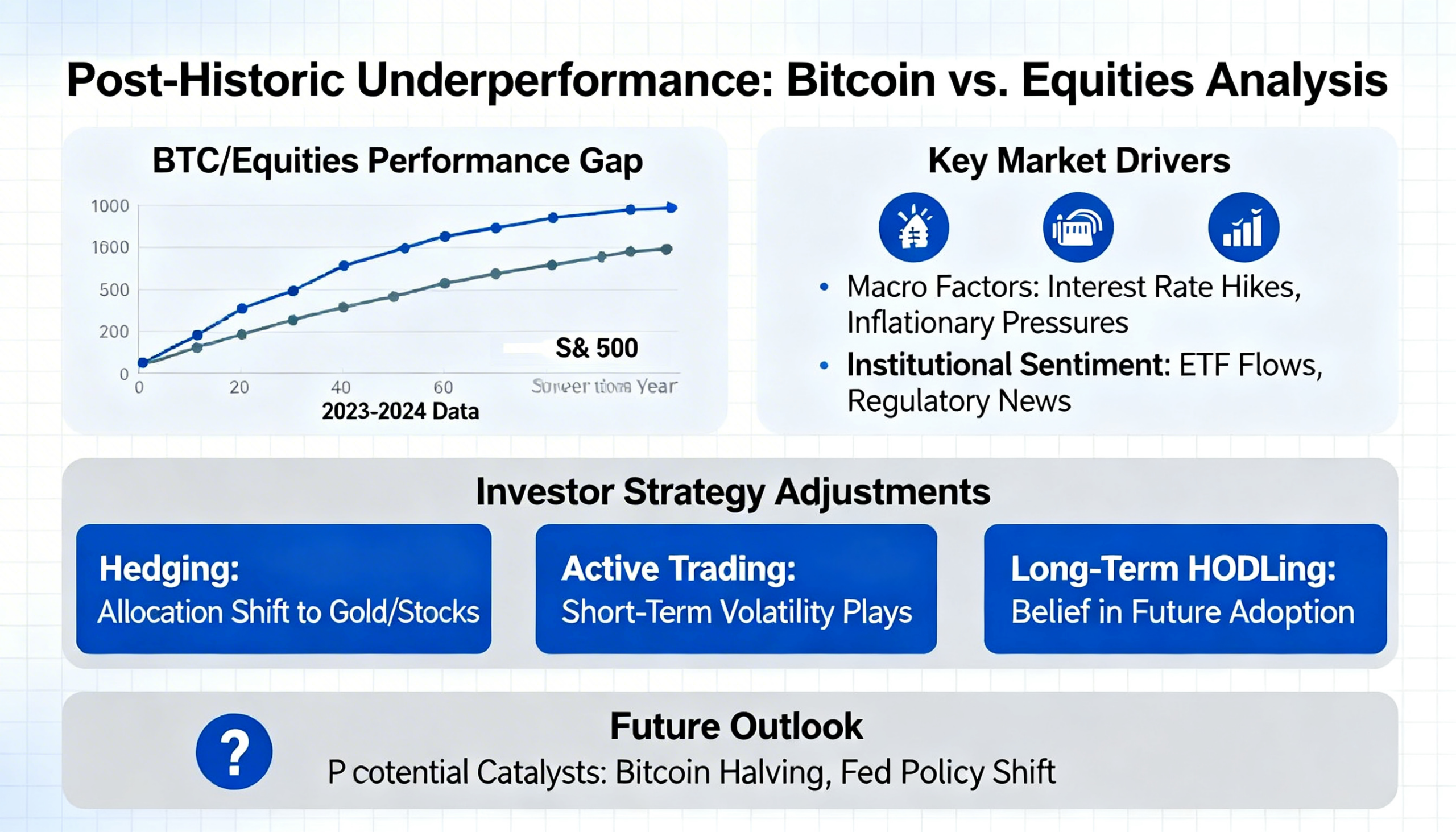
The cryptocurrency fell roughly 22% in Q1 2026, following a 25% drop in Q4 2025. Over the same timeframe, the S&P 500 posted far smaller losses, leaving a persistent performance gap. According to Mark Connors, founder of Risk Dimensions, the streak of bitcoin underperforming equities since early October is the longest on record. While past drawdowns have occasionally been sharper, they have never lasted this long.
The weakness coincided with broader market struggles. U.S. equities posted their worst quarterly performance in four years, with the Nasdaq down more than 10% from recent highs. Combined declines in stocks and crypto have largely erased the post-2024 election rally.
Policy developments have been mixed. The SEC’s more favorable stance on crypto ETFs, progress on the GENIUS Act, and a Trump-era executive order expanding access to alternative assets in retirement accounts have offered some support, but broader market pressures have persisted.
Despite this challenging backdrop, bitcoin showed relative resilience in March. Early-month tensions between the U.S. and Iran pushed oil prices and the dollar higher, triggering volatility across global markets. Gold fell sharply amid forced liquidations, dropping roughly 11%, while bitcoin gained about 1%. Connors attributes this stability to earlier deleveraging and bitcoin’s ability to move across borders, which may reduce forced selling.
Looking forward, the prolonged underperformance could be a signal for a potential reversal. Rolling 63-day data shows bitcoin trailing the S&P 500 for six months — the longest such streak on record. Historically, similar imbalances have preceded periods of renewed demand, especially as macro pressures like rising debt and currency expansion intensify.
However, timing remains uncertain. Geopolitical developments, particularly the Iran conflict and its impact on energy markets, liquidity, and risk appetite, are likely to influence how quickly sentiment shifts.
As Connors noted, “It’s either two months or two years.”