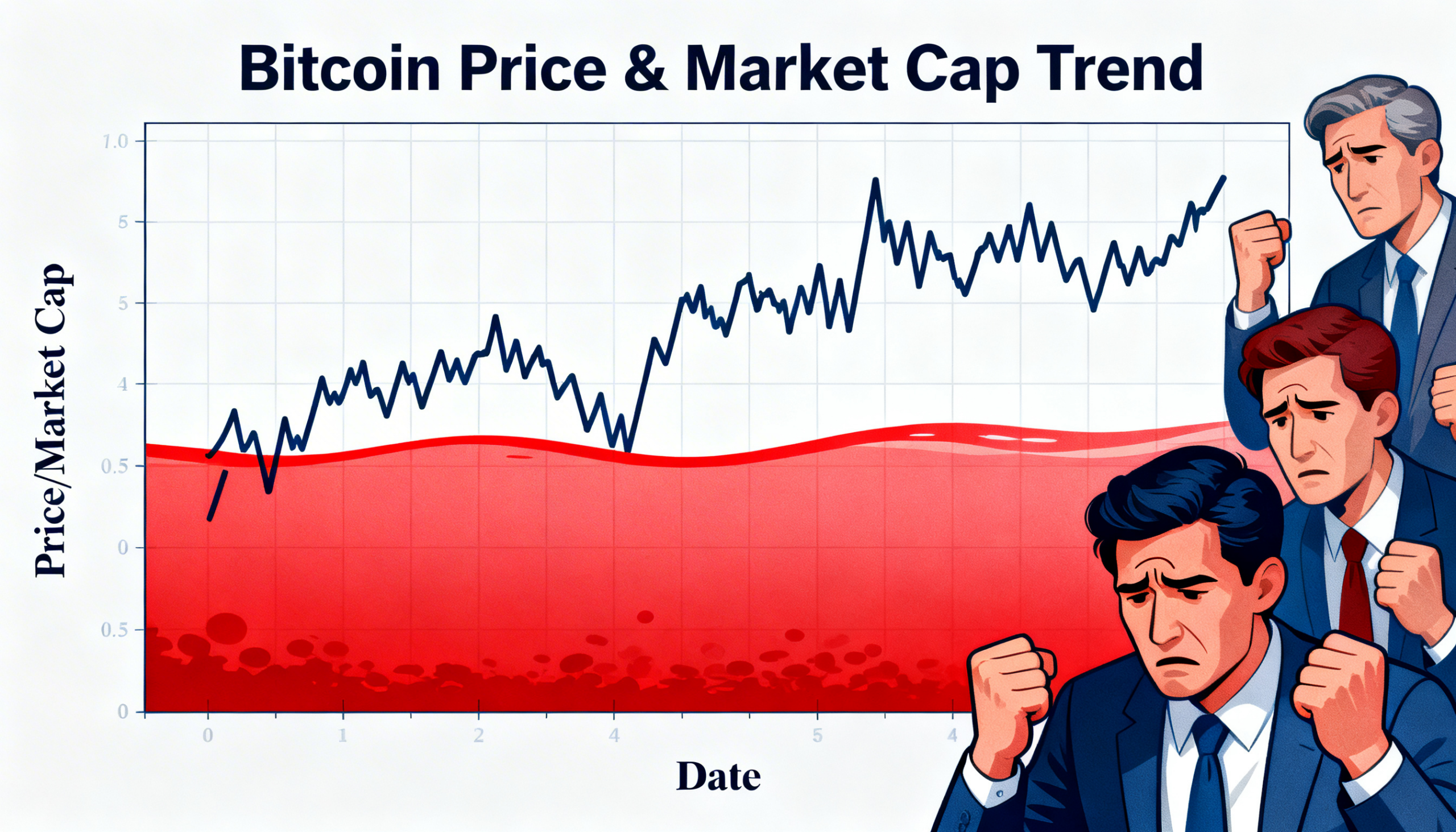
Nearly half of bitcoin’s circulating supply is now trading below cost, underscoring mounting stress across the market as key indicators weaken.
According to CEX.IO, roughly 50% of BTC is currently underwater. The Bitcoin Impact Index — a composite measure of market stress based on on-chain activity, ETF and derivatives flows, and liquidity conditions — surged 13 points to 57.4 in the week ending March 28, marking its sharpest jump since January.
On a scale capped at 100, the index has entered the “high impact” zone, a range historically associated with broad selloffs and double-digit declines, including those seen in 2018, 2022 and earlier this year.
Long-term holders, defined as wallets holding BTC for more than six months, have seen a sharp reversal. Just a week earlier, when bitcoin traded above $70,000, this group remained comfortably in profit. Now, more than 4.6 million BTC — about 30% of their holdings — are underwater, with realized losses last week reaching their highest level since 2023.
The report highlights this disconnect between price action and weakening on-chain conviction as a potential warning signal. Similar patterns in mid-2018 and mid-2022 preceded declines of more than 25%.
Short-term holders are also under pressure, with approximately 47% of total supply now held at a loss — levels last observed during February’s peak stress period.
Meanwhile, capital flows have turned negative. Stablecoin flows, which previously averaged $250 million in daily inflows, have flipped to outflows of around $292 million. ETFs and miners have also shifted from accumulation to net selling, adding further pressure to the market.
Despite the rising strain, one key sign of full capitulation remains absent. On-chain data shows no significant increase in BTC being moved onto exchanges — a behavior typically seen during panic-driven selloffs — suggesting the market has yet to reach a full capitulation phase.