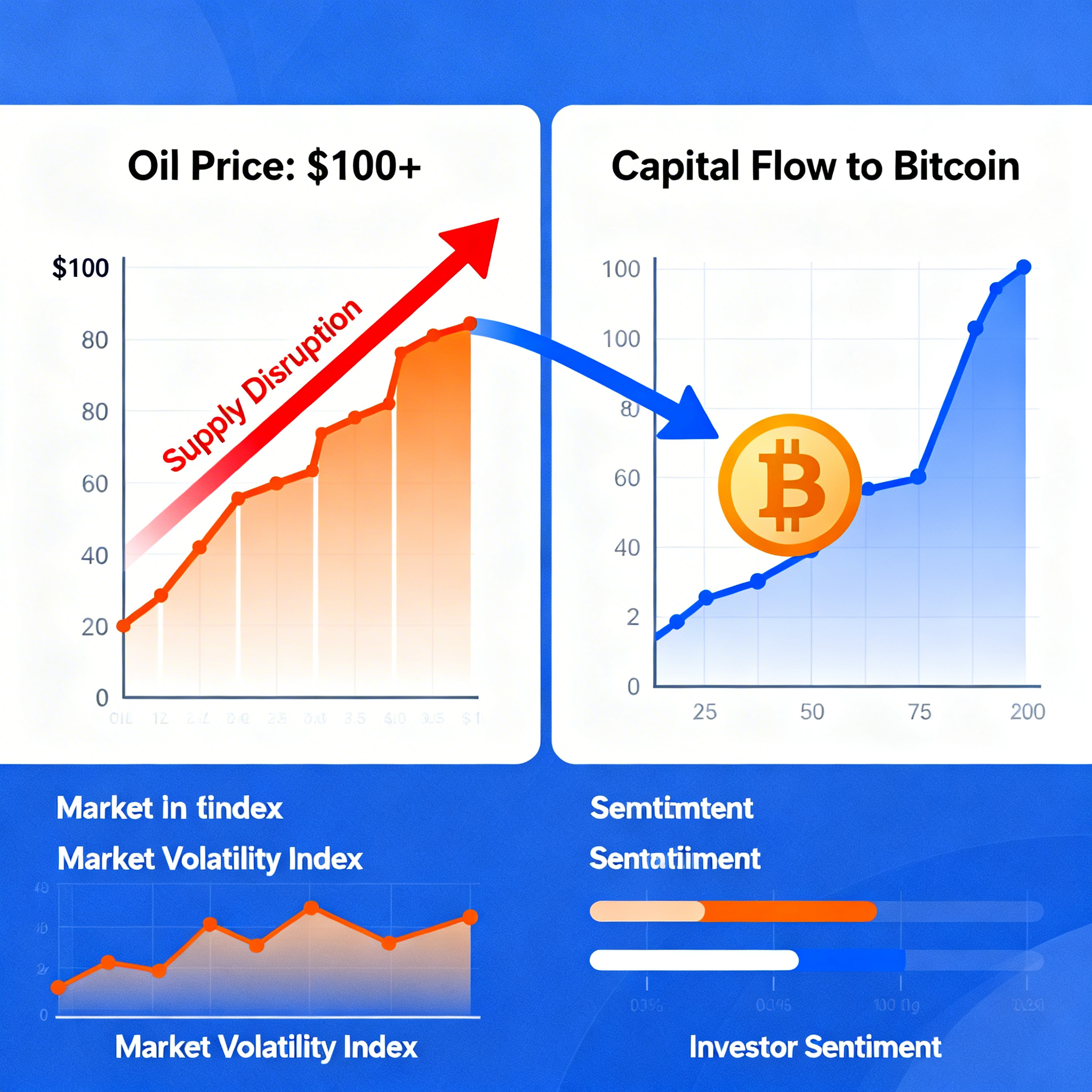
Oil shipments from the Middle East that can still reach global buyers without major disruption are now trading above $100 per barrel, reflecting rising geopolitical tensions that could spill over into broader financial markets, including equities and Bitcoin.
One of the clearest signals comes from Murban crude oil, which recently traded around $103 per barrel. The benchmark has gained prominence because it represents barrels capable of bypassing the vulnerable Strait of Hormuz, one of the world’s most critical oil transit chokepoints.
The price surge follows a week of escalating tensions involving the United States, Israel and Iran. The conflict has disrupted flows through the Strait of Hormuz, a narrow waterway responsible for facilitating more than $500 billion in annual oil and gas trade.
With supply routes under pressure, traders are paying closer attention to whether oil can physically reach international markets, not just to global production or demand levels. As a result, the oil market is effectively splitting into two groups: barrels exposed to disruptions at chokepoints such as the Strait of Hormuz, and barrels that can still move reliably to buyers.
Murban has emerged as the benchmark for the latter category. According to data cited by Oilprice.com, the crude traded above $103 on Sunday—well above widely followed benchmarks such as West Texas Intermediate and Brent crude.
The premium suggests strong competition among refiners seeking prompt cargoes. Unlike moves driven mainly by speculative futures trading, the surge indicates genuine demand for physical oil that can be delivered quickly.
Produced by Abu Dhabi National Oil Company from onshore fields in the United Arab Emirates, Murban is a light, high-quality crude exported through the Fujairah Oil Terminal. Because the port lies outside the Strait of Hormuz, shipments can reach global markets without passing through the contested waterway.
From Fujairah, cargoes are shipped mainly to Asian markets such as Japan, India, Thailand and Philippines, as well as to some European destinations. This accessibility has made Murban a key gauge for oil that can reliably reach buyers despite regional tensions.
Potential impact on bitcoin and global markets
Murban’s rise above $100 per barrel signals more than just higher crude prices. It reflects how geopolitical risk is now being priced directly into the physical oil market, where the ability to deliver barrels has become as important as overall supply.
That pressure could soon spread to broader benchmarks. When trading resumes, both West Texas Intermediate and Brent crude may approach or exceed $100 per barrel as markets react to tightening supply conditions.
Higher oil prices could create turbulence across financial markets. Rising energy costs often fuel inflation concerns, which can weigh on equities and other risk-sensitive assets—including bitcoin.
For bitcoin, liquidity conditions in traditional financial markets play a significant role in shaping price trends. If surging oil prices drive inflation expectations higher, central banks such as the Federal Reserve may be forced to maintain restrictive monetary policy, potentially limiting liquidity available for speculative investments.
Oil markets have already reacted strongly since the conflict began, with both WTI and Brent climbing roughly 30%. At the same time, investors have begun reducing expectations for near-term interest-rate cuts from the Federal Reserve.
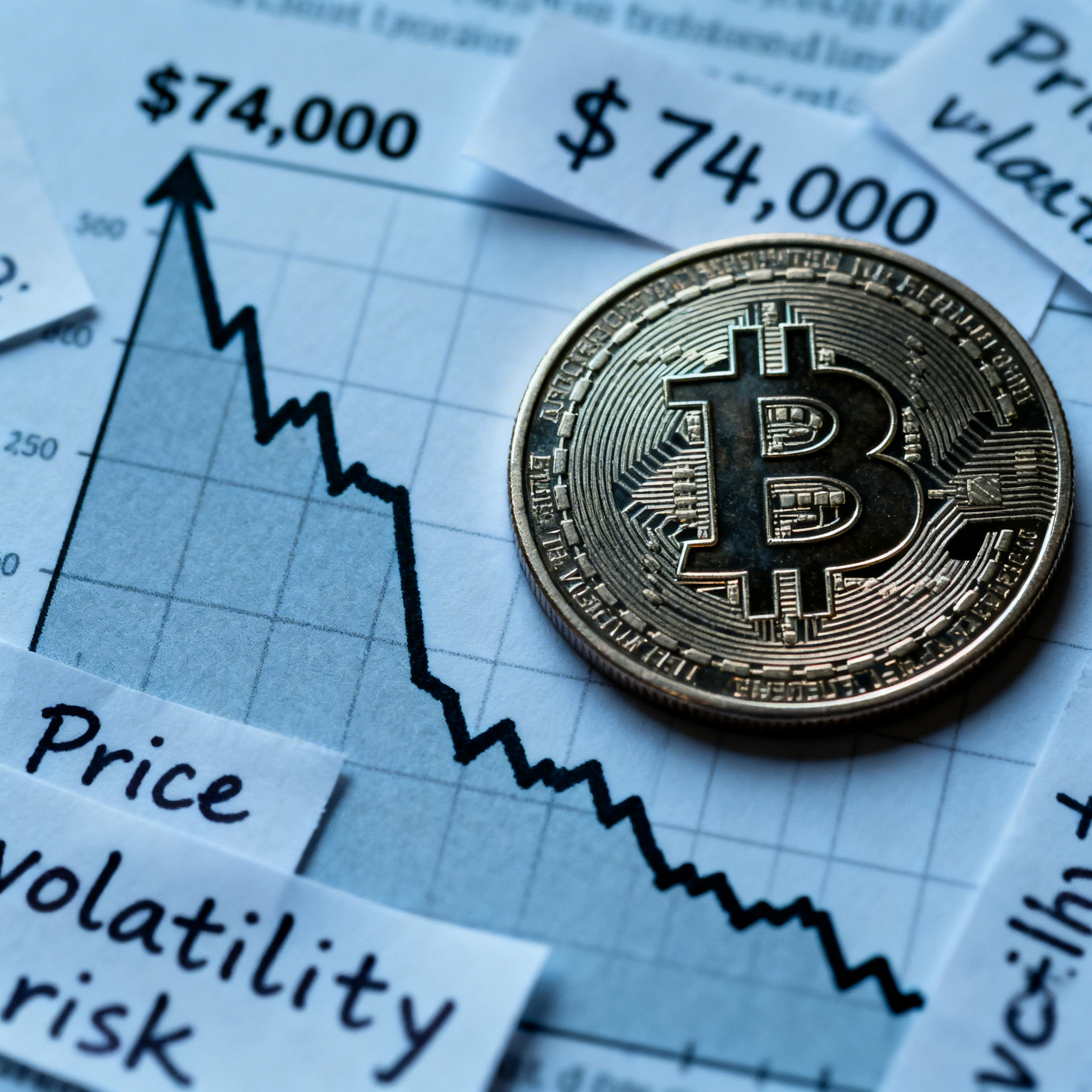
Meanwhile, bitcoin—the largest cryptocurrency by market value—recently traded near $67,000 after briefly reaching highs close to $74,000 earlier in the week, according to market data.