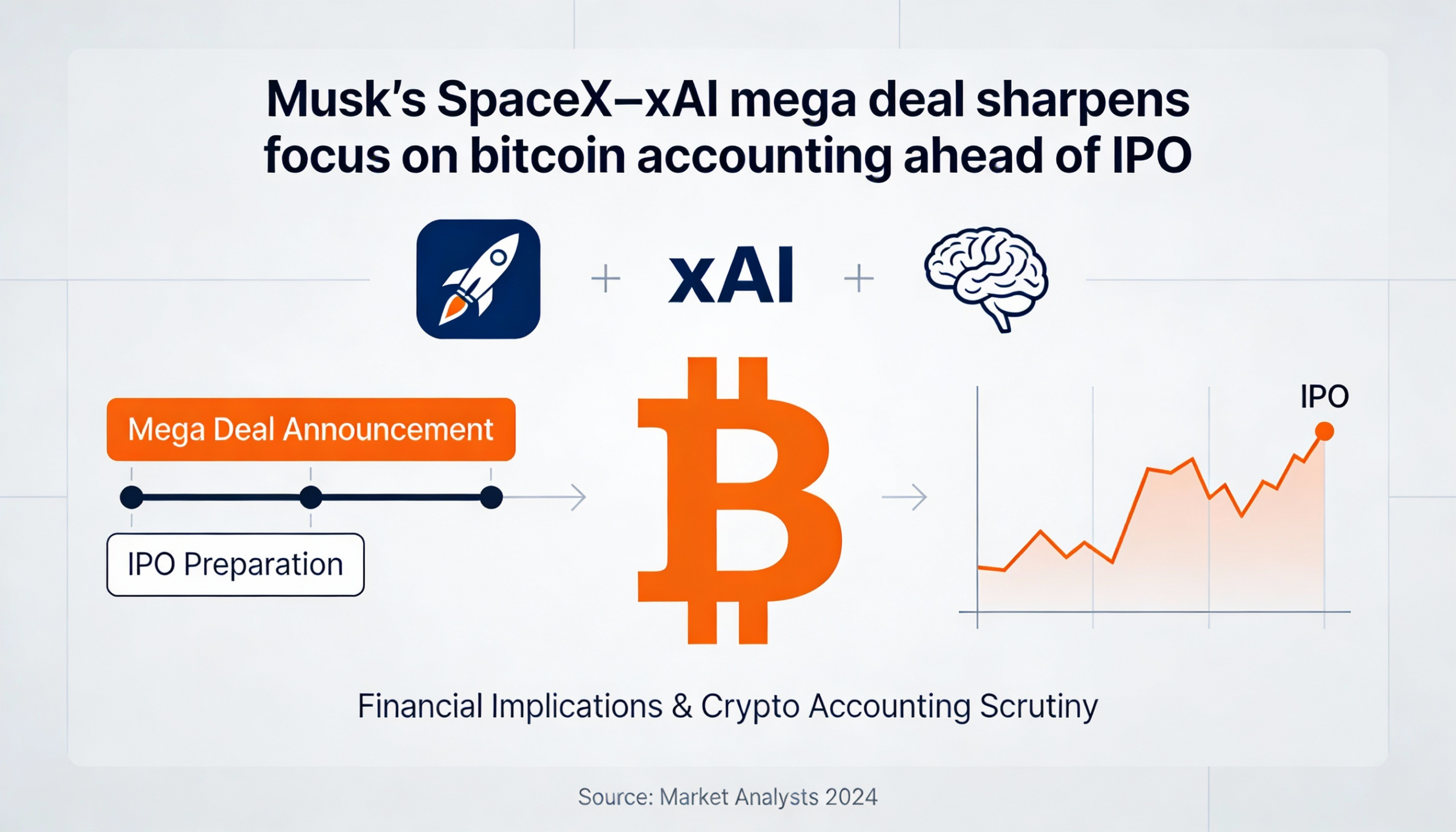
Elon Musk’s decision to fold SpaceX into his artificial intelligence venture xAI has created a technology giant that could eventually be valued near $1 trillion — and in doing so has brought renewed focus to one of the world’s larger corporate bitcoin holdings as the company edges closer to a potential public listing.
While the deal has been framed as a step toward building “space-based AI,” the merged entity will also inherit SpaceX’s long-standing bitcoin position, estimated at about 8,300 BTC based on earlier disclosures. At current prices, that stake is worth roughly $650 million — modest in the context of a trillion-dollar valuation, but significant from the standpoint of accounting treatment, disclosure obligations and investor perception.
SpaceX first disclosed its bitcoin purchase in 2021 and, unlike Musk’s publicly traded electric-vehicle maker Tesla, has remained a private company. That status has insulated it from the quarter-to-quarter earnings volatility that public firms must report under fair-value accounting rules. As IPO preparations advance, that insulation would no longer apply.
Tesla’s experience offers a cautionary parallel. The automaker has reported hundreds of millions of dollars in paper losses during periods of bitcoin price weakness, even when it made no changes to its holdings. Similar swings could emerge for SpaceX once it becomes publicly listed.
The SpaceX–xAI tie-up also concentrates crypto exposure within a single corporate structure at a time when bitcoin has returned to heightened volatility following liquidation-driven selloffs. Unlike Tesla, which has sold and later repurchased bitcoin in the past, SpaceX appears to have largely maintained a buy-and-hold strategy. That stability may appeal to long-term investors, but it also reduces flexibility should market conditions deteriorate during an IPO window.
More broadly, the merger highlights lingering questions about how digital assets are managed across Musk’s wider business empire. Tesla, SpaceX and xAI have historically operated under different disclosure standards, accounting treatments and capital structures, reflecting their mix of public and private ownership — differences that may now need to be aligned as crypto exposure becomes more concentrated and more visible to investors.