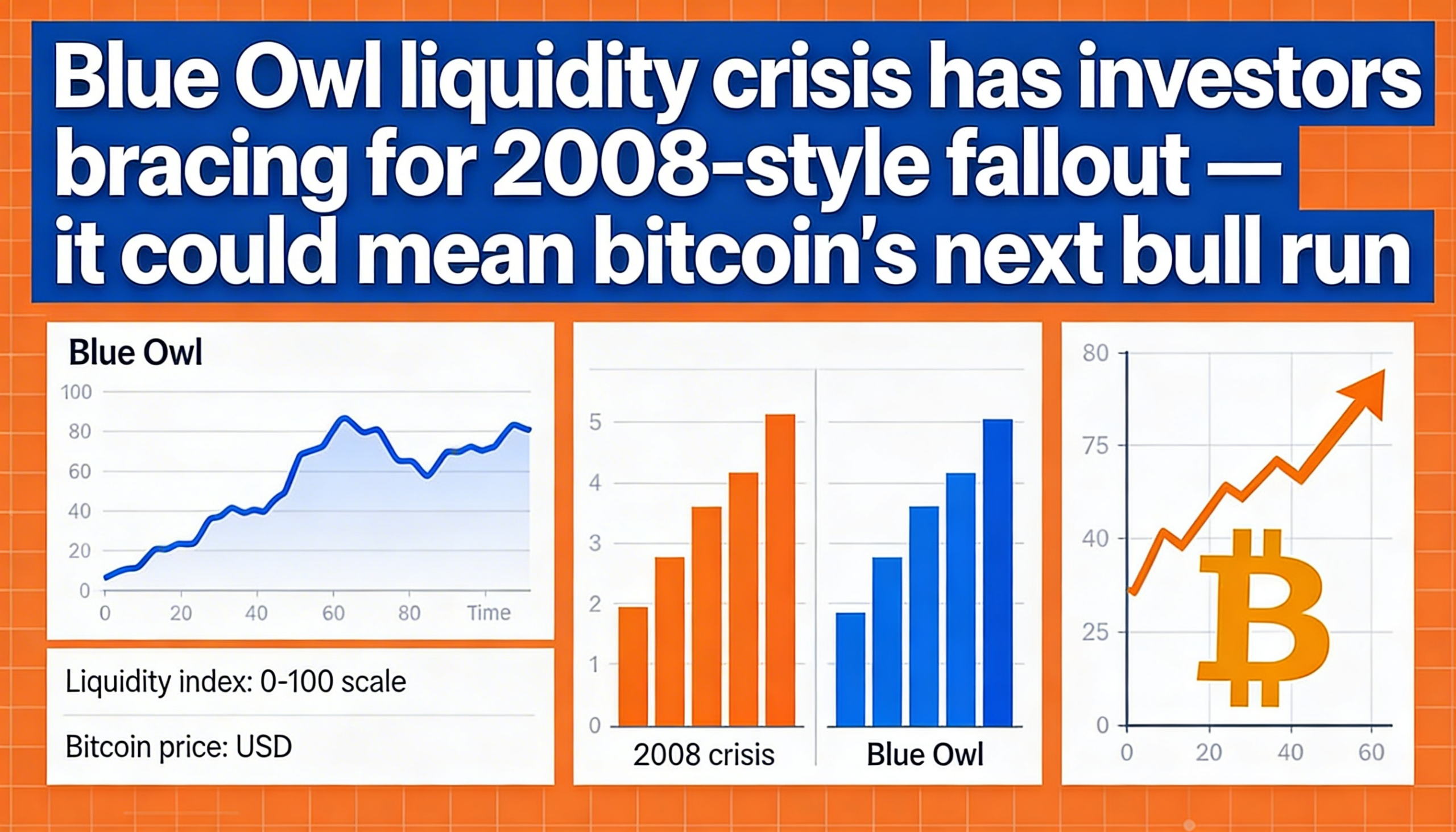
A sharp selloff in Blue Owl Capital (OWL) has put markets on alert after the firm said it would unload $1.4 billion in loans to satisfy redemption requests from investors in one of its retail-focused private credit funds. The stock fell nearly 15% on the week and is now down more than 50% year-over-year.
While major equity benchmarks have so far avoided broader contagion, weakness spread across the alternative asset management space. Shares of Blackstone, Apollo Global Management and Ares Management also logged notable declines, reflecting investor concern about potential stress in private credit markets.
Flashbacks to the early GFC
The episode has drawn comparisons to the early stages of the global financial crisis. In 2007, two Bear Stearns hedge funds collapsed after heavy exposure to subprime mortgage securities. Soon after, BNP Paribas froze withdrawals in several funds due to difficulties valuing U.S. mortgage assets — developments that preceded a full-blown credit freeze.
Mohamed El-Erian, former head of Pimco, questioned whether the Blue Owl situation could represent a “canary in the coal mine” moment. Still, he stressed that current risks do not appear to be on the same systemic scale as 2008. He also warned of potential excesses in artificial intelligence-related markets that could amplify fragility.
What it could mean for bitcoin
For Bitcoin investors, the implications are nuanced. Credit stress typically tightens financial conditions, which can initially pressure risk assets — crypto included.
Although bitcoin did not exist during the 2008 crisis, its performance during the early COVID-19 shock offers perspective. In March 2020, BTC plunged roughly 70% in a matter of weeks as global markets scrambled for liquidity.
However, once central banks intervened aggressively — particularly the Federal Reserve with trillions in stimulus — bitcoin rebounded sharply, climbing from under $4,000 to above $65,000 within about a year.
Born out of financial turmoil
The 2008 financial crisis directly influenced bitcoin’s creation. Introduced by the pseudonymous Satoshi Nakamoto, the digital currency was designed as a decentralized alternative to a banking system that required large-scale government rescues.
Bitcoin’s Genesis Block, mined on Jan. 3, 2009, famously included the headline: “Chancellor on brink of second bailout for banks,” referencing the U.K.’s crisis-era interventions.
Since then, bitcoin has evolved from a fringe experiment into a trillion-dollar asset class embraced by institutions. What began as an anti-establishment project is now increasingly embedded within the traditional financial system, with exchange-traded funds and corporate treasury allocations driving adoption.
A contained tremor or first domino?
Whether Blue Owl’s liquidity move proves to be an isolated adjustment or the start of broader stress in private credit remains to be seen. If strains escalate and trigger widespread monetary easing, bitcoin could once again benefit from a surge in liquidity — though likely after near-term volatility.
For now, markets are closely watching whether this episode fades quietly or signals deeper cracks in the global credit landscape.