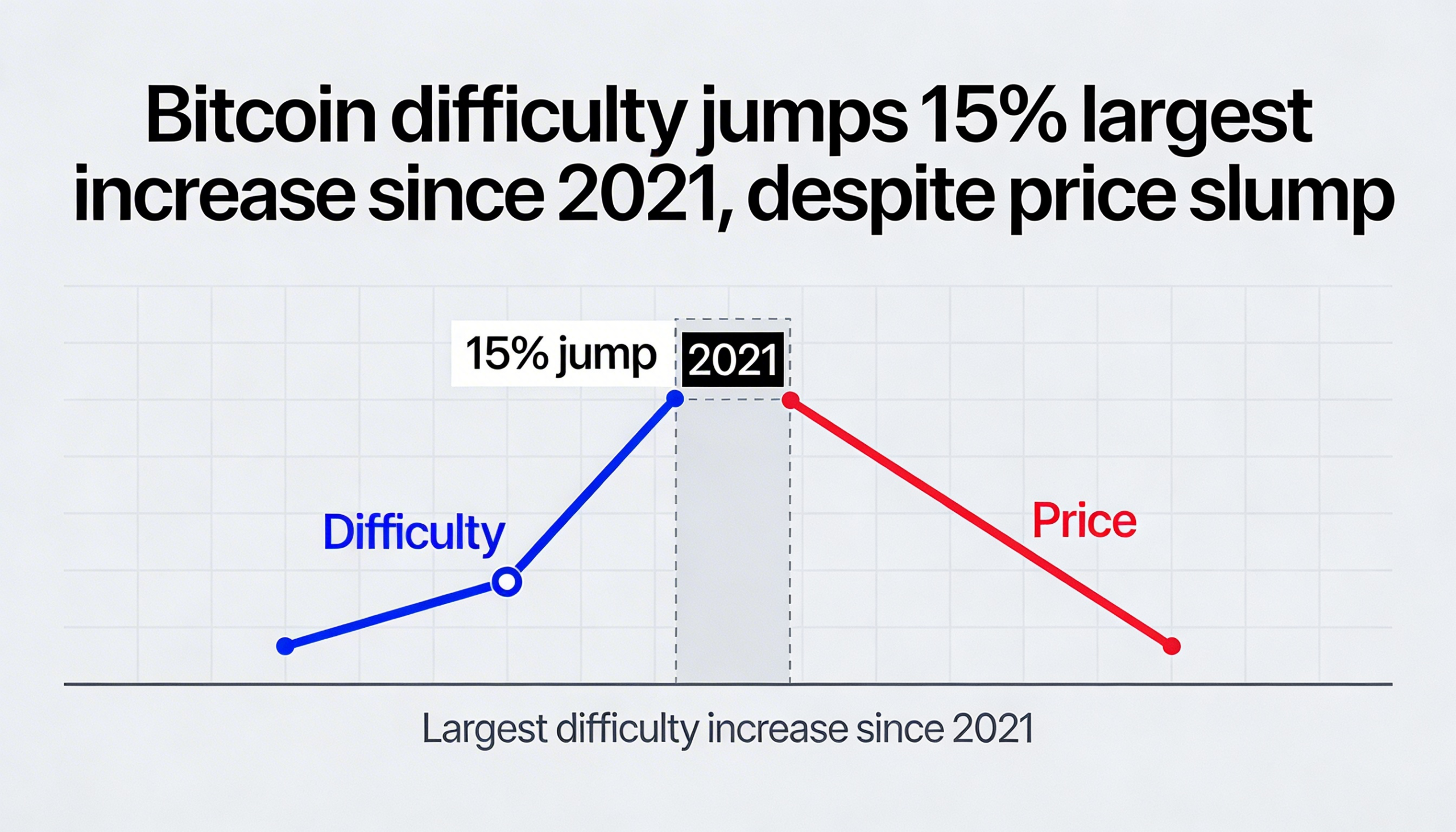
Bitcoin mining difficulty has jumped to 144.4 trillion in its latest adjustment, marking a 15% increase — the sharpest percentage rise since 2021. The move comes as network hashrate rebounds to 1 zettahash per second (ZH/s), even as miner revenues remain stuck near multi-year lows.
Difficulty, which measures how hard it is to mine a new block, automatically recalibrates every 2,016 blocks — roughly every two weeks — to keep block production close to Bitcoin’s 10-minute target. The latest upward revision follows a 12% decline in the previous period, triggered by a drop in overall computing power securing the network.
That earlier hashrate slump was the most pronounced since late 2021, when a severe winter storm in the United States forced several large mining operators to temporarily reduce output.
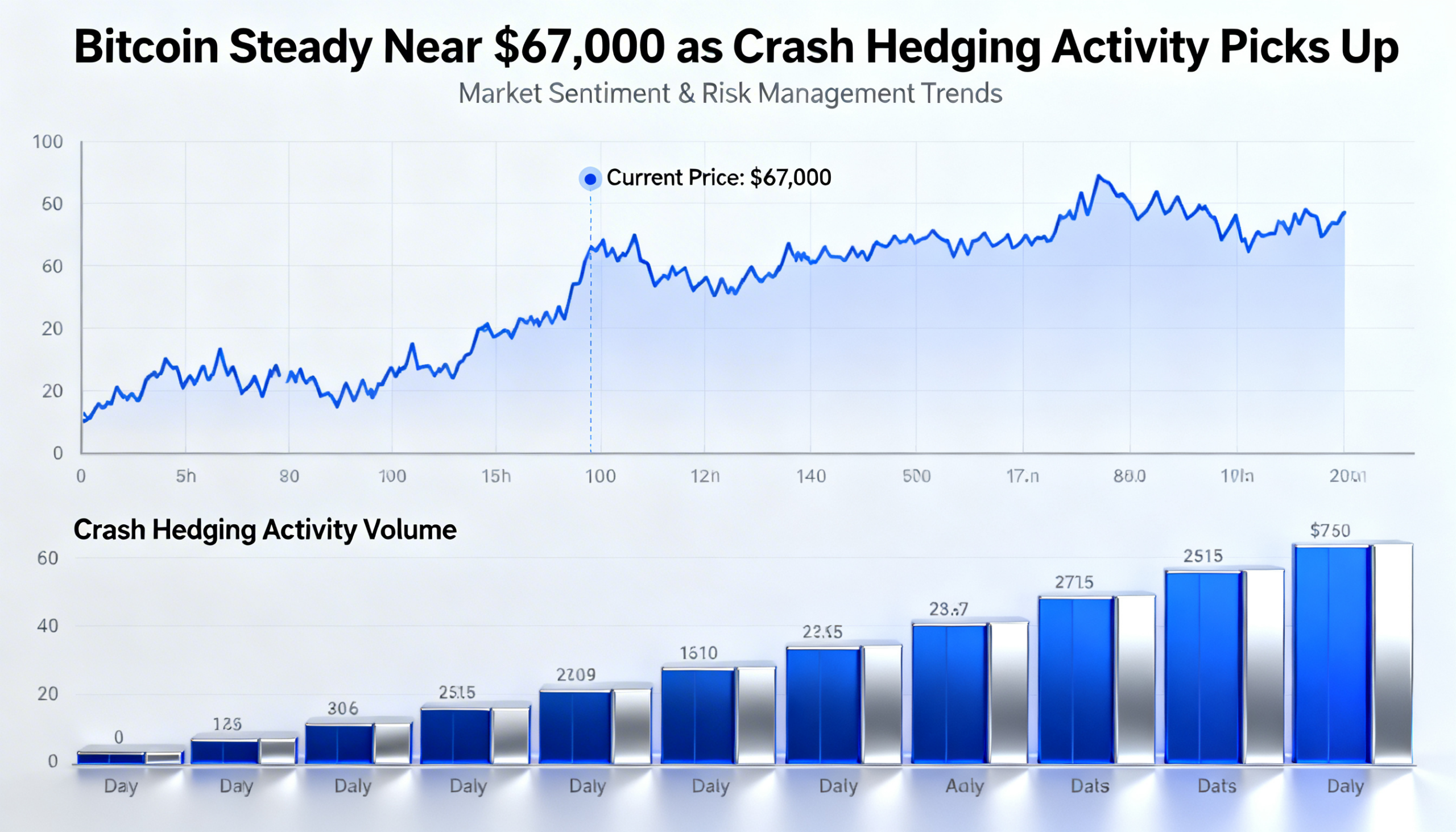
Network activity had previously reached record highs in October, when bitcoin traded near $126,500 and hashrate peaked at 1.1 ZH/s. As prices later fell to around $60,000 in February, computing power declined to 826 exahash per second (EH/s). Since then, hashrate has recovered to 1 ZH/s, alongside a price rebound toward $67,000.
Despite the improvement in network strength, profitability remains under strain. Hashprice — the estimated daily revenue miners earn per unit of hashrate — is hovering around $23.9 per petahash per second (PH/s), one of the weakest readings in years.
Still, major operators with access to low-cost energy continue to mine aggressively. The United Arab Emirates is estimated to be sitting on roughly $344 million in unrealized gains from its mining operations, highlighting how well-capitalized players can withstand margin pressure.
These efficient, large-scale miners are helping keep the network resilient, maintaining elevated hashrate levels even during periods of softer bitcoin prices.
At the same time, the industry is undergoing structural change. Part of the recent softness in hashrate has been linked to publicly listed mining firms reallocating energy and computing resources toward artificial intelligence (AI) and high-performance computing (HPC) data centers.
Bitfarms (BITF) recently rebranded to distance itself from a pure bitcoin mining identity as it increases its focus on AI infrastructure. Meanwhile, activist investor Starboard has urged Riot Platforms (RIOT) to expand further into AI data center operations, underscoring a broader diversification trend across the sector.