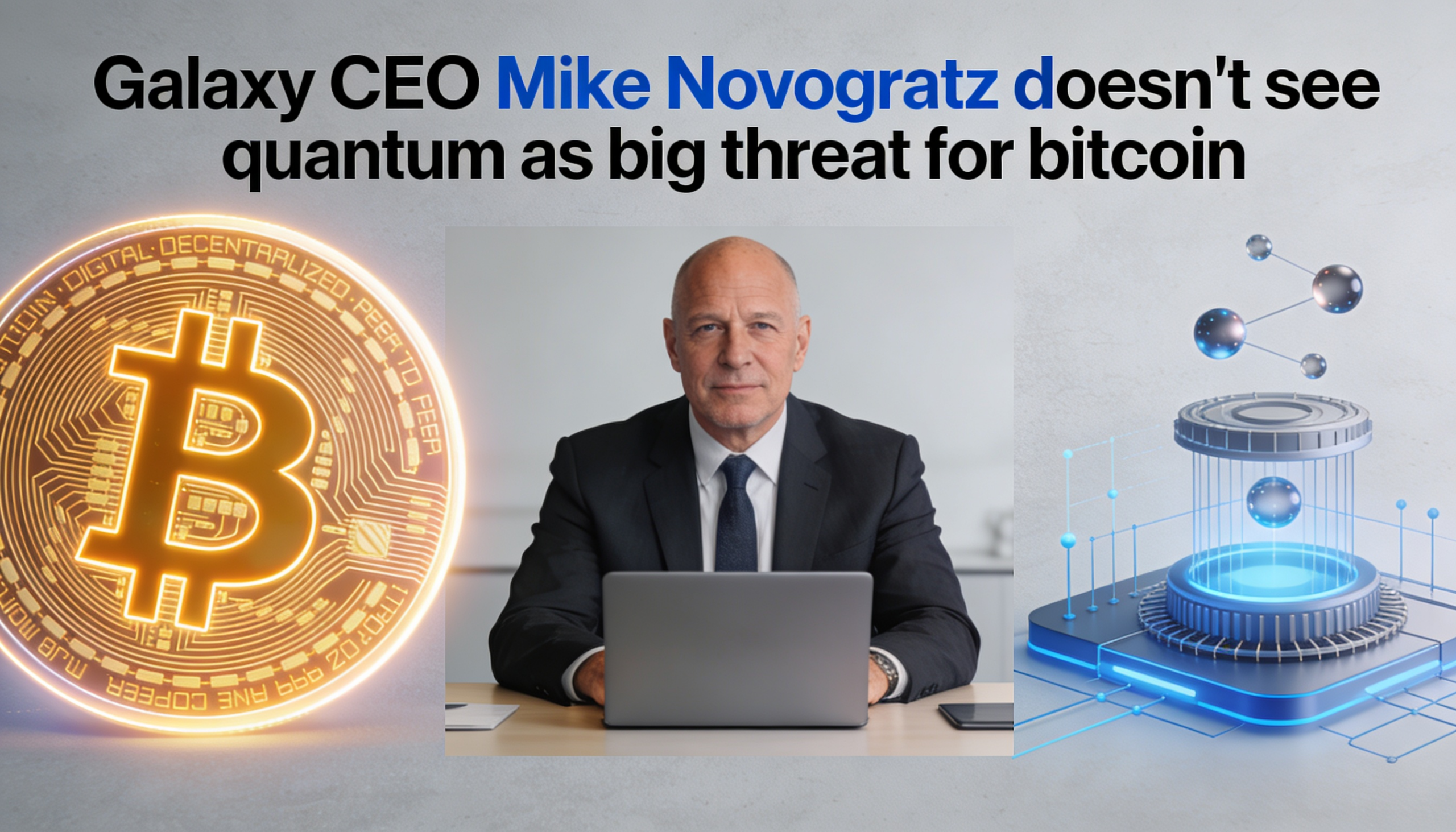
Galaxy Digital CEO Mike Novogratz says early Bitcoin holders are increasingly locking in gains, a development he sees as evidence that the long-held “HODL” ethos is losing its grip on the market.
During Galaxy’s earnings call on Tuesday, Novogratz pushed back against mounting fears that quantum computing poses an imminent threat to Bitcoin, suggesting the narrative has instead become a convenient rationale for investors looking to sell.
“Quantum has been the big excuse,” Novogratz said, arguing that while the technology could eventually have sweeping implications, Bitcoin is well positioned to adapt. “In the long run, quantum won’t be a huge issue for crypto. It’ll be a big issue for the world, but crypto—Bitcoin especially—will be able to handle it.”
Concerns over quantum computing and cryptographic security have intensified recently. Last month, Jefferies’ global head of equity strategy Christopher Wood dropped a 10% Bitcoin allocation from his model portfolio, citing quantum-related risks. Coinbase has also flagged quantum computing as a potential long-term threat, while the Ethereum Foundation elevated post-quantum security to a strategic priority this month by launching a dedicated team.
Novogratz emphasized that quantum technology remains far from maturity and said Bitcoin’s open-source architecture gives the network ample time to evolve. “As we get closer to quantum, we’ll also get closer to quantum-resistant,” he said. “The Bitcoin code will be updated well before it becomes an issue.”
Some Bitcoin developers have echoed that view, noting that machines capable of breaking Bitcoin’s cryptography do not exist today and are unlikely to for decades. Even so, the debate has unsettled some investors, particularly those focused on Bitcoin’s long-term store-of-value narrative.
Early adopters sell
Novogratz also addressed speculation around whether long-term Bitcoin holders—often referred to as “OGs”—are reducing their exposure.
The discussion intensified last year after Galaxy revealed it had facilitated the sale of more than 80,000 bitcoin, valued at roughly $9 billion at the time, for a Satoshi-era investor. The firm said the transaction, one of the largest in Bitcoin’s history, was part of the seller’s estate planning process.
That disclosure reignited questions about whether early adopters, long known for holding through extreme volatility, are starting to rethink their commitment. Novogratz said profit-taking among these investors is real and tends to snowball once it begins.
“You sell a little more, then a little more,” he said. “It becomes very hard to keep HODLing.”
“There was a period when people were almost religious about never selling Bitcoin,” Novogratz added. “That mindset has softened, and you’re seeing the impact now.”