A senior executive at BlackRock said even a minimal portfolio shift toward digital assets in Asia could translate into trillions of dollars in potential inflows.
Speaking at Consensus in Hong Kong, Nicholas Peach, head of APAC iShares, pointed to the rapid institutional embrace of crypto exchange-traded funds (ETFs) and the sheer scale of capital held within traditional financial systems across the region.
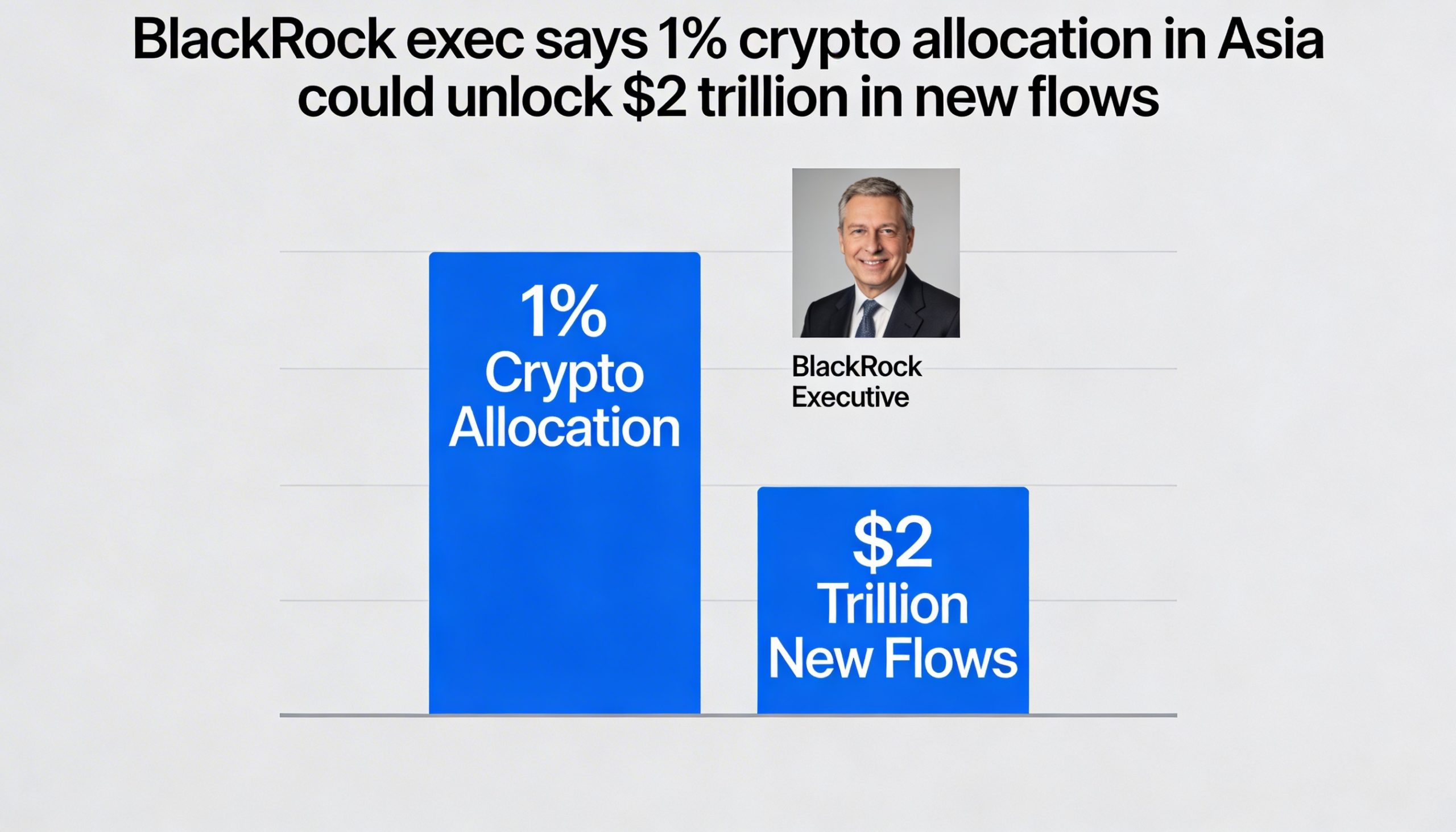
Peach noted that some model portfolio advisors have begun incorporating a 1% allocation to cryptocurrencies in diversified investment strategies. With roughly $108 trillion in household wealth across Asia, such a move would equate to nearly $2 trillion in prospective flows — a figure that would represent a substantial portion of the current crypto market’s size.
He framed the calculation as a way to illustrate the magnitude of sidelined capital. Even a conservative adjustment to asset allocation models, he argued, could have an outsized impact on the evolution of digital asset markets.
BlackRock’s iShares platform, the world’s largest ETF provider, has been instrumental in bringing regulated crypto exposure to mainstream investors. In January 2024, the firm introduced the iShares Bitcoin Trust (IBIT) in the U.S., which quickly became the fastest-growing ETF on record and now oversees approximately $53 billion in assets.
According to Peach, interest in crypto ETFs extends well beyond the United States. Asian investors have represented a meaningful share of inflows into U.S.-listed crypto products. More broadly, ETF adoption across Asia has accelerated, with investors increasingly using the structure to gain exposure to equities, fixed income, commodities, and digital assets.
Regional financial centers such as Hong Kong, Japan, and South Korea are moving to launch or expand crypto ETF offerings as regulatory clarity improves. Industry participants expect those local ecosystems to deepen over time.
For BlackRock and other asset managers, Peach said the next phase involves pairing broader product access with investor education and thoughtful portfolio integration.
“The pools of capital in traditional finance are incredibly large,” he said, adding that even modest adoption could deliver significant financial impact.