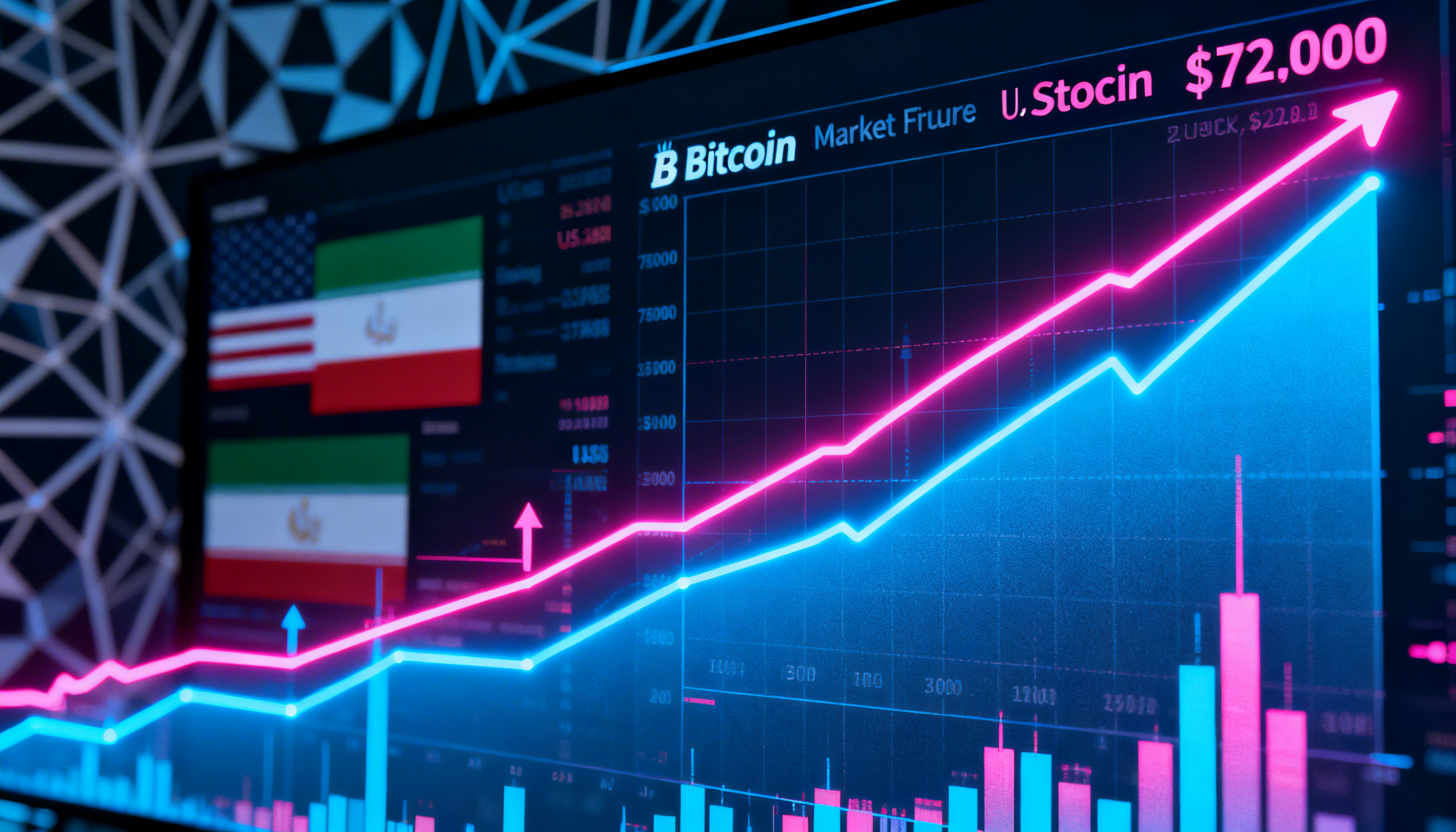
Bitcoin’s (BTC) next move is increasingly tied to oil, with macro dynamics overshadowing crypto-specific drivers.
The asset has rebounded to around $70,900 from lows near $67,000 earlier in the week, tracking a broader risk-on shift after the U.S.-Iran ceasefire pushed crude prices down roughly 15% to below $100 per barrel.
But momentum remains fragile. Bitcoin has repeatedly crossed above $70,000 in recent weeks only to stall, suggesting the market is still searching for a stronger catalyst.
According to analysts at Bitfinex, that catalyst may come from oil. A sustained 15%–16% drop in crude could accelerate expectations for rate cuts, prompting markets to price in looser monetary policy—a supportive backdrop for assets like bitcoin.
Lower energy prices would also help ease inflation pressures, potentially giving the Federal Reserve more room to pivot later this year.
Positioning data points to a potential upside trigger if that scenario plays out. A large cluster of leveraged short positions sits just above current levels, creating the conditions for a squeeze.
“About $6 billion in shorts are concentrated between $72,200 and $73,500, with peak density near $72,500,” said Adam Saville Brown of Tesseract Group. “A move through that range could trigger liquidations and accelerate a push toward $80,000.”
For now, however, markets are not fully pricing in rate cuts. Elevated energy costs risk keeping inflation sticky, which could leave the Fed holding rates around 3.5% for longer.
At the same time, the geopolitical backdrop is shifting again. The ceasefire that drove the recent rally is already showing signs of strain, with renewed tensions in the region and fresh disruptions to tanker traffic through the Strait of Hormuz.
That leaves oil vulnerable to another spike—an outcome that could quickly reverse sentiment.
“If talks collapse and oil pushes back above $100, we’re essentially back to a risk-off environment,” Brown said.
Bitfinex analysts added that crude could climb toward $120 if the Strait remains closed, further delaying any prospects of monetary easing.
With the ceasefire limited to a two-week window, markets are effectively facing a binary outcome. The direction of oil—and its impact on inflation and rate expectations—may ultimately decide bitcoin’s next major move.