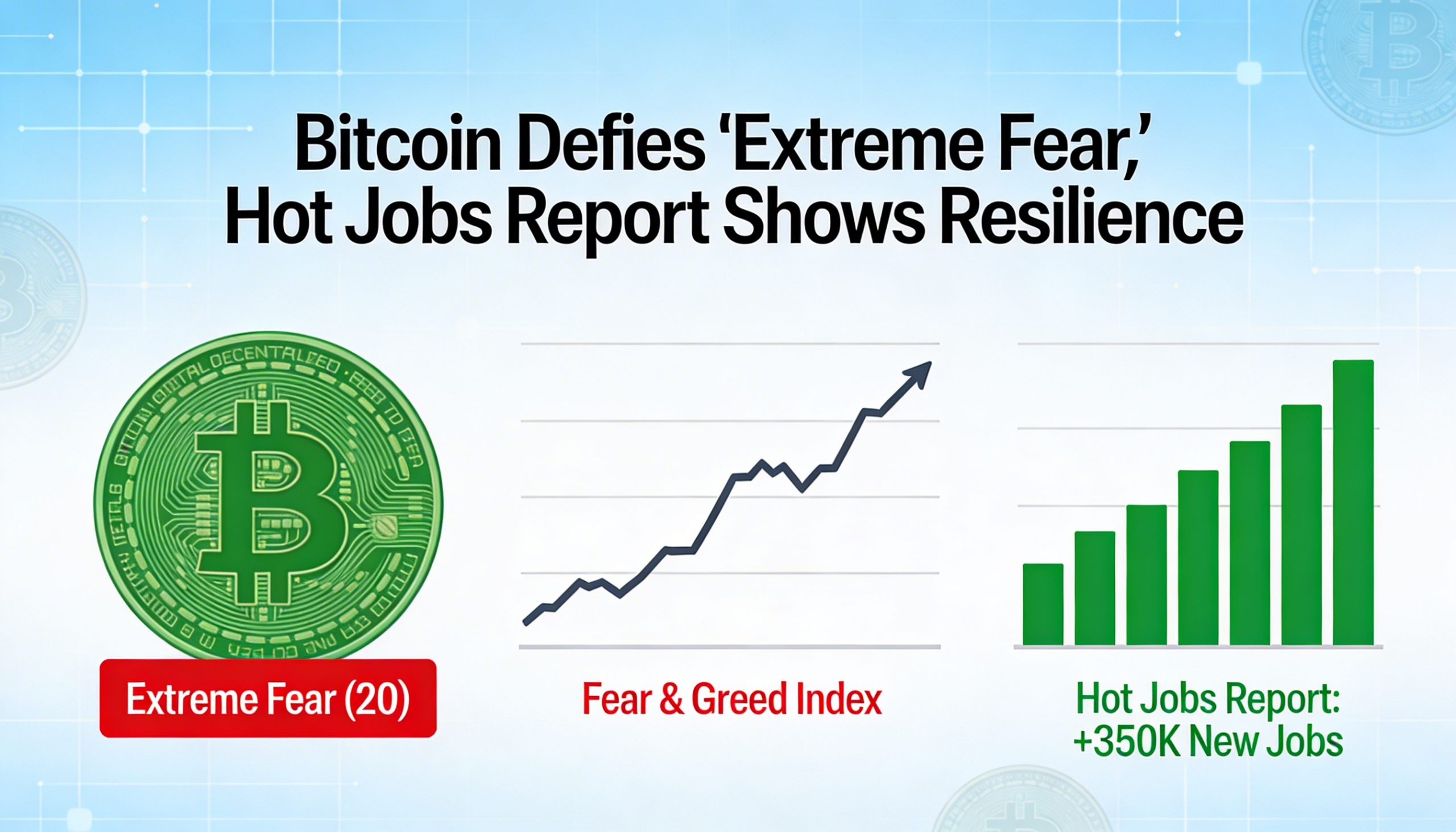
Bitcoin moved higher after January’s U.S. labor report exceeded expectations, with traders looking past the headline strength to signs of uneven hiring beneath the surface.
The cryptocurrency was trading around $67,800, up on the session, as markets digested the stronger-than-forecast payrolls print without a pronounced risk-off reaction. The muted response suggests selling pressure may be losing steam, even as the broader macro backdrop remains tight.
The U.S. added 130,000 jobs in January, nearly double the consensus estimate of 70,000. The upside surprise dampened expectations for a near-term interest rate cut from the Federal Reserve, with markets now pricing potential easing closer to midyear.
Typically, fading rate-cut hopes would weigh on speculative assets such as crypto. However, a closer look at the data showed job growth was concentrated primarily in health care and a narrow set of related industries, while most other sectors were little changed. That detail indicates the strong headline figure may be masking broader cooling trends in the economy.
Bitcoin’s ability to remain firm contrasts with extremely weak sentiment indicators. The Crypto Fear & Greed Index has fallen to 5, its lowest reading since the 2022 collapse of FTX, underscoring the divergence between depressed investor mood and relatively stable price action.
Futures and options positioning
Derivatives data points to stabilizing bearish momentum. Open interest remains near $15.8 billion, and perpetual funding rates have rotated back toward neutral or slightly positive territory.
Funding trends are strongest on Bybit and Binance, while Hyperliquid continues to reflect comparatively cautious positioning. Meanwhile, the three-month futures basis sits around 2%, suggesting institutional investors have yet to meaningfully increase conviction alongside the more retail-driven funding shift.
In the options market, defensive hedging remains elevated. The one-week 25-delta skew slipped to 19%, with puts accounting for 54% of 24-hour trading volume. Implied volatility has shifted into short-term backwardation, signaling that traders are paying a premium for near-term downside protection.
Coinglass data shows $342 million in liquidations over the past day, split almost evenly between long and short positions. Bitcoin led the tally, followed by ether and other tokens. Binance’s liquidation heatmap flags $68,800 as a key level that could trigger additional forced buying if prices break higher.
BlackRock expands into DeFi
Separately, BlackRock is deepening its involvement in decentralized finance by listing its $2.2 billion tokenized U.S. Treasury fund, BUIDL, on Uniswap. The move allows DeFi participants to access tokenized Treasury yields directly through the decentralized exchange.
The listing marks the first time the asset management giant has launched a tokenized product on a decentralized platform. BlackRock also disclosed a strategic investment in Uniswap and acquired an undisclosed amount of UNI, the protocol’s governance token.
UNI initially surged on the news before paring gains, reflecting heightened investor interest. The development appears to represent the first direct investment in a DeFi governance token by a major traditional financial institution.
To execute the rollout, BlackRock collaborated with Uniswap Labs and compliance firm Securitize. BUIDL trades will be processed via UniswapX, an offchain quoting system that sources prices from approved market makers before settling transactions onchain.
Access to the fund is restricted to qualified investors vetted by Securitize to ensure compliance with U.S. securities laws.