Bitcoin markets grew markedly calmer in 2025 as institutional investors increasingly used derivatives to generate yield from their holdings, putting sustained downward pressure on implied volatility.
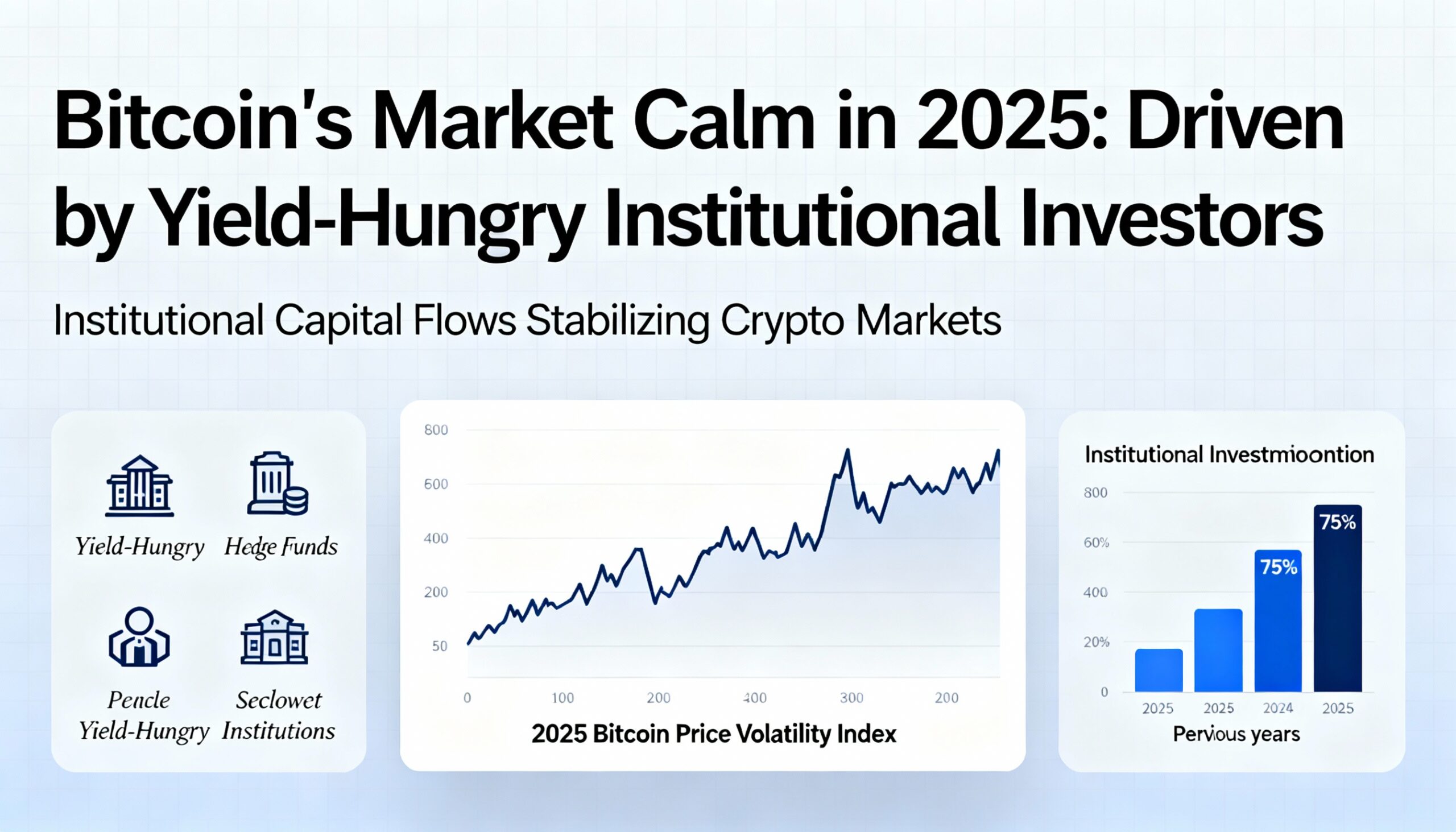
The trend is visible in key options-based benchmarks such as Volmex’s BVIV and Deribit’s DVOL, which track expected price swings over the next 30 days. Both indices began the year around 70% and are set to finish near 45%, after dipping to lows of roughly 35% in September. Analysts attribute this steady decline to structural changes in how bitcoin exposure is being managed.
A central factor has been the widespread adoption of covered call strategies by institutions holding spot bitcoin or spot bitcoin ETFs. By selling call options against their holdings, investors collect upfront premiums while capping upside beyond the strike price — a strategy that has proved effective during periods of muted price movement.
“We saw a structural decline in BTC implied volatility as institutional capital increased and more participants harvested yield through upside call selling,” said Imran Lakha, founder of Options Insights, in a post on X.
Options give investors the right, but not the obligation, to buy or sell bitcoin at a predetermined price before expiration. Calls reflect bullish bets, while puts are generally used to hedge downside risk. For sellers, the structure resembles selling lottery tickets: premiums are collected upfront, and most options expire worthless, generating steady income over time.
Large institutional holders have leaned heavily on selling out-of-the-money calls, which require substantial rallies to pay off. In range-bound markets, this approach has produced a consistent source of incremental yield.
The volume of call selling has created a steady supply of options, driving implied volatility lower across the curve. Jake Ostrovskis, head of Wintermute’s OTC desk, noted that over 12.5% of all mined bitcoin is now held in ETFs and corporate treasuries — assets that generate no native yield.
“With no intrinsic yield, call overwriting emerged as the dominant flow in 2025, applying sustained supply-side pressure on implied volatility,” Ostrovskis said in a note to CoinDesk.
Hedged longs reshape the market
Institutional participation has also transformed the structure of the bitcoin options market. Throughout 2025, put options — commonly used for downside protection — traded at a premium to calls across both short- and long-dated maturities.
This persistent put skew represents a shift from prior years, when longer-dated options typically showed a bullish call bias. Rather than signaling bearish sentiment, the change reflects sophisticated investors pairing long positions with hedges.
“The demand for downside protection and pressure on upside, typical of institutional activity, shifted the market from call skew to put skew across the term structure,” Lakha said. “It’s a sign that real money is long and hedged — not necessarily bearish.”
Combined, the rise of yield-focused options strategies and widespread hedging has tempered bitcoin’s volatility, contributing to a more mature, institutionally influenced market as 2025 comes to a close.