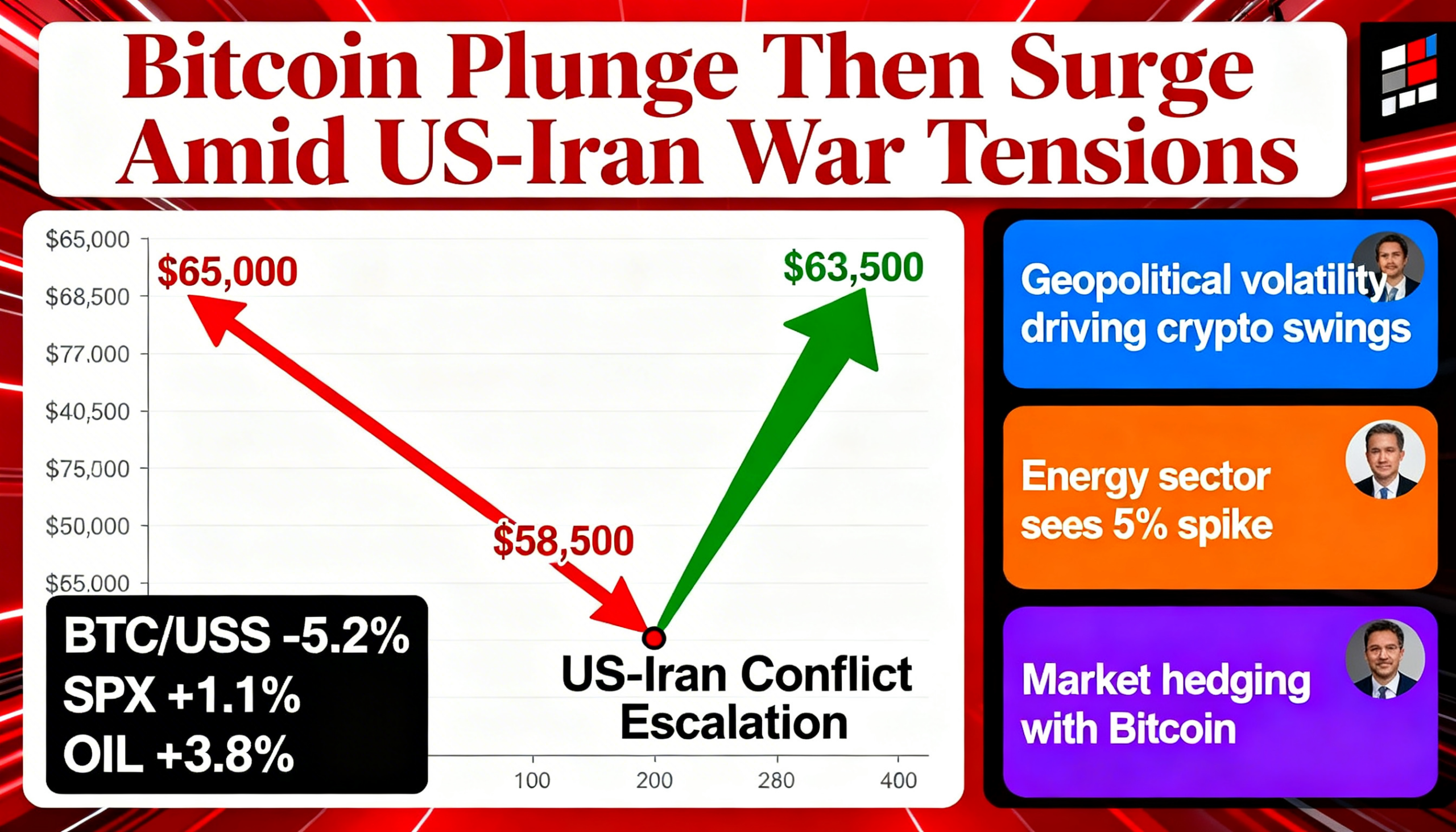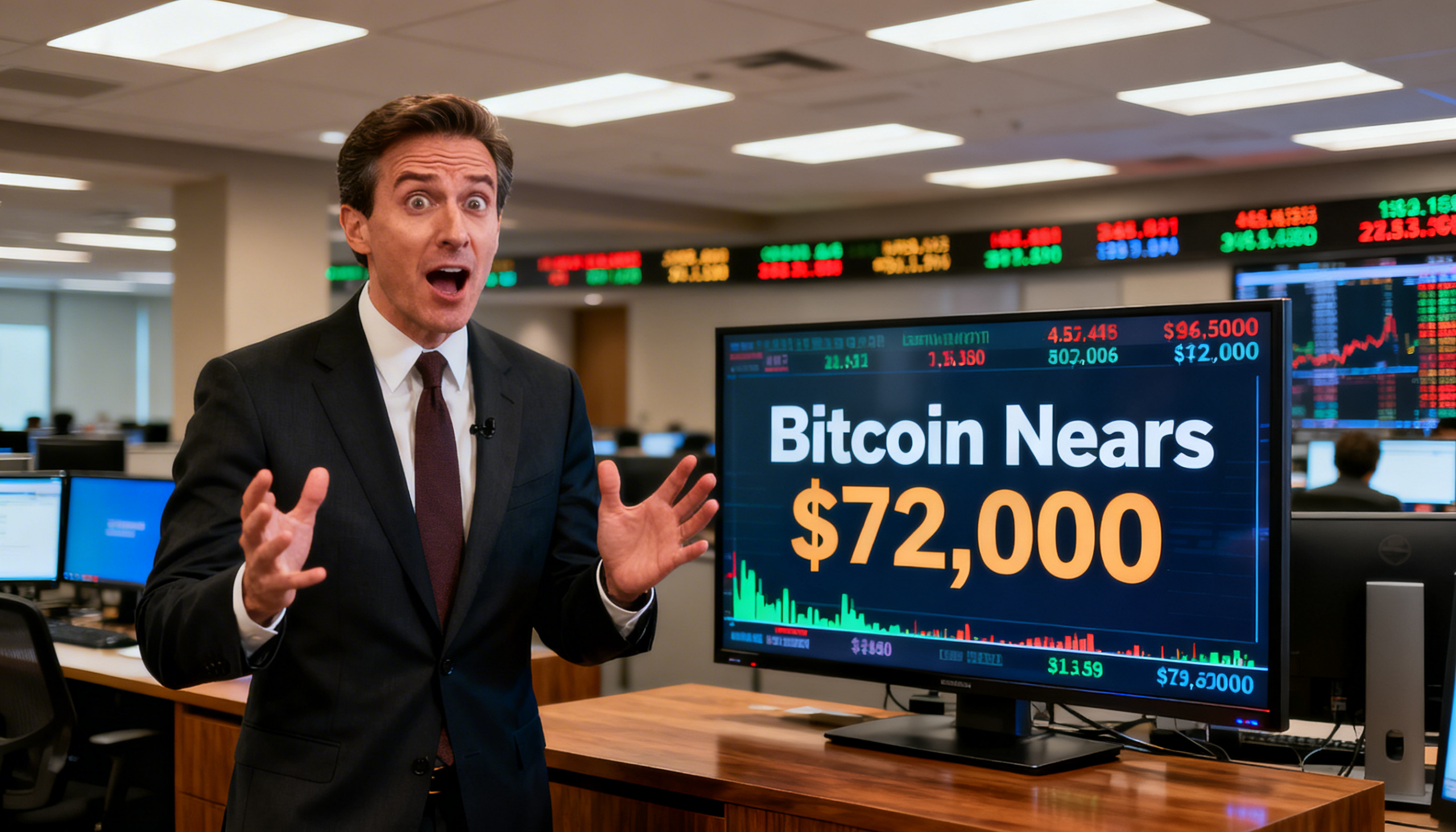
Bitcoin briefly pushed above the $74,000 level on Monday, breaking through a resistance zone that had capped gains multiple times over the past two weeks before pulling back slightly.
The largest cryptocurrency was trading just above $74,000 during Monday morning hours, up roughly 2.9% in the past 24 hours and about 9.7% over the week. The broader digital asset market also advanced alongside bitcoin.
Ethereum posted one of the strongest gains among major tokens, rising 7.7% in the past day and 14.3% over the week to around $2,261. Solana climbed 5.6% in 24 hours and about 12% on the week to trade near $93.
Other major cryptocurrencies followed the move higher. Dogecoin reached $0.10 for the first time since early March after gaining 4.6% over the day and 10.6% for the week. BNB advanced 3.8% to about $683, bringing its weekly rise to 9.5%, while XRP added 4.2% to roughly $1.47, up 8.9% over the past seven days.
Part of the rally appears to have been driven by a short squeeze in derivatives markets. Data from CoinGlass shows about $344 million in liquidations over the past 24 hours across nearly 92,000 traders. Short positions accounted for around $284.9 million, or roughly 83% of the total.
Short sellers in ether faced the largest losses with $127.9 million in liquidations, followed by bitcoin at $124.5 million and solana at $18.5 million. The biggest single liquidation was a $6.94 million bitcoin position on Bitfinex.
While forced short covering helped accelerate the move, the breadth of gains across altcoins and the macro backdrop suggest broader buying interest.
The rally coincided with several geopolitical developments that eased market concerns. Donald Trump said the United States was in talks with Iran, though Tehran denied requesting negotiations or a ceasefire. Meanwhile, Abbas Araghchi said the Strait of Hormuz remained closed only to vessels belonging to “enemies,” softening earlier statements that suggested a full shutdown.
Two tankers carrying liquefied petroleum gas to India also passed through the strait on Sunday, marking the first commercial transit since the conflict began.
Energy markets reflected the shift in sentiment. Brent crude traded near $104 after earlier reaching as high as $106.50 following strikes on Kharg Island, while West Texas Intermediate slipped below $100. The U.S. dollar weakened by about 0.3%.
At the same time, S&P 500 futures rose roughly 0.5%, setting the index up for its first gain in five sessions, while the MSCI World Index stabilized after three days of declines.
For crypto markets, the combination of softer oil prices, a weaker dollar and tentative signs of de-escalation has improved the macro environment that had weighed on risk assets since the conflict began.
Weekly performance highlights the shift in sentiment. Bitcoin’s roughly 9.7% weekly gain is notable, but stronger advances in altcoins suggest investors are beginning to take on more risk. Ether’s weekly performance exceeded bitcoin’s by about 4.6 percentage points, while solana outpaced it by roughly 2.3 points.
Attention now turns to the upcoming meeting of the Federal Reserve scheduled for March 17–18. Although oil prices remain elevated, signs that the Strait of Hormuz may be reopening could affect inflation expectations.
Investors will be watching the Fed’s updated projections and comments from Jerome Powell to gauge whether expectations for future interest-rate cuts remain intact or face renewed uncertainty.