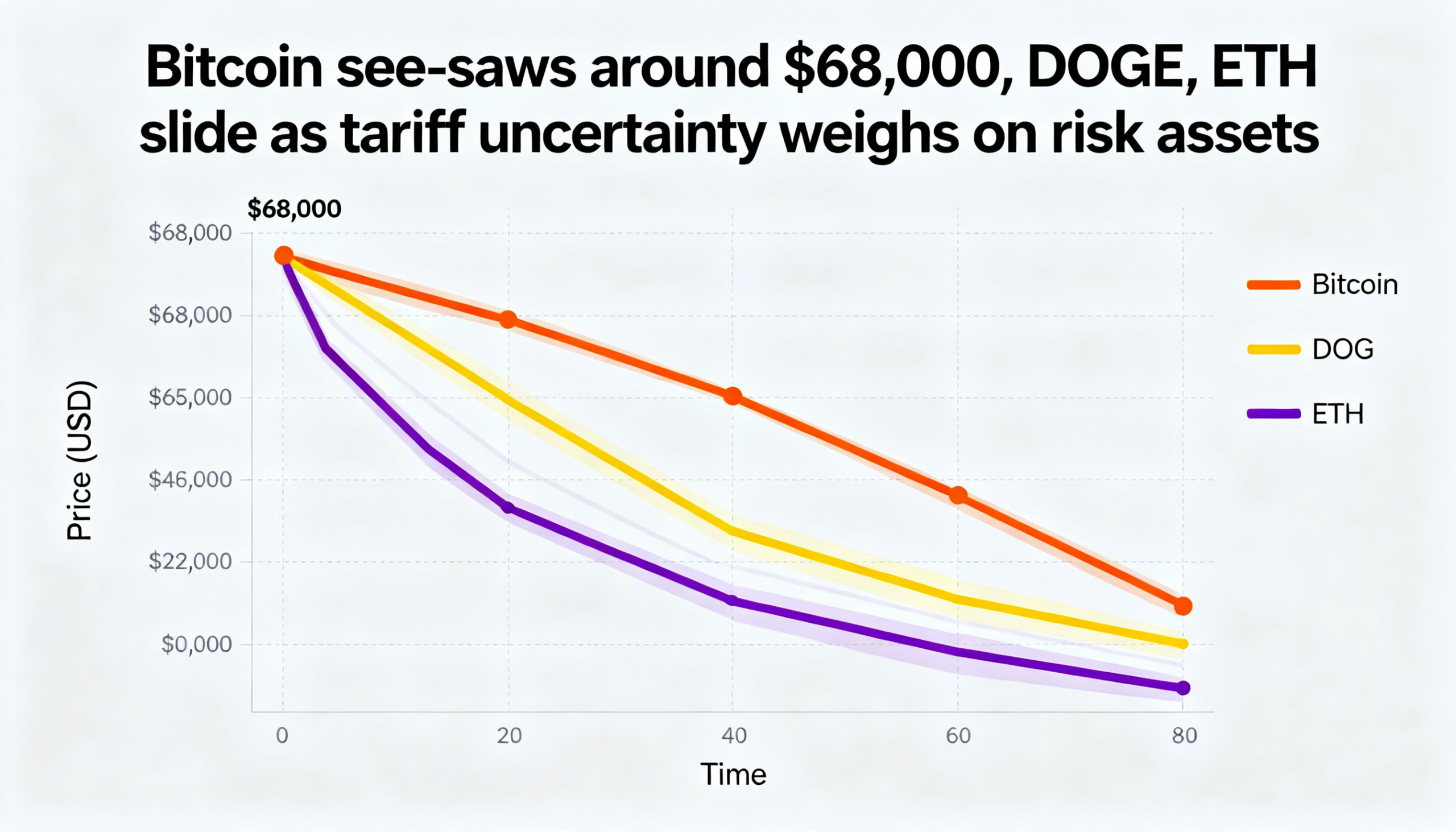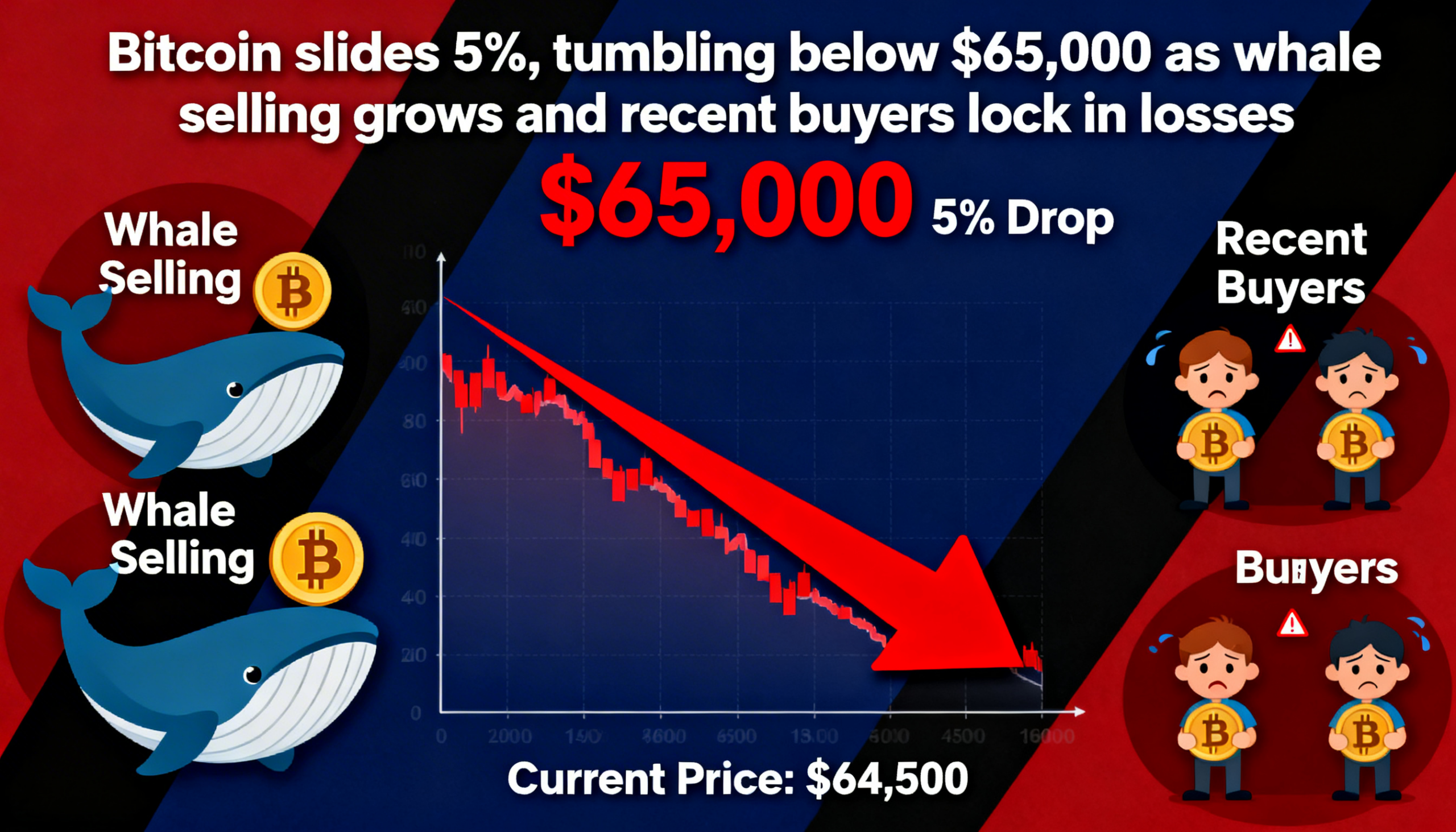
Bitcoin started the week under renewed selling pressure, falling 5% over the past 24 hours to change hands near $64,700. The decline comes alongside weakness in U.S. equity futures — with Nasdaq 100 contracts down 0.9% — while traditional safe havens rally. Gold has climbed 2% and silver is up 5.6%.
The latest drop follows a weekend rejection around $67,000 and arrives as on-chain indicators from Glassnode and CryptoQuant suggest that although the sharpest wave of panic selling has subsided, the market’s broader structure remains vulnerable.
Short-term holders still capitulating
Glassnode data shows that short-term bitcoin holders were locking in steep losses earlier this month. A seven-day smoothed measure of their net realized profit and loss plunged to negative $1.24 billion per day on Feb. 6, indicating that newer market participants were collectively selling more than $1 billion at a loss each day.
That figure has since improved to approximately negative $480 million per day. The slowdown signals that capitulation has eased, but short-term investors remain underwater on balance — a dynamic typically seen during bottoming phases rather than sustained rallies.
Whale-driven exchange inflows
CryptoQuant’s exchange metrics point to a moderation in overall selling intensity but a shift in who is selling. During the early-February decline toward $60,000, bitcoin inflows to exchanges surged to around 60,000 BTC per day. On a seven-day smoothed basis, that number has since dropped to roughly 23,000 BTC.
However, CryptoQuant’s exchange whale ratio has climbed to 0.64, its highest level since 2015. This indicates that nearly two-thirds of bitcoin flowing to exchanges now comes from the 10 largest daily deposits — a sign that large holders are dominating supply.
The average deposit size has also risen to levels last seen in mid-2022, reinforcing the view that whales, rather than smaller retail traders, are driving exchange activity.
Altcoins are experiencing broader distribution as well. Average daily altcoin deposits to exchanges have increased to about 49,000 so far in 2026, up from roughly 40,000 in the fourth quarter of 2025. Historically, elevated altcoin inflows have coincided with higher volatility and softer risk appetite.
Liquidity backdrop weakens
Liquidity signals are deteriorating. Net USDT inflows to exchanges have fallen sharply from a one-year peak of $616 million in November to just $27 million, briefly turning negative in late January. Stablecoin inflows typically expand during bullish phases; their contraction suggests diminished marginal buying power.
Taken together, the Glassnode and CryptoQuant data depict a market that has endured a capitulation event but has not yet rebuilt robust demand. As the week unfolds, attention centers on whether $65,000 can hold as near-term support — or whether bitcoin remains in an extended base-building phase.