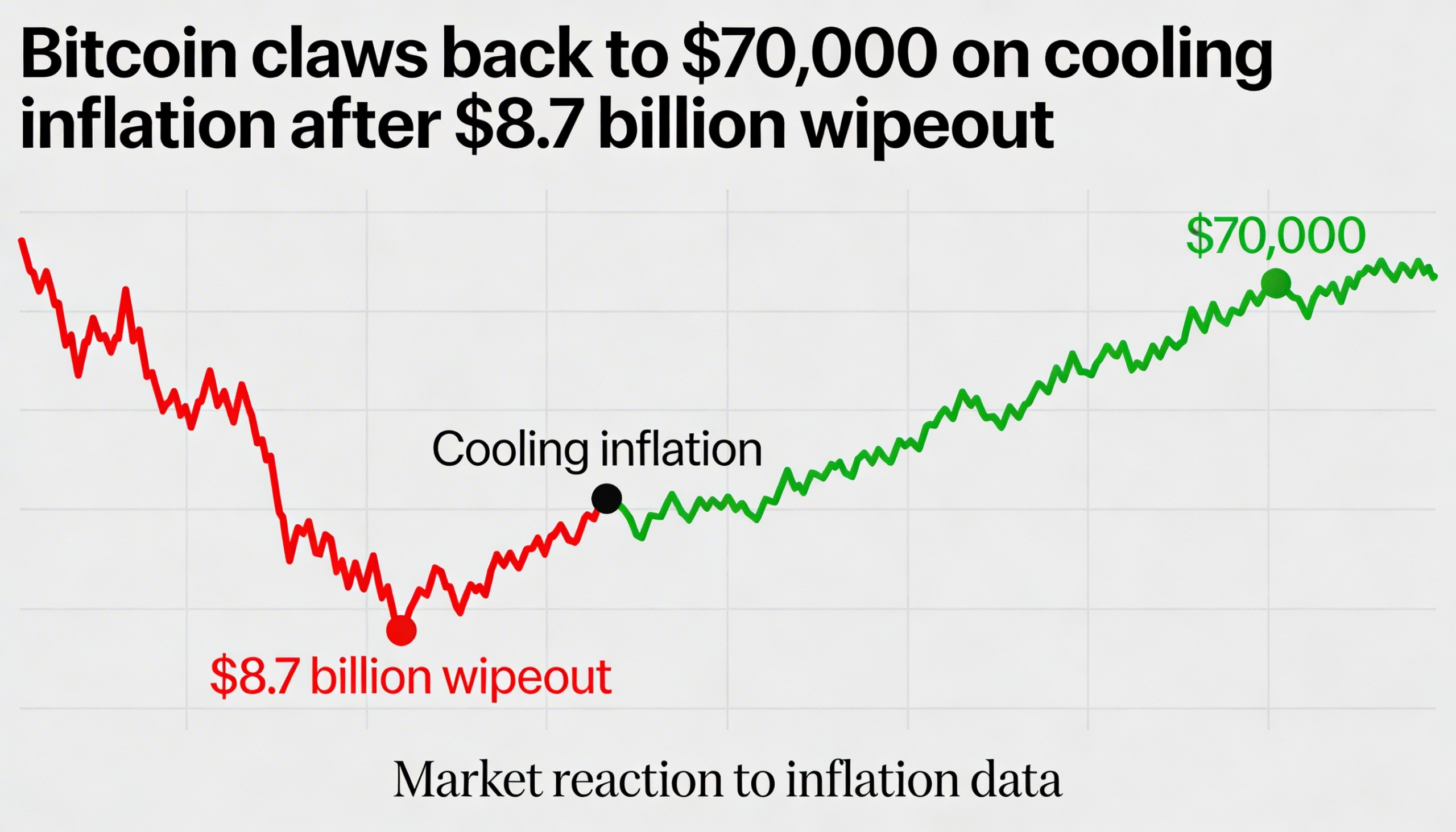
Bitcoin has climbed back above $70,000 after falling to nearly $60,000 earlier this month, gaining around 5% in the past 24 hours. The broader CoinDesk 20 (CD20) advanced 6.2% over the same timeframe, reflecting a broad-based recovery in digital assets.
The move higher followed a cooler-than-expected U.S. inflation report. January’s Consumer Price Index rose 2.4% year over year, slightly below the 2.5% consensus forecast, boosting hopes that interest rate cuts could come sooner than markets had anticipated. Lower rates typically support risk assets by reducing yields on safer investments.
Rate-cut expectations have shifted on prediction platforms. Traders on Kalshi now see a 26% chance of a 25-basis-point cut in April, up from 19% earlier in the week. On Polymarket, the implied odds increased from 13% to 20%.
Yet sentiment indicators show caution persists. The Crypto Fear & Greed Index remains lodged in “extreme fear,” levels last seen during the 2022 bear market following the collapse of FTX. The index has stayed in that zone since the start of the month, signaling continued unease among investors.
According to analysts at Bitwise Asset Management, approximately $8.7 billion in bitcoin losses were realized over the past week — second only to the sell-off tied to the downfall of Three Arrows Capital. The firm characterized the episode as a potential capitulation event, noting that such periods often involve coins moving from short-term holders to longer-term investors, a dynamic that can precede stabilization.
At the height of the downturn, bitcoin treasury firms were facing more than $21 billion in unrealized losses, a record high. As prices rebounded, that total has fallen to about $16.9 billion.
Thin weekend liquidity and signs of seller exhaustion appear to be supporting the latest rally. Still, fear remains a dominant theme. As Bitwise research analyst Danny Nelson told CoinDesk, the market’s primary driver at present is concern that prices could decline further.
That anxiety has prompted some investors to treat rebounds as opportunities to trim positions. Whether the ongoing shift toward higher-conviction holders will ultimately stabilize the market or if renewed selling pressure emerges remains uncertain.