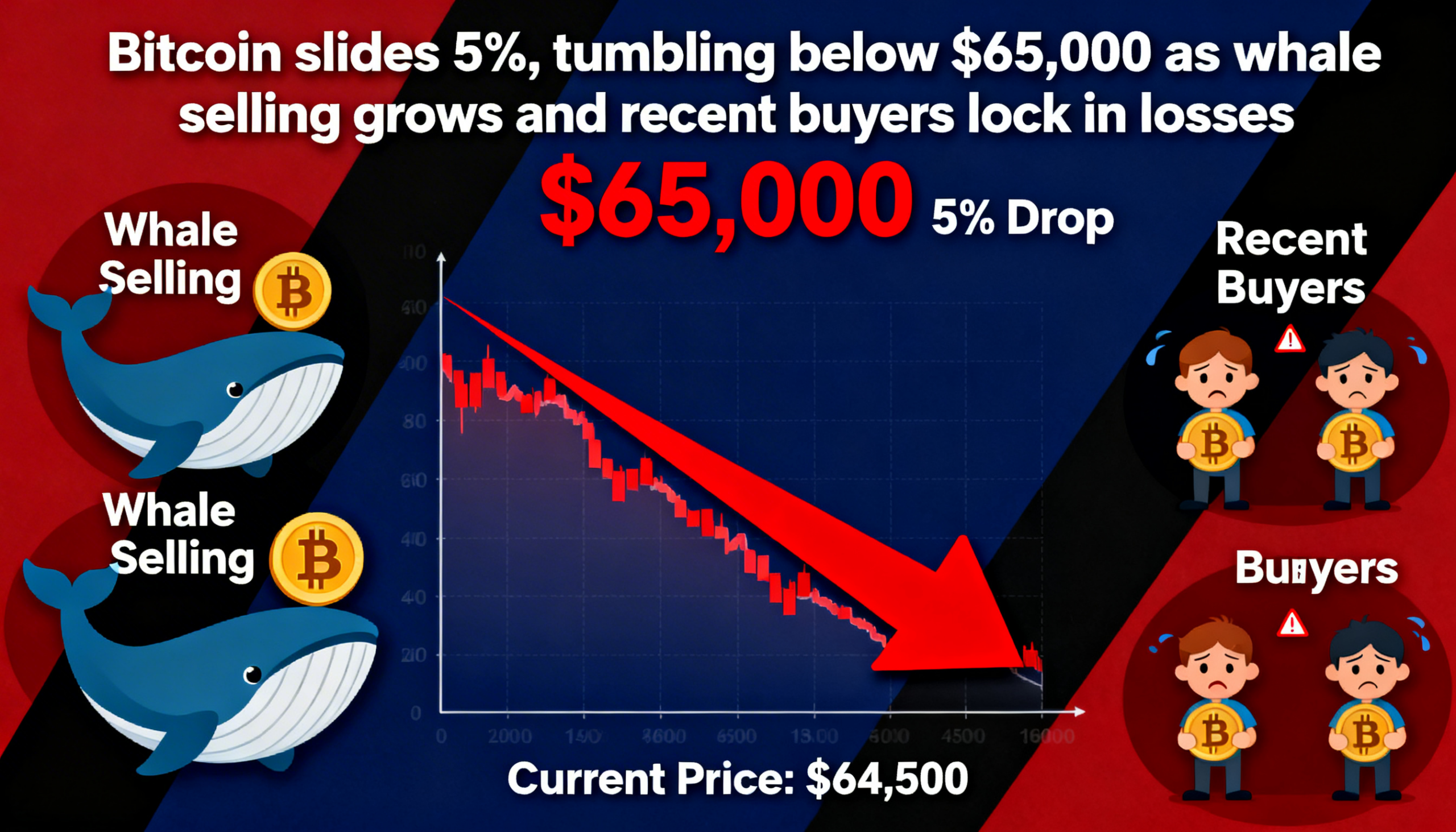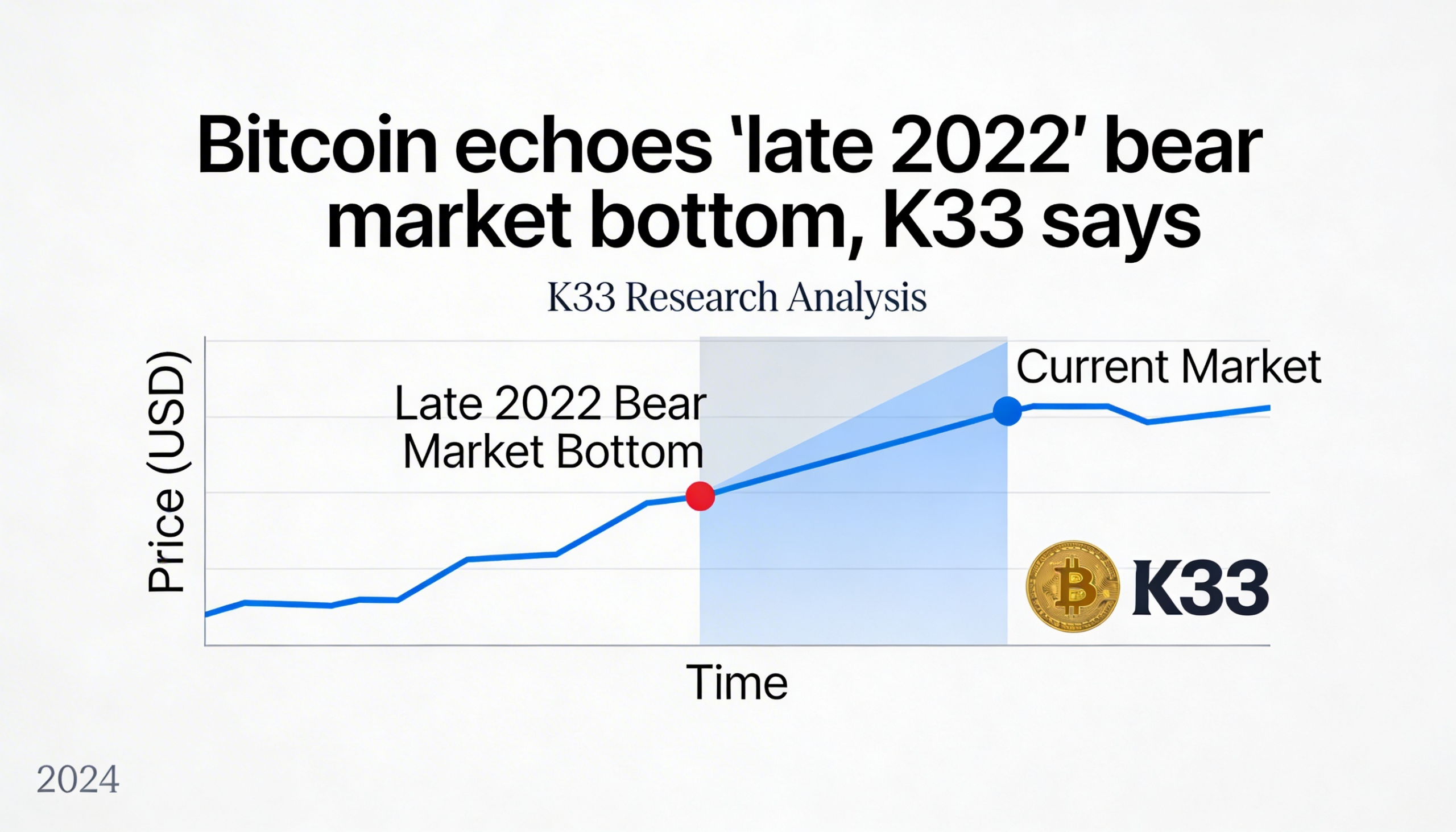
Bitcoin’s recent selloff may be morphing into the final stretch of a bear-market cycle, but a rapid recovery appears unlikely, according to Vetle Lunde, head of research at K33.
Lunde argues that the current setup mirrors late September and mid-November 2022 — a period that marked the bottoming phase of the last downturn and led to months of range-bound trading. Back then, bitcoin oscillated between $15,000 and $20,000, roughly 70% below its 2021 peak.
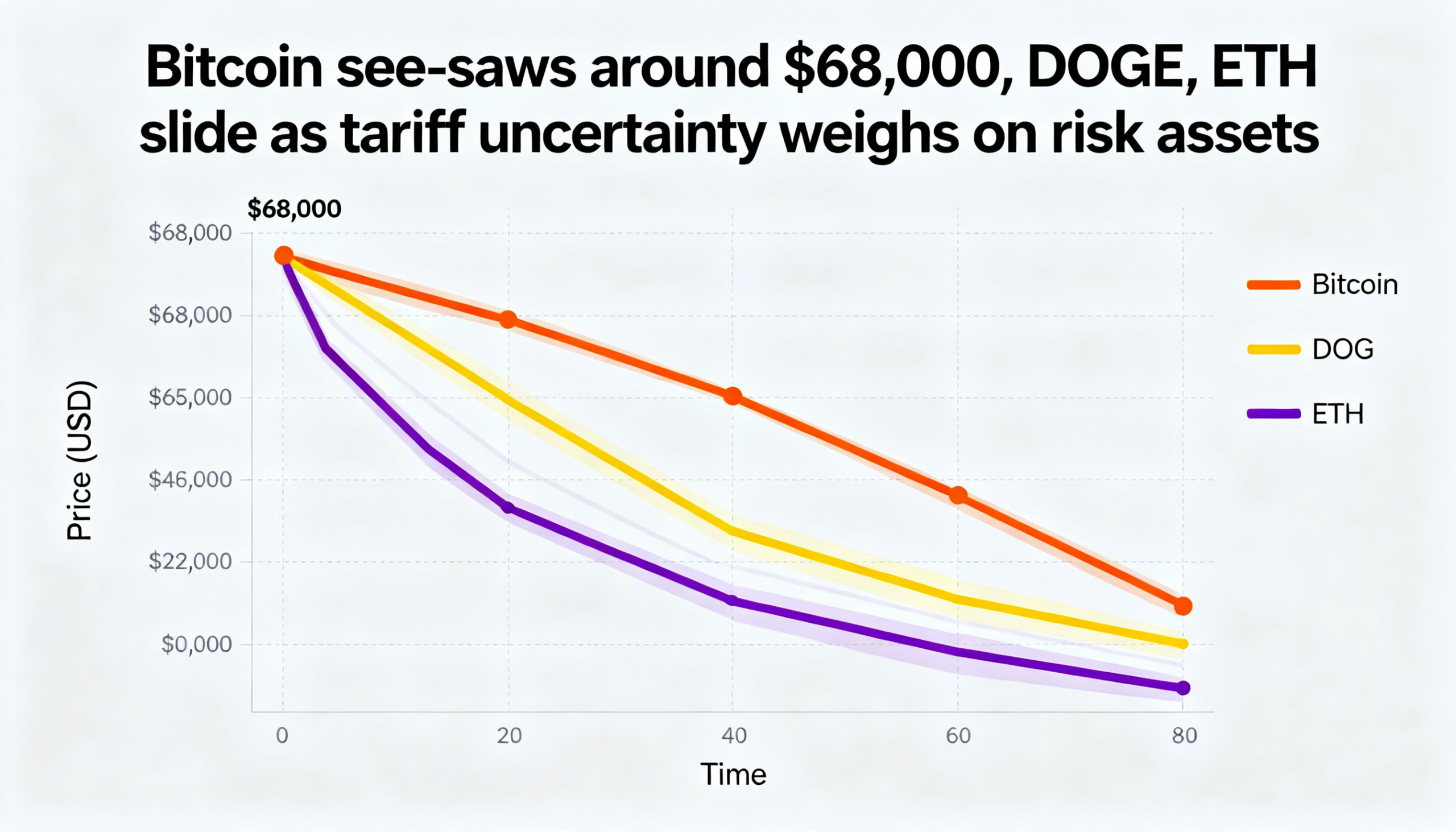
Today, BTC is holding within a tighter $65,000 to $70,000 corridor. K33’s regime model — which blends derivatives positioning, ETF flows, technical indicators and macroeconomic inputs — signals the market may once again be approaching a cyclical low.
Cooling momentum
Late-stage bear markets are often characterized by fading activity, and recent data reflects that pattern. Spot volumes have dropped 59% week-over-week, while perpetual futures open interest has fallen to a four-month low. Funding rates remain negative, underscoring muted speculative appetite.
According to Lunde, such lulls typically follow heavy liquidation waves, as traders absorb losses and recalibrate risk exposure.
Meanwhile, U.S.-listed spot bitcoin ETFs have posted a record peak-to-trough reduction of 103,113 BTC in holdings since early October. Despite bitcoin’s nearly 50% retracement, more than 90% of peak ETF exposure in BTC terms remains intact.
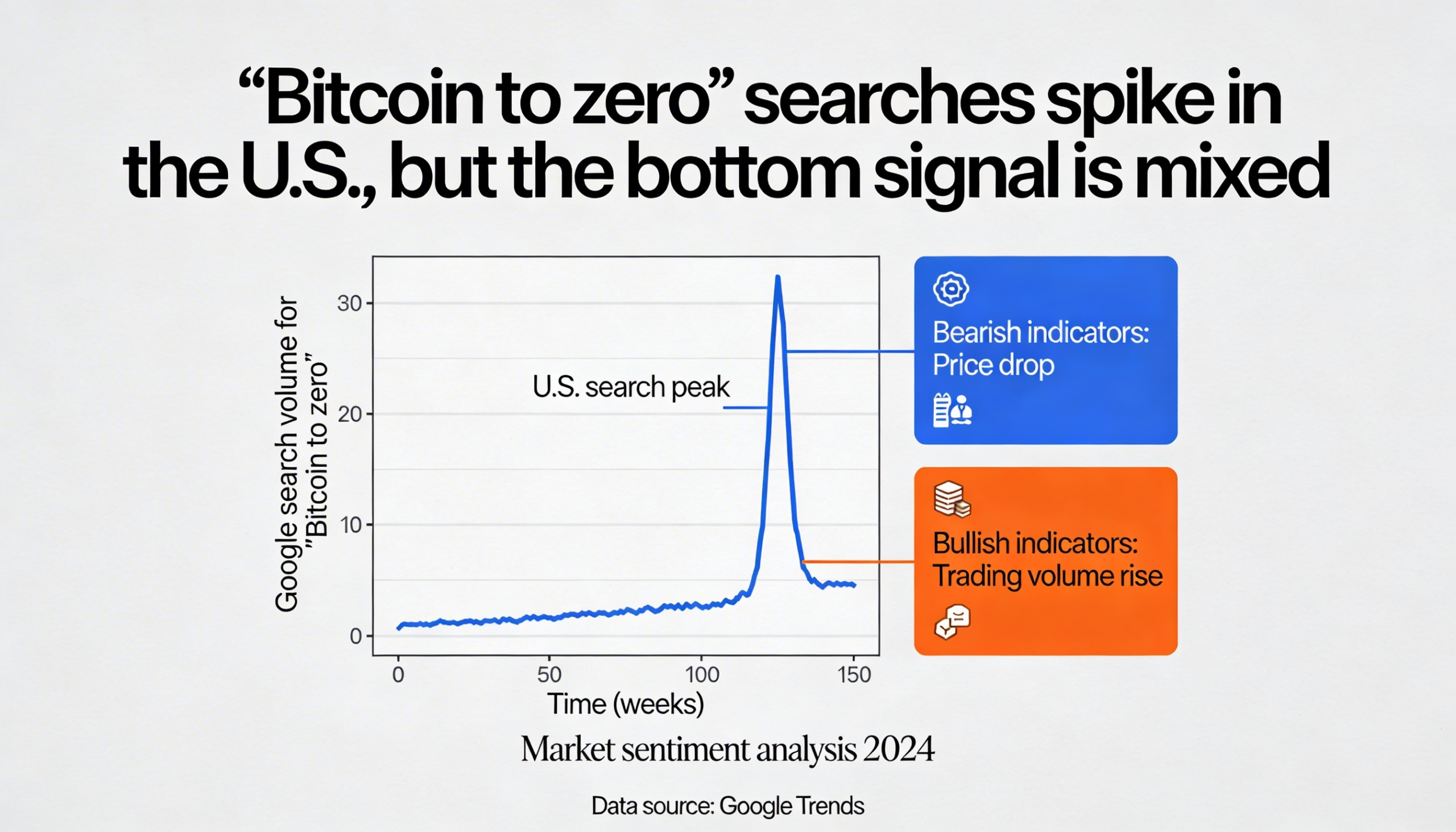
Sentiment readings are equally subdued. The Crypto Fear and Greed Index recently sank to a historic low of 5 and has hovered below 10 for much of the past week, reflecting extreme pessimism.
Range-bound before repricing
Taken together, these signals suggest bitcoin is “likely near, or at, a global bottom,” Lunde said. However, he expects an extended consolidation phase between $60,000 and $75,000 — similar to prior late-cycle environments that delivered limited short-term gains before the next breakout.
For long-term investors, such conditions may present an attractive accumulation window, though patience will be required.
James Check, on-chain analyst and co-founder of Checkonchain, reinforced that view, noting that bitcoin tends to spend long periods moving sideways before erupting in sharp repricing bursts. Those rallies often occur within a small cluster of trading days, frequently early in a bull cycle and again during later-stage acceleration.
He cautioned that trying to precisely time market bottoms and tops can result in missing the early stages of a significant rally.
While extended consolidation can test investor resolve, past cycles suggest that disciplined positioning — rather than perfect timing — has historically been rewarded.