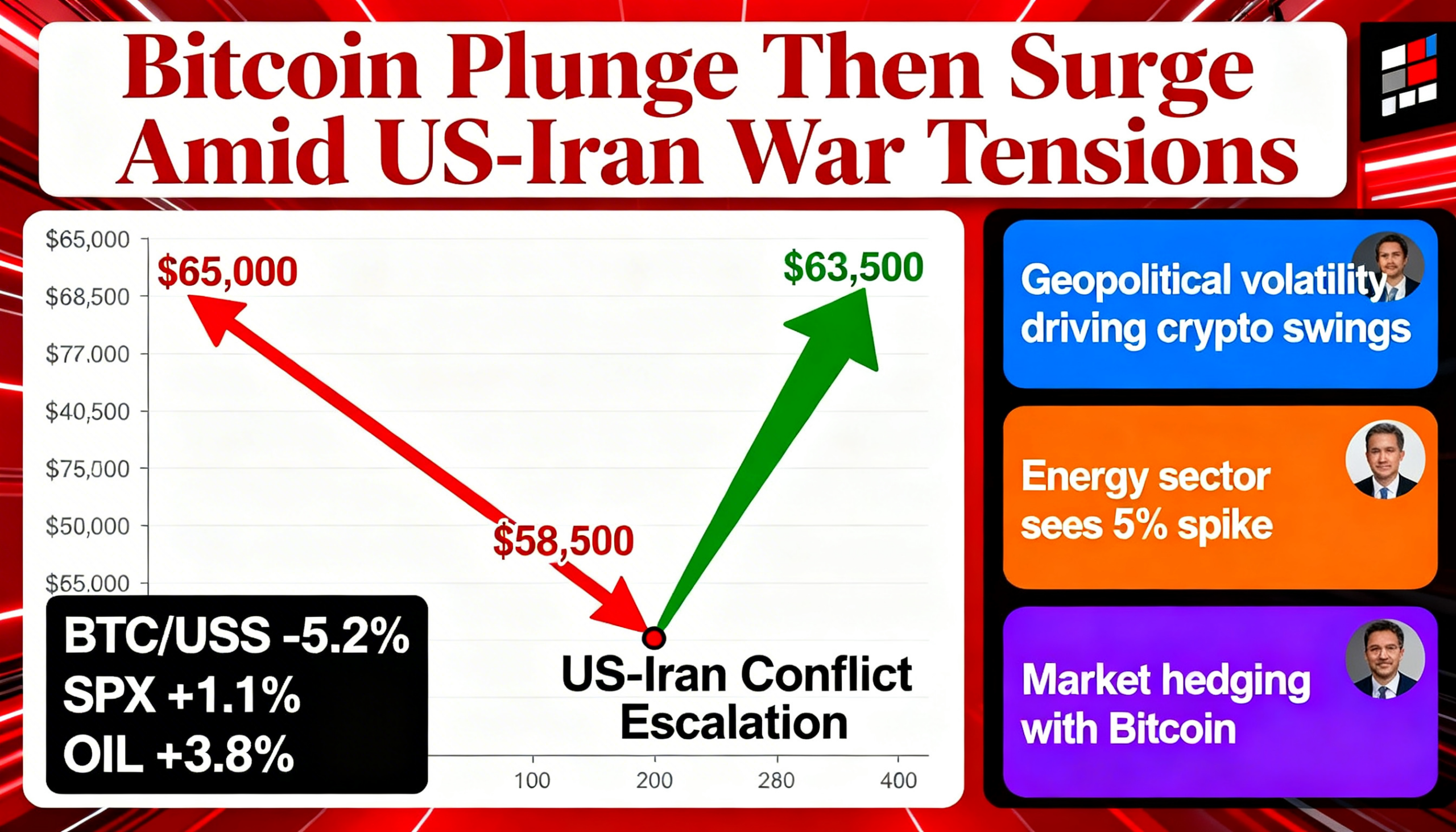
Bitcoin is heading for its strongest weekly advance since September 2025, climbing roughly 8.5% over the past seven days and holding above $71,000. The rally comes as bitcoin begins to diverge from traditional markets while institutional flows slowly return.
Over the past week, bitcoin’s performance has started to separate from broader risk assets. Using iShares Bitcoin Trust as a short-term indicator, the ETF has gained around 3.5% in the past five days and approached a one-month high by Friday.
In contrast, several traditional assets have struggled. The iShares Expanded Tech Software ETF, Gold and U.S. equities have all trended lower through the week. The divergence suggests bitcoin’s tight correlation with technology and software stocks may be weakening, at least temporarily.
The shift has become more noticeable since tensions in the Middle East escalated about two weeks ago. Since then, bitcoin has gained roughly 13%, outperforming both traditional risk assets and safe havens. Over the same period, IGV has risen about 3%, while gold has dropped around 6% and U.S. stocks have also recorded losses.
On a monthly basis, bitcoin is up roughly 7% in March so far. If the trend continues, it would mark the cryptocurrency’s first positive month since September. The recovery follows a difficult stretch during which bitcoin posted five consecutive monthly declines and at one point dropped nearly 50% from its October all-time high.
Recent buying activity appears to be driven largely by U.S. investors, as institutional demand gradually returns. U.S. spot bitcoin ETFs have attracted approximately $1.3 billion in net inflows so far in March, putting the segment on track to record its first month of positive flows since October.
Despite the improving price action, sentiment across the crypto market remains cautious.
The crypto Fear and Greed Index continues to sit in “extreme fear,” indicating that investors remain wary even as prices rise. Meanwhile, funding rates in perpetual futures markets remain negative. These rates are periodic payments exchanged between traders to keep perpetual futures prices aligned with the spot market. Negative funding means short sellers are paying long positions, signaling that bearish positioning still dominates and traders are willing to pay to maintain short exposure.
That dynamic suggests the market has not fully shifted toward bullish sentiment.
Still, bitcoin’s recent divergence from other assets hints at a broader shift in how investors view the cryptocurrency. Rather than trading purely as a high-beta risk asset closely tied to technology stocks, bitcoin may increasingly act as a real-time indicator for global markets.
Because it trades 24 hours a day, bitcoin often reacts to geopolitical and macroeconomic developments before traditional markets open. The Middle East conflict provided a clear example: bitcoin moved immediately when the war began, while other asset classes adjusted only after their markets reopened. Now, those markets appear to be catching up while bitcoin itself remains relatively stable.