Bitcoin’s rally earlier this week began to lose traction on Thursday, even as software stocks surged, creating an unusual divergence between two markets that had been closely aligned for months.
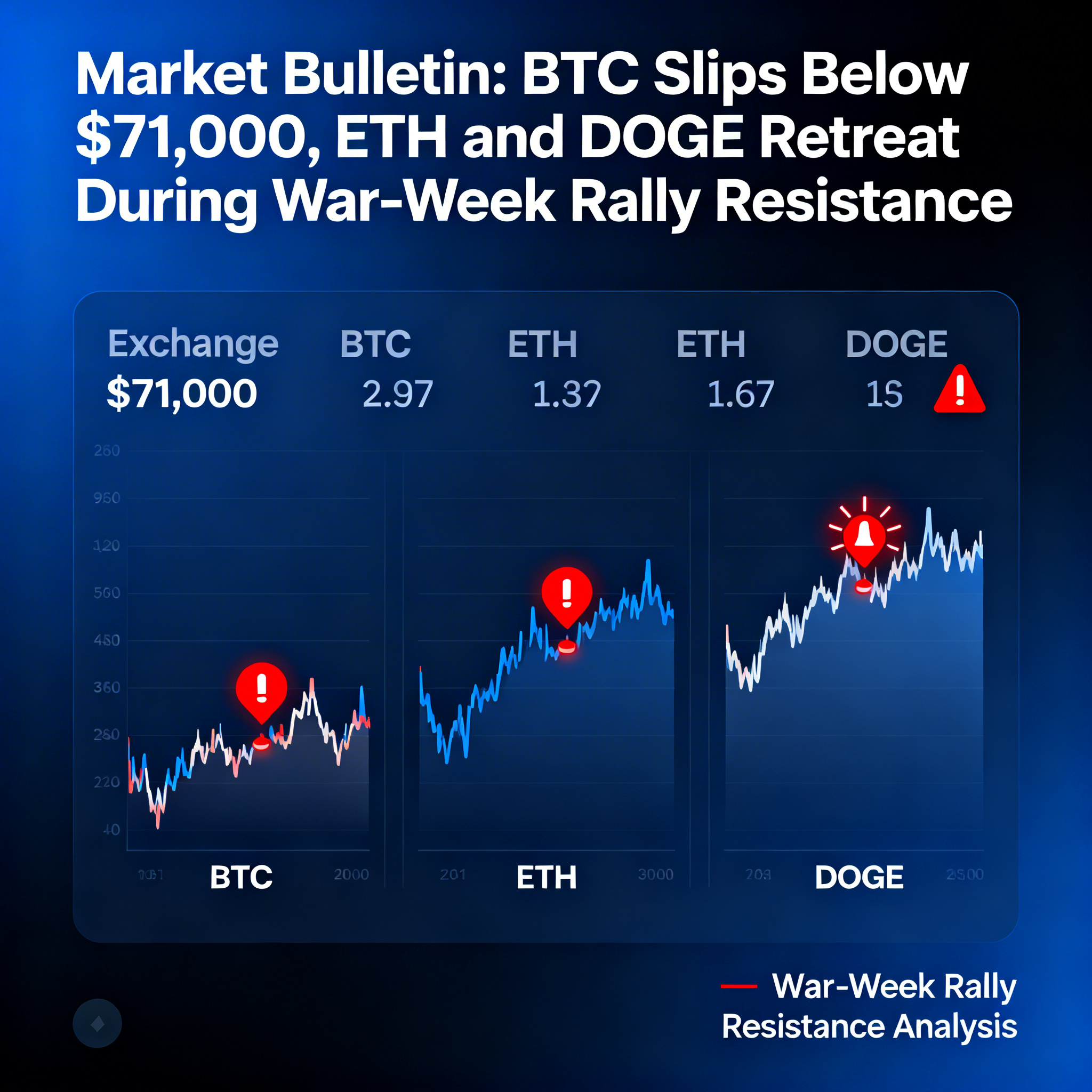
Bitcoin dropped nearly 2% over the past 24 hours to around $71,400 after retreating from earlier gains following the opening of U.S. trading.
The decline came amid broader weakness in equities as geopolitical tensions linked to the Iran conflict continued to weigh on markets. Oil prices climbed about 5.3% to roughly $78.70 per barrel on concerns that the conflict could drag on. The Dow Jones Industrial Average fell 1.4%, while the S&P 500 slipped 0.7%.
The Nasdaq Composite held up better, easing only 0.4% as investors rotated back into software stocks that had previously suffered steep losses. The iShares Expanded Tech-Software Sector ETF (IGV) rose roughly 2% and has gained around 9% over the past five trading sessions.
The divergence is notable because bitcoin and software stocks have moved almost in lockstep since October. Both markets sold off together amid investor concerns about potential disruption from artificial intelligence within the software industry, and both recently rebounded from their lows.
Still, some analysts believe bitcoin’s recovery remains uncertain. Arthur Hayes, chief investment officer at Maelstrom, said the cryptocurrency has yet to decisively break its correlation with the IGV ETF despite its recent climb toward $74,000.
Whether the separation between the two markets will persist is unclear, but software stocks advancing while bitcoin pulls back is not the outcome many crypto bulls were hoping for. Hayes cautioned that the recent rebound could still prove to be a short-lived “dead cat bounce.”
Traders may also be trimming positions ahead of Friday’s closely watched U.S. employment report for February. Recent economic releases have frequently exceeded expectations, lowering the likelihood that the Federal Reserve will soon resume cutting interest rates.
Pricing on the Chicago Mercantile Exchange now suggests an 88% probability that the Fed will keep interest rates unchanged at both its upcoming meeting and again in April. A month ago, those odds were closer to 59%.
Despite the near-term uncertainty, some market participants remain cautiously optimistic. Bryan Tan, a trader at Wintermute, said steady inflows into spot bitcoin exchange-traded funds—nearly $2 billion in the past week—along with stabilizing trading volumes are helping support the market.
Tan added that the relatively muted reaction to disruptions around the Strait of Hormuz could leave room for bitcoin to push back toward the $74,000–$75,000 range.
Meanwhile, analysts at Bitfinex noted a “notable increase in spot market strength,” suggesting the latest rally has been driven more by real buying demand than by leveraged speculation.
If that trend continues, they said the market could see a period of relief in the coming weeks and months.