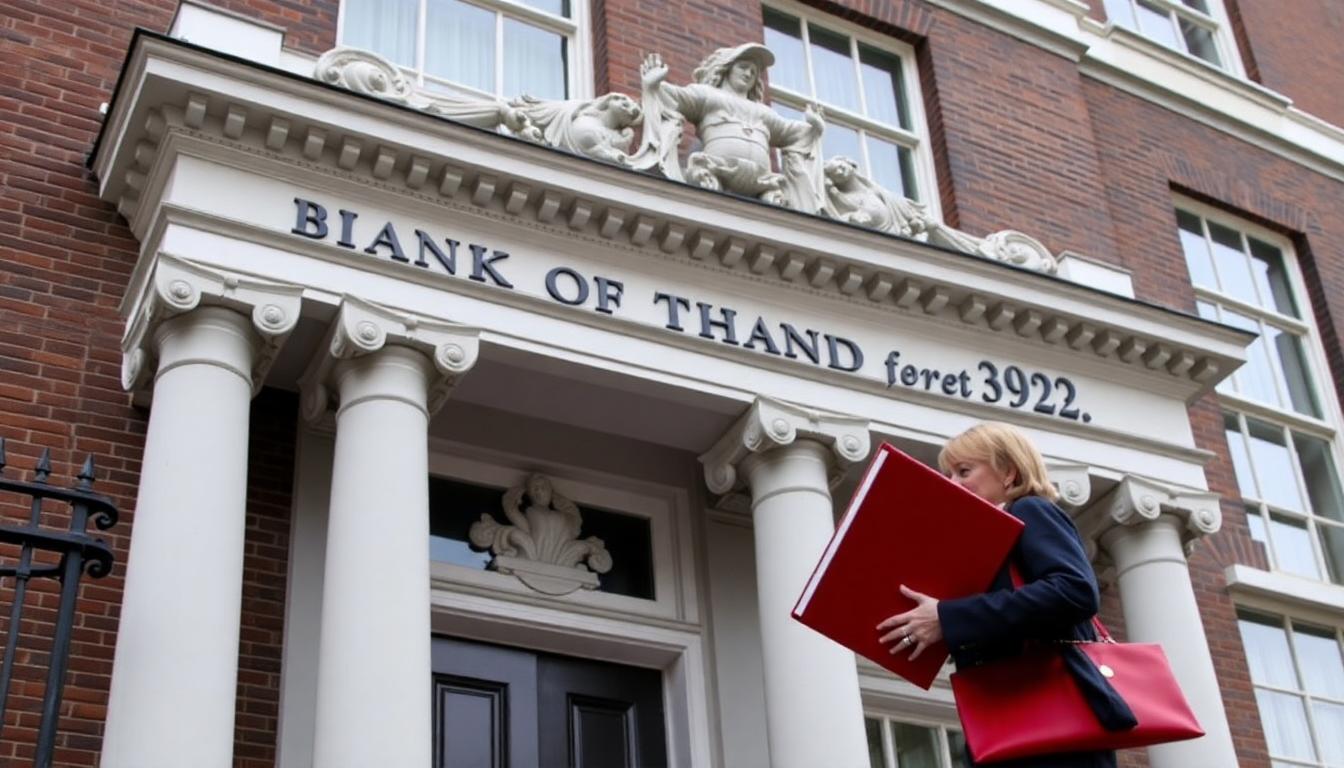
The Bank of England would continue to prioritize financial stability, while the proposed secondary mandate would require it to report to Parliament each year on efforts to promote innovation.
The UK government is planning to introduce a new statutory objective for the Bank of England aimed at encouraging innovation in stablecoins and other digital forms of money. The additional responsibility would sit alongside, rather than replace, the central bank’s primary financial-stability mandate.
The government plans to introduce the measure through an amendment to the Financial Services and Markets Bill. The Bank would be required to provide Parliament with an annual report detailing its progress in supporting innovation across payment systems and digital money, according to the Treasury.
The proposal would make payment innovation a formal part of the central bank’s remit. Britain is working on a unified regulatory framework for traditional and tokenized payment systems, covering stablecoins and tokenized deposits, while officials are also considering how the framework could handle payments initiated by AI agents.
City Minister Lucy Rigby said financial stability would remain the Bank’s primary objective. She added that the new secondary goal would encourage progress in payments and digital finance and help maintain the UK’s standing as a leading global financial center, according to the Financial Times.
Britain Adjusts Its Stablecoin Rules
In June, the Bank of England dropped plans for temporary restrictions on how many stablecoins individuals and businesses could hold. Instead, it proposed a temporary £40 billion ($54 billion) issuance limit for each stablecoin classified as systemic.
Under the proposed arrangement, stablecoin issuers could keep as much as 70% of their reserves in short-term UK government debt. The rest would be held as deposits with the Bank of England.
The Financial Conduct Authority has separately finalized its regulatory framework for crypto companies and stablecoin issuers. Following feedback from the industry, the rules include streamlined capital requirements.
Crypto firms and stablecoin issuers will be able to begin applying for authorization from Sept. 30, while the new regime is scheduled to come into force on Oct. 25, 2027.
The stablecoin market has grown to approximately $303 billion, according to DeFiLlama, compared with roughly $200 billion at the start of last year. U.S. dollar-pegged tokens continue to account for the overwhelming majority of the market.
Stablecoin use among smaller retail transactions is also expanding. Visa data shows transactions worth less than $250 rose from about $500 million in 2019 to nearly $70 billion last year, pointing to increased consumer adoption.
The Treasury had not responded to CoinDesk’s request for comment by the time of publication.