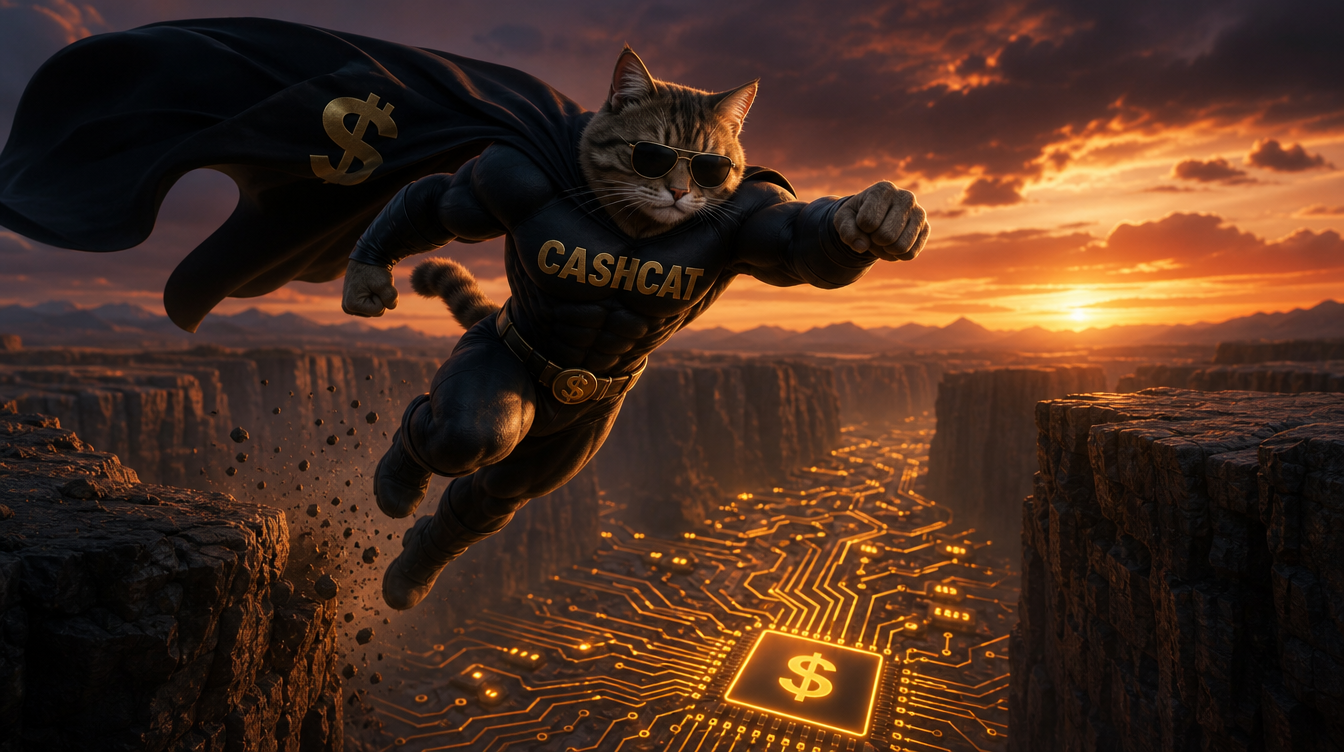
CASHCAT, the memecoin that became the early breakout success of Robinhood Chain, has rebounded to an $86 million market capitalization, while tokenized assets — the core purpose of the network — currently represent only about $27.6 million.
The cat-themed token that captured attention during Robinhood Chain’s launch period has gained 120% over the past week, recovering some of the losses from the initial July hype cycle. The surge comes as many other tokens launched around the same time have struggled to maintain momentum.
CASHCAT is trading around $0.087, up 22% in the past 24 hours, with a market cap near $86 million and approximately $9 million in daily trading volume. Despite the recovery, the token remains significantly below its mid-July high of roughly $0.22.
The token was created by independent developers using a cat-with-cash logo previously associated with Robinhood before the company rebranded. Its website describes the project as “fan fiction with a ticker.” Within a week of Robinhood Chain’s July 1 mainnet launch, CASHCAT became the network’s first major memecoin success, creating large gains for several early buyers.
The token’s popularity also caught the attention of Robinhood CEO Vlad Tenev, who had previously criticized cryptocurrencies lacking utility but later noted that the blockchain was also capable of supporting meme-driven assets.
However, most projects launched during the same period have failed to sustain interest. Noxa, the launch platform responsible for many of July’s token releases, halted new launches on July 11 and went offline shortly afterward after reportedly collecting around $12 million in fees.
Token creation activity on Robinhood Chain has declined sharply, falling from approximately 35,000 launches per day in mid-July to around 10,000. Despite the slowdown, Noxa continues to hold about $137,000 worth of CASHCAT and has not sold any tokens, with its balance remaining unchanged as the asset’s value increased.
CASHCAT’s holder base has continued to expand. DEXTools data shows the token now has roughly 41,200 holders, with the entire 989 million supply circulating and no locked tokens.
The largest holder is the Uniswap liquidity pool, which accounts for 2.47% of the supply. Other major wallets hold between 1.3% and 1.5% each.
The liquidity pool currently contains around $5 million, below the $6.6 million that supported a $105 million valuation in July. Even after the decline, it remains the largest liquidity pool among memecoins on Robinhood Chain.
Beyond the token’s performance, the broader Robinhood Chain ecosystem has continued expanding. Total value locked has climbed to $774 million, rising 20% over the last seven days.
Lending applications account for about 43% of the locked assets, while asset management represents roughly 41.5%. Two protocols make up the majority of the network’s TVL: Morpho holds approximately $332 million and provides lending infrastructure for Robinhood’s on-chain earning service, while Ethena manages around $236 million through its yield-generating stable asset.
Stablecoin holdings on the network have also increased, reaching $575 million, up 14% from the previous week.
Tokenized real-world assets, which Robinhood Chain was designed to support, now have an active market value of about $100 million, compared with roughly $70 million in late July. During that period, several tokenized stocks exceeded $500,000 in daily trading volume, while GameStop-linked assets alone reached $26 million.
Robinhood is currently covering network transaction fees until roughly late September. The real test for the ecosystem will come afterward, when users begin paying their own gas costs and the network’s long-term demand can be measured without incentives.