Here is another rewritten version with a sharper, publication-style tone:
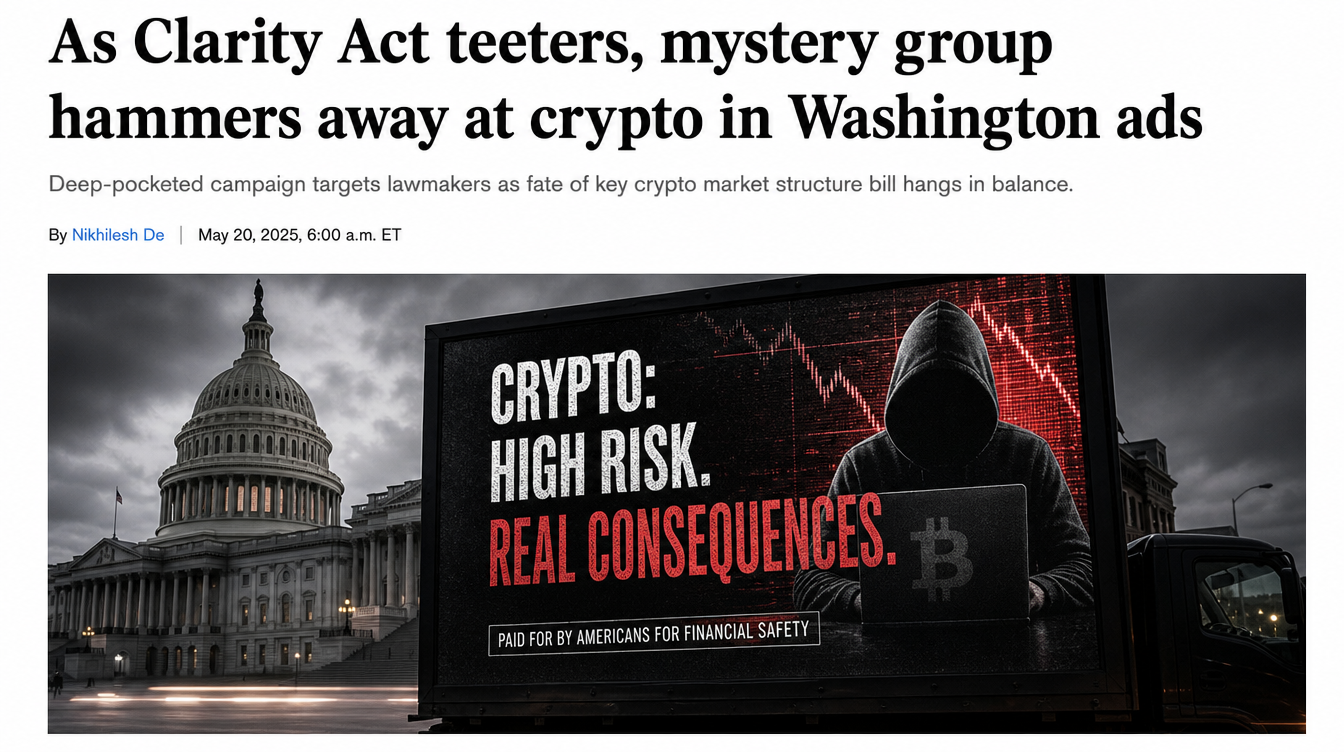
A newly formed advocacy group called Crypto Watchdog has launched a campaign in Washington warning about the risks associated with digital assets, while refusing to reveal the identities of those funding its efforts.
The crypto industry’s primary legislative goal in the U.S. is to secure rules that establish digital assets as a regulated part of the financial system. But as the Digital Asset Market Clarity Act approaches a decisive Senate vote, an unknown organization has launched an advertising campaign portraying crypto as a vehicle for criminal activity.
The group’s ads, running across television and social media, claim that criminals in “the darkest places” use crypto because of weak oversight. The campaign points to alleged connections between digital assets and drug cartels, terrorist organizations, and scams targeting older Americans.
The message ends with a push for stricter oversight: “Let’s bring crypto out of the shadows now.”
Crypto Watchdog was recently created by Executive Director Chapin Fay, a political communications strategist who previously worked on Republican campaigns but had no prior public ties to the cryptocurrency industry.
Fay said the organization’s objective is to increase awareness and transparency around the crypto sector, which he described as a more than $2 trillion industry that has historically operated without enough public visibility.
The group began its campaign as lawmakers entered the final stage of negotiations over the Digital Asset Market Clarity Act. The legislation has faced uncertainty as some Democrats and Republicans continue to debate unresolved provisions.
Fay said the group wants policymakers and the public to have access to broader information about crypto’s potential risks as discussions around regulation continue.
Crypto Watchdog pointed to a June survey of 1,000 voters showing that 65% of respondents expressed significant distrust toward cryptocurrencies. The organization said the results were consistent with earlier research showing many Americans remain skeptical about crypto’s economic impact.
However, the group’s own transparency standards have drawn questions. While calling for greater openness in the crypto industry, Crypto Watchdog has not disclosed its donors or funding sources.
When asked who finances the campaign, Fay declined to identify the backers, saying he could not comment on behalf of the organization’s supporters. He argued that transparency around crypto companies and disclosure of advocacy group donors are separate matters.
Although Fay rejects the idea that Crypto Watchdog is anti-crypto, the group’s messaging has focused largely on negative events in the sector, including hacks, fraud, and theft cases.
The campaign arrives during a critical period for the Clarity Act, as senators attempt to resolve the remaining disputes preventing the legislation from advancing. While lawmakers from both parties have settled many issues, one of the biggest disagreements involves proposed ethics restrictions on government officials’ involvement in crypto.
Democrats have pushed for stronger limits on officials’ crypto activities, citing concerns related to former President Donald Trump. Trump supported an earlier version of the proposal, but many Democrats argued the restrictions did not go far enough. A bipartisan compromise is now awaiting further consideration.
With the Senate preparing to break for its summer recess, crypto industry supporters see the remaining days as a final opportunity to gather the 60 votes needed to move the bill forward. If lawmakers fail to reach an agreement, further action may be delayed until Congress returns in September.
At the same time, banking groups continue to oppose parts of the legislation, warning that crypto companies offering rewards on stablecoin products could pull deposits away from traditional banks and create pressure on the banking system.