Bitcoin has managed to weather a series of negative developments throughout the month, but traders remain cautious as concerns over potential rate hikes and upcoming employment data continue to shape market sentiment.
The largest cryptocurrency is closing July in better condition than many investors had expected.
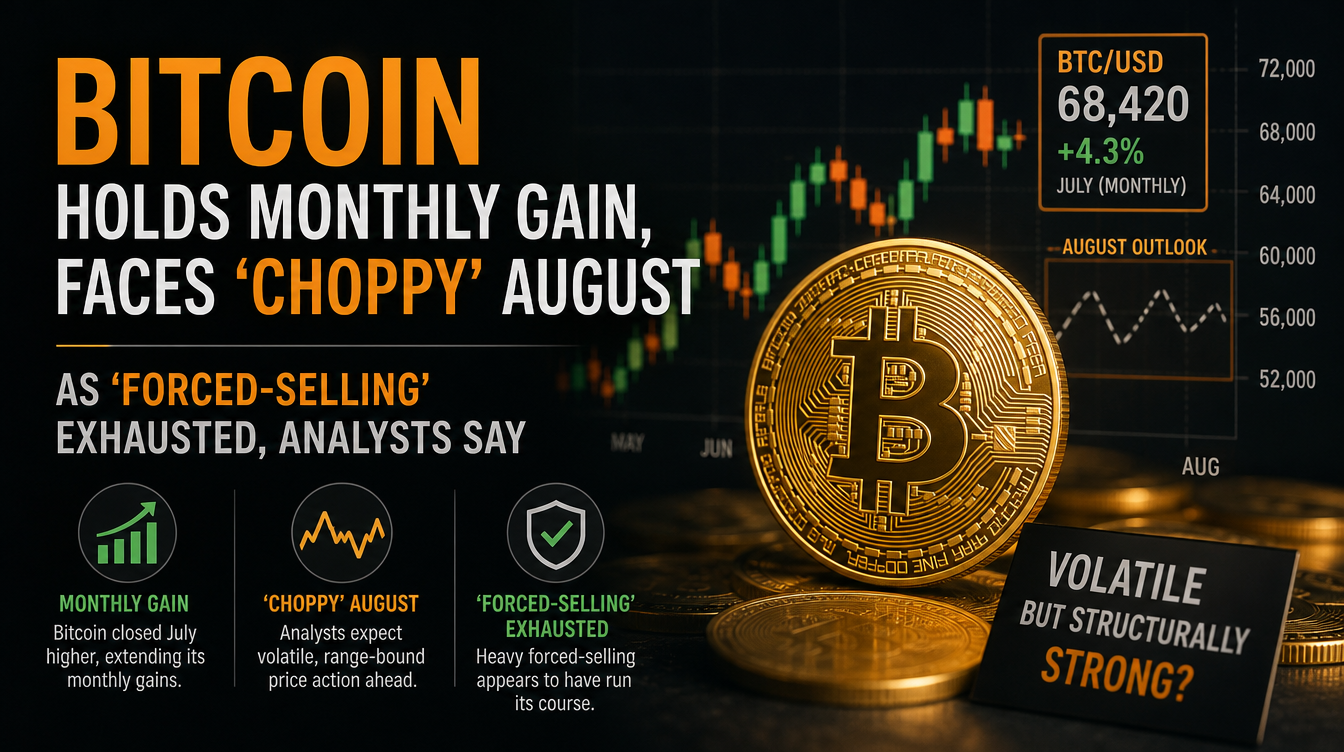
While BTC briefly dropped below $63,000 on Friday, falling about 3% during the session, the broader trend remains positive. Bitcoin is still on track to finish the month with an increase of around 7.5%, an impressive performance given the number of challenges that have pressured risk assets.
Over the past several weeks, markets have faced growing expectations of a possible Federal Reserve rate hike, rising Treasury yields, a sharp reversal in AI-related investments, and a major security breach affecting Coldcard, a well-known Bitcoin hardware wallet brand.
Despite these headwinds, Bitcoin has avoided the deeper sell-off many analysts anticipated and has continued trading above its bear market lows, even as broader risk appetite weakened across financial markets.
Bitcoin Outperforms Risk Assets
Bitfinex analysts said Bitcoin’s resilience is partly linked to improved market positioning.
They noted that the crypto market entered the Federal Reserve meeting with far less leverage than equities, as many leveraged traders had already been forced out during the late-June downturn that pushed BTC below $58,000 on July 1.
Since then, average daily liquidations have stayed significantly below this year’s typical $400 million to $500 million range, suggesting that forced selling has largely subsided despite continued macroeconomic pressure.
“Crypto declined less than leveraged equity sectors because the forced-selling pressure had already been cleared,” Bitfinex analysts said.
Coldcard Breach Adds to Security Debate
The market is also evaluating the impact of the Coldcard exploit, which led to the theft of at least $38 million worth of Bitcoin.
Although the incident has not caused a major market reaction, it has renewed concerns about the risks of self-custody and highlighted ongoing security challenges within the crypto ecosystem.
Paul Howard, director at trading firm Wincent, said the stolen Bitcoin has not yet been sold, but any potential liquidation could create short-term downside pressure. He added that the incident underscores the operational risks involved with managing assets independently.
Focus Shifts to Jobs Data and ETF Demand
As August approaches, macroeconomic uncertainty remains the main driver for market expectations.
Jeff Anderson, managing partner at STS Digital, said investors may be entering a period of increased volatility as markets alternate between expectations of rate cuts, policy pauses, and possible hikes. He warned that this uncertainty could continue affecting higher-risk assets like Bitcoin until economic conditions become clearer.
Bitfinex analysts expect investors to maintain a defensive stance ahead of the upcoming U.S. jobs report, which will be the next major economic event after the Fed meeting.
Instead of another wave of forced liquidations, analysts said the key market signal will be whether spot Bitcoin ETF inflows recover once investors have greater clarity on the Fed’s policy direction.
“Investors are likely to remain cautious while rate hike risks persist,” the analysts said, noting that stronger institutional buying would provide an important market signal.
Lacie Zhang, research analyst at Bitget Wallet, predicted a potentially volatile and range-bound August for Bitcoin unless real yields decline or ETF inflows regain consistent strength.
“The market can absorb a neutral Fed outlook, but a stronger dollar, higher real yields, and weak ETF demand together would create a tougher environment,” Zhang said.