


Here’s a refined and smoothly reworded version with a clean, professional tone:
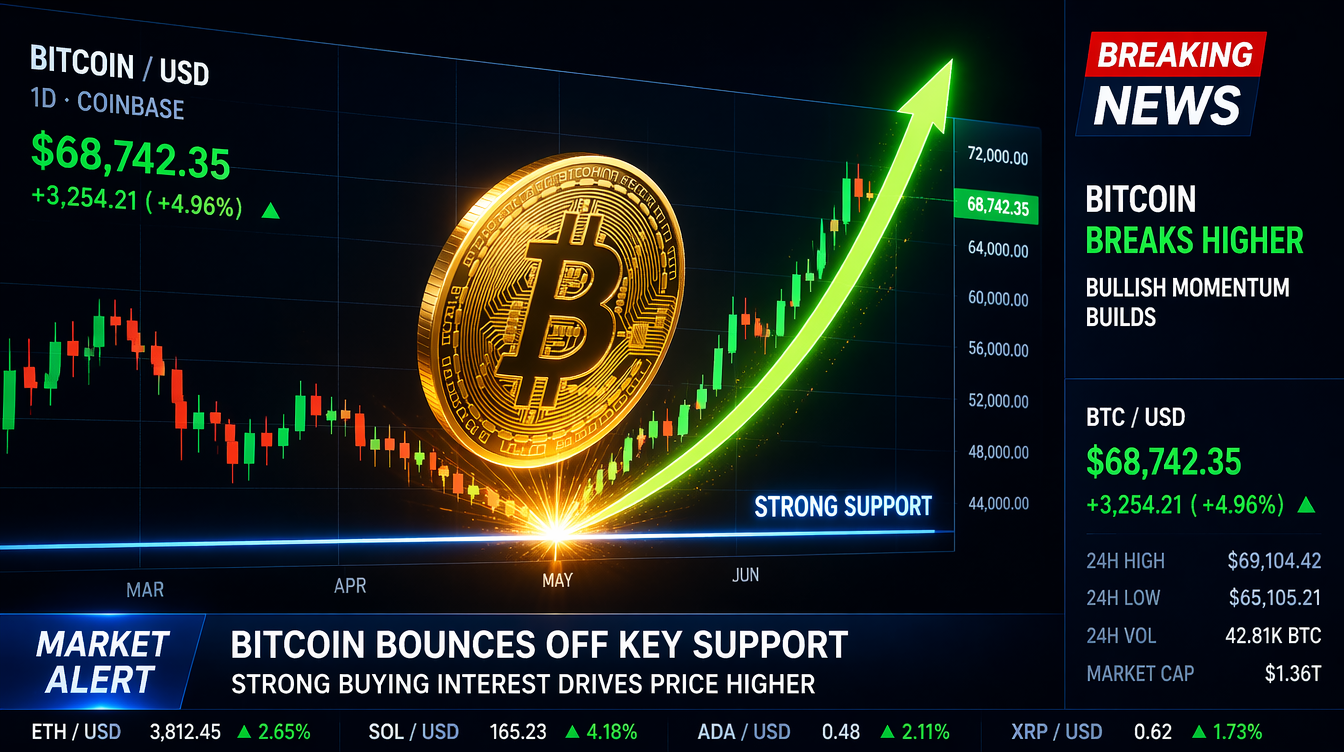
Bitcoin pushed back above $62,000 after June’s nonfarm payrolls came in at 57,000—well below the 113,000 estimate. The weaker labor data cut the implied odds of a September Federal Reserve rate hike from 64% to 54% on the CME FedWatch Tool, while also weighing heavily on AI-related equities.
The development raises a central question: does this macro shift indicate a sustainable market bottom, or is it simply a short-lived rebound within a broader structure that has already declined roughly 20% over the past month?
The U.S. Labor Department deepened concerns by revising April and May payroll figures downward by a combined 74,000 jobs, suggesting earlier labor strength had been overstated.
Prior to the report, Bitcoin had fallen to $57,750 on Wednesday. The soft data acted as a catalyst, helping BTC rebound above $60,000 as capital rotated back into scarce assets.
Bitcoin News: Breaking Down the Labor Data Impact
Weaker employment data tends to ease inflationary pressures, reducing the Federal Reserve’s justification for maintaining elevated interest rates. This directly lowers the opportunity cost of holding non-yielding assets such as Bitcoin and gold, while also boosting expectations for future liquidity expansion.
The Fed’s balance sheet remains steady at $6.73 trillion. Although it has the authority to conduct up to $40 billion in monthly short-term Treasury purchases, that option has not yet been utilized—though it could come into focus if labor conditions continue to deteriorate.
Gold supported this narrative, recovering part of its 8% decline from the prior two weeks. Its rebound suggests markets are increasingly pricing in a less restrictive Fed rather than reacting to a one-off trading move.
Oil markets also contributed to easing inflation concerns. WTI crude held below $70 after Qatar’s Foreign Ministry pointed to progress in U.S.–Iran discussions, reducing the geopolitical risk premium in energy prices.
Equities, however, told a different story. The Nasdaq 100 reversed three consecutive days of gains, led lower by chipmakers and AI hardware stocks. Companies such as SanDisk, Seagate, Western Digital, and Applied Materials each dropped more than 9% intraday. The scale and coordination of the selloff indicate deeper concerns about stretched valuations, with capital potentially rotating into alternative assets.
On-Chain Signals: Signs of Seller Fatigue
Beyond macro drivers, Bitcoin’s on-chain data is showing stabilization rather than further deterioration.
CryptoQuant analyst gaah_im noted that Bitcoin’s realized profit-to-loss ratio has fallen to its lowest level since 2022. At the same time, the proportion of supply in profit has turned negative relative to total supply.
Historically, this combination has aligned closely with major cycle bottoms, often signaling inflection points with notable precision.
This suggests that selling pressure is largely exhausted at current price levels, with most capitulation already behind the market.
However, these signals do not pinpoint timing. While they indicate proximity to a bottom, they do not guarantee immediate upward momentum. Bitcoin was rejected at $82,500 two months ago, and that supply zone remains unresolved.
As a result, the realized profit-to-loss ratio is more useful as a risk management indicator than a directional signal. It reduces the probability of deeper downside without eliminating it entirely.
A potential retest below $60,000—often viewed by analysts as a healthy confirmation of a bottom—remains plausible, particularly if upcoming CPI data or Federal Reserve commentary revives hawkish expectations. One weak jobs report alone is not enough to fully remove downside risk.



















































Leave a Reply