


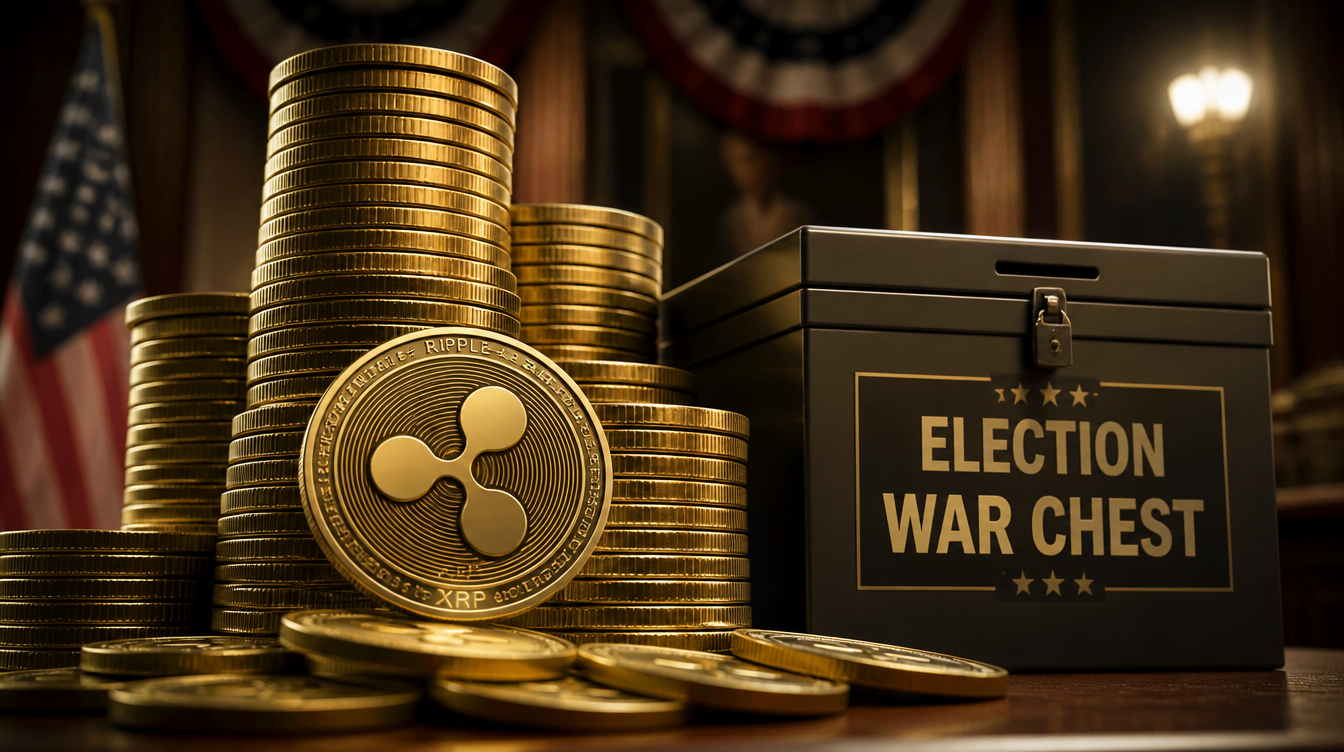
FairShake and its affiliated political action committees have accumulated $193 million ahead of the 2026 midterm elections, backed by major industry players including Coinbase, Ripple, and Andreessen Horowitz, as lawmakers continue to debate crypto market structure reforms.
The bipartisan crypto super PAC entered the 2026 cycle with a combined $193 million war chest, a figure disclosed to CNBC prior to the January 31 Federal Election Commission filing deadline. Ripple emerged as the leading contributor.
The fundraising surge coincides with early Senate action on a sweeping digital assets market structure bill. The Senate Agriculture Committee is preparing to vote on part of the legislation, while progress in the Senate Banking Committee remains stalled amid disputes over whether oversight should fall to the Securities and Exchange Commission or the Commodity Futures Trading Commission.
The scale of funding underscores a broader shift in strategy. The crypto sector has moved beyond experimental political spending and is now operating a sustained electoral infrastructure, with enough capital to influence dozens of House and Senate races before the general election phase begins.
How the $193M War Chest Was Built
The total is spread across three aligned PACs: FairShake, which supports candidates across party lines; Protect Progress, focused on Democrats; and Defend American Jobs, aligned with Republicans. This structure enables coordinated but targeted political spending without concentrating funds in a single entity.
Two major contributions in the second half of 2025 significantly boosted the total. Ripple donated $25 million, with CEO Brad Garlinghouse framing the contribution as a continuation of prior election-cycle efforts.
Andreessen Horowitz added $24 million through its crypto-focused arm, a16z. Coinbase had already contributed $25 million earlier in the year, just before FairShake reported holding $141 million. Together, these contributions accounted for roughly $74 million in second-half inflows, according to Politico.
Federal Election Commission data compiled by Bloomberg Government shows that between 2023 and 2024, FairShake and its affiliates raised about $93.5 million from Coinbase, $45 million from Ripple, and approximately $67 million from Marc Andreessen and Ben Horowitz. The donor base has remained largely intact in the current cycle.
Legislative Timing and Political Strategy
The fundraising effort aligns with Congress’s ongoing attempt to pass comprehensive crypto regulation governing digital asset market structure. Progress has been uneven across committees.
The Senate Agriculture Committee’s upcoming vote will serve as the bill’s first procedural test, while disagreements over jurisdiction between the SEC and CFTC have delayed action in the Banking Committee.
During the 2024 election cycle, FairShake deployed roughly $195 million, which the group credits with helping advance stablecoin legislation in 2025. The current war chest is now positioned to influence lawmakers as broader digital asset rules are debated.
A spokesperson for the network, Josh Vlasto, said the PAC remains focused on supporting pro-crypto candidates and opposing those viewed as unfavorable to the industry.
Scale, Spending, and What Comes Next
Bloomberg Government analysis shows that FairShake holds the largest industry-specific war chest entering a midterm cycle, surpassing comparable PACs in sectors like finance and healthcare.
Across the wider crypto political network, including smaller allied groups, total funding reached around $221 million for the 2026 cycle as of early this year.
Spending has already been aggressive. Reuters reported that crypto-aligned groups had deployed roughly $189 million in primary races by mid-2026. Forbes noted that a significant portion of funds had already been converted into independent expenditures ahead of the general election window, signaling a strategy focused on influencing primary contests.
Campaign finance watchdogs have described the scale of activity as one of the most assertive industry-led political efforts in recent years.
The trend raises questions about whether similar corporate-backed political models will be adopted by sectors such as artificial intelligence and fintech as lawmakers move toward broader digital regulation.
Upcoming FEC filings later in the cycle are expected to provide further detail on how remaining funds will be allocated, particularly in competitive Senate races where digital asset policy remains a central issue.


















































Leave a Reply