Bitcoin’s latest effort to reclaim the $70,000 level has once again met resistance, leaving the cryptocurrency trading within a familiar range as global markets remain unsettled by geopolitical tensions.
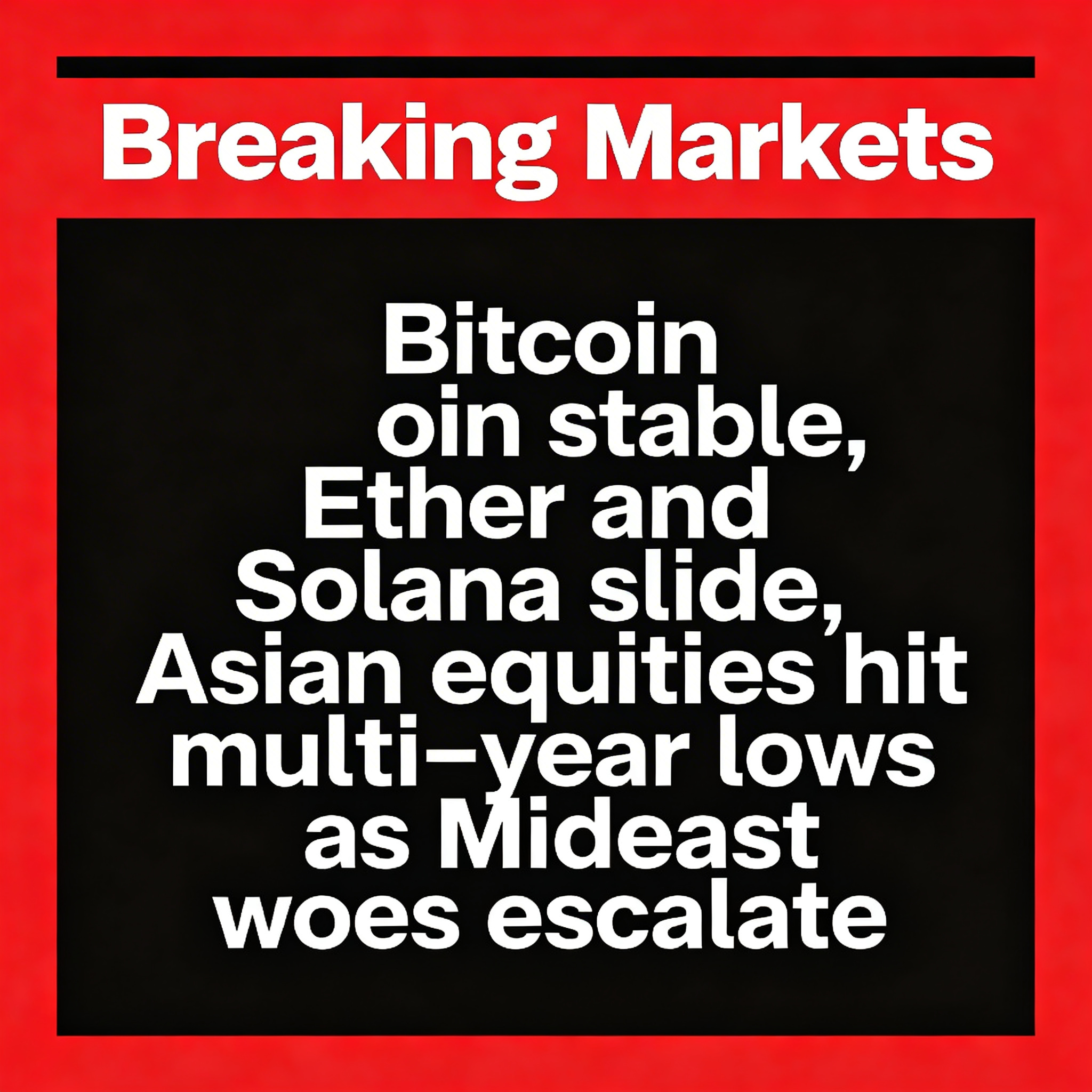
The largest digital asset briefly moved toward the upper end of its range earlier this week before slipping back to around $67,000. Data compiled by CoinDesk shows bitcoin trading near $67,612 during Wednesday’s Asian session, down about 0.7% over the past 24 hours but still up roughly 3.4% for the week as the recovery from weekend lows holds.
Among major cryptocurrencies, ether declined 2.2% to about $1,957, giving back some of its recent rebound but remaining up 2.6% over the past seven days. BNB stood out as a relative outperformer, gaining 5.2% on the week to trade around $629.
Losses were deeper among several altcoins. Dogecoin dropped 2.9% over the past day and is down 3.9% over the week. Cardano fell 4.2% in the past 24 hours and 3.5% over seven days. Solana slipped 0.8% to roughly $85.16 and remains the weakest major token on a weekly basis following Saturday’s sharp sell-off. XRP held relatively steady, easing 1.3% to about $1.35 while maintaining a modest weekly gain of 1.5%.
The broader pattern across crypto markets shows most assets rebounding from weekend lows but failing to sustain Tuesday’s highs. That has left traders in a wait-and-see mode as they monitor developments surrounding tensions involving Iran and the reaction of traditional financial markets.
According to Wojciech Kaszycki, chief strategy officer at BTCS SA, the recent move fits a typical post-shock market pattern.
“BTC bouncing back to $70K looks like a classic shock, flush, rebuild move,” he said, noting that much of the selling over the weekend appeared forced due to thin liquidity. Once selling pressure eased, the rebound came quickly. However, he added that the more important signal will be whether exchange-traded fund inflows remain consistent throughout the week.
Meanwhile, Alex Kuptsikevich, chief market analyst at FxPro, warned that repeated rejections near $70,000 raise the possibility of a deeper correction. If bitcoin continues to struggle at the top of its range, he said a decline toward $63,000 becomes a realistic scenario.
The macro environment has added to the pressure. Asian equities sold off sharply on Wednesday, with stocks in South Korea posting their largest two-day decline since the 2008 financial crisis as the conflict rattled investor sentiment.
Technology shares across the MSCI Asia Pacific Index dropped around 4%, pulling markets in Japan, Taiwan and South Korea lower. Meanwhile, the currency of India weakened to a record low as rising oil prices increased economic pressure. Precious metals also gained ground, with gold advancing and silver following higher for the first time this week.
Energy markets remain a central focus. Brent crude continued to climb even after the United States announced plans to escort tankers through the Strait of Hormuz, a crucial global shipping route that has faced disruptions since the weekend strikes.
U.S. President Donald Trump also proposed an insurance framework for oil tankers operating in the region, though details remain unclear. Prolonged disruption in the strait could keep energy prices elevated, feeding inflation expectations and potentially delaying interest-rate cuts — a development that would tighten liquidity conditions for risk assets such as cryptocurrencies.
Despite the short-term volatility, some industry leaders argue that bitcoin’s long-term narrative remains intact. Gracy Chen, CEO of Bitget, said the cryptocurrency is gradually establishing itself as a new form of reserve asset.
However, she noted that many investors still find it easier to allocate to gold due to its long history, while bitcoin remains relatively young and is still viewed as a riskier alternative.
Chen added that lingering disappointment from previous crypto market downturns continues to weigh on sentiment. In her view, the current weakness in bitcoin is partly driven by that frustration, particularly as traditional assets such as equities and precious metals have recently reached new highs