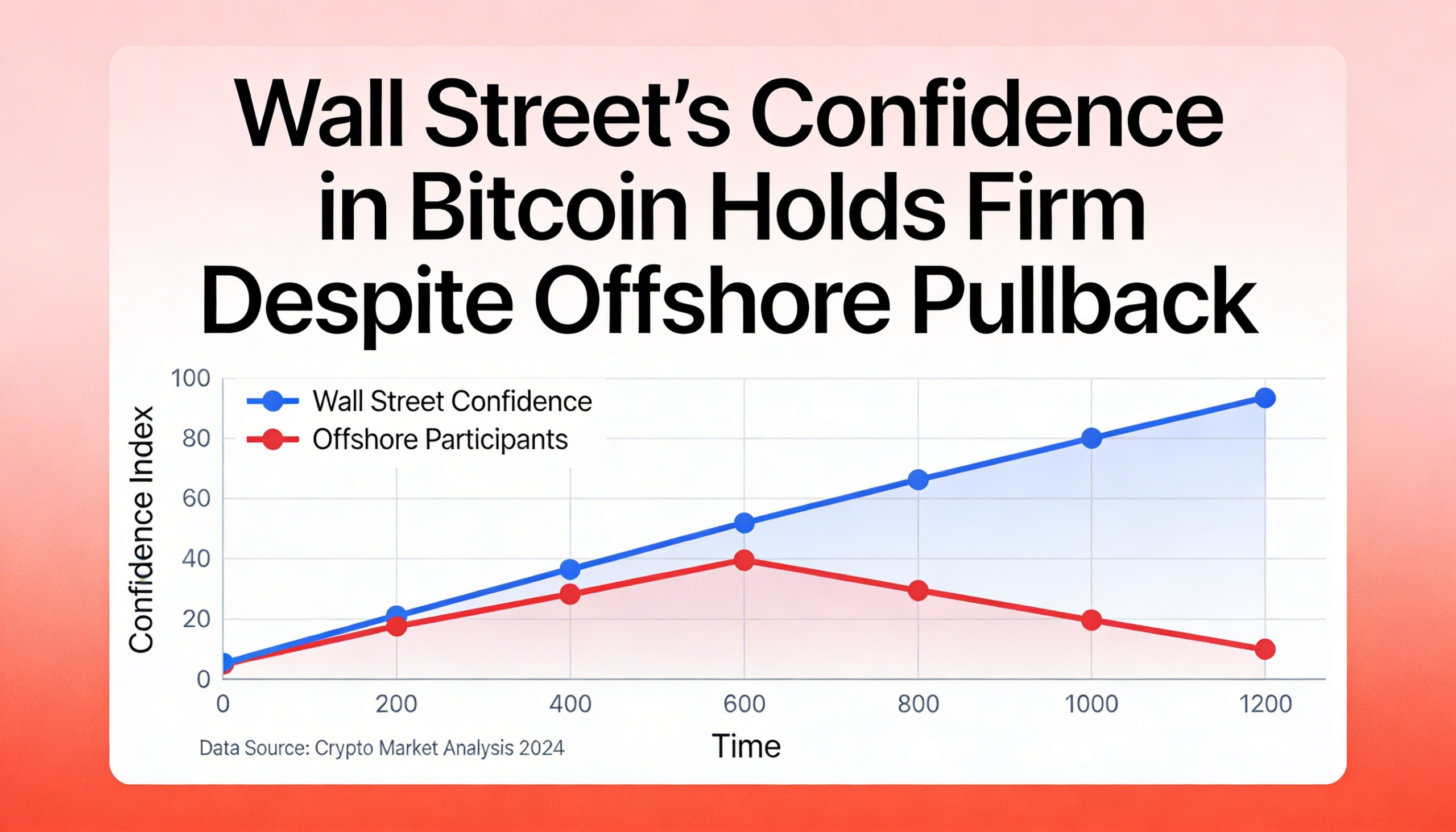
Global sentiment around Bitcoin is increasingly fragmented, with U.S. institutional investors holding their ground while offshore traders pare back exposure.
The divide is most visible in the futures market. On CME Group — a preferred venue for U.S. hedge funds and asset managers — traders continue to pay a relatively healthy premium to maintain long bitcoin positions, according to Greg Cipolaro, head of research at NYDIG. The one-month annualized futures basis on CME remains higher than on offshore exchange Deribit, where the premium has fallen more sharply.
Cipolaro said the steeper compression in offshore basis suggests diminishing appetite for leveraged long trades outside the U.S. The widening gap between CME and Deribit basis levels, he noted, acts as a real-time signal of regional differences in risk tolerance.
Earlier this month, bitcoin dropped to around $60,000 before recovering. Some market participants linked the decline to renewed concerns that advances in quantum computing could threaten bitcoin’s cryptographic framework. However, NYDIG’s data analysis does not support that claim.
Bitcoin’s price movements have closely tracked shares of publicly listed quantum-computing companies such as IonQ (IONQ) and D-Wave Quantum (QBTS). If fears about quantum risks were driving crypto’s weakness, those stocks would likely have risen as bitcoin fell. Instead, they declined in tandem, pointing to a broader pullback in speculative, long-duration assets.
Search trends further weaken the theory. Google Trends data indicates that interest in the term “quantum computing bitcoin” tends to increase during price rallies rather than downturns, suggesting the narrative gains momentum in bullish phases rather than acting as a trigger for sell-offs.