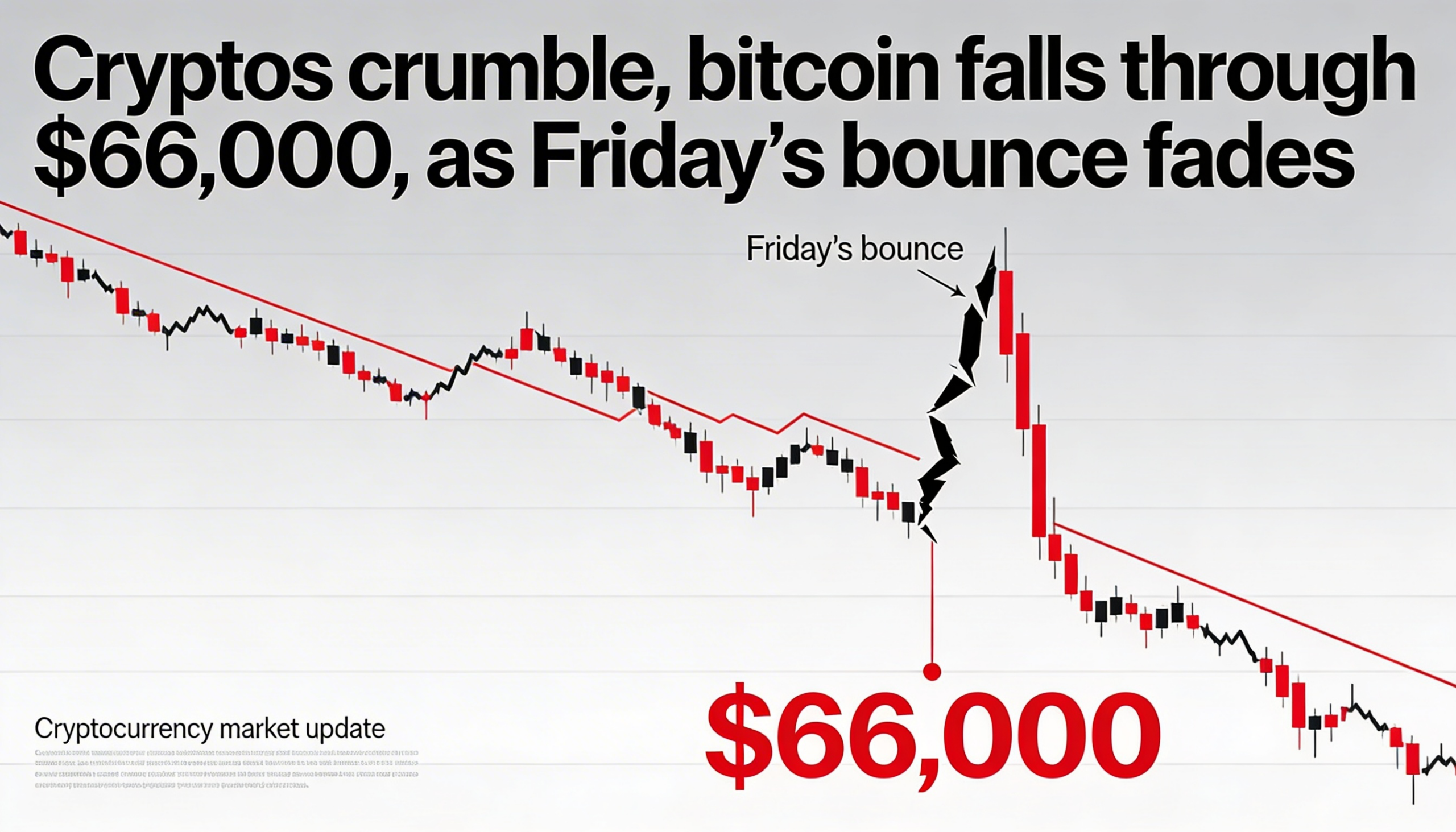
Cryptocurrencies resumed their slide even as other asset classes remained firm, reinforcing the view that investor capital is rotating away from digital assets.
Bitcoin (BTC) had staged a sharp recovery late last week, rebounding from a Thursday low near $60,000 to almost $72,000 on Friday — a gain of roughly 20%. That move now appears fleeting. By mid-morning U.S. trading, Bitcoin was down more than 4% over the past 24 hours, slipping back below the $66,000 level.
Losses were widespread across major tokens. Ether (ETH) and Solana (SOL) each fell about 5.5%, while XRP (XRP) dropped roughly 3.5%, underscoring continued weakness in the broader crypto complex.
Traditional markets painted a different picture. U.S. equities, which had traded higher earlier in the session, eased back toward flat. Precious metals extended gains, with gold rising 0.8% and silver advancing 3.2%.
Fresh U.S. labor market data added another layer of pressure. January job growth came in at 130,000 — nearly double expectations — and the unemployment rate unexpectedly dipped to 4.3%. The stronger-than-anticipated report prompted traders to scale back expectations for near-term Federal Reserve rate cuts.
CME FedWatch data now show just a 6% probability of a March rate cut and a 23% chance of an April move, down sharply from 21% and 52%, respectively, before the jobs release.
Still, whether additional easing would meaningfully reverse crypto’s downturn is uncertain. The current slide began in 2025 despite the Federal Reserve cutting rates at three consecutive meetings.
Participation Pulls Back
Signs of cooling enthusiasm are becoming more apparent.
According to data from Coinglass, Bitcoin perpetual futures open interest has fallen to 51% below its October 2025 peak, reflecting a sharp contraction in leverage and speculative positioning.
The shift is particularly evident in South Korea. As the KOSPI trades at record highs, retail investors appear to be pivoting toward equities. Monthly Kospi trading volume surged 221% year over year, while crypto exchange activity dropped roughly 65% over the same period.
Market observers have characterized the trend as an “exit-crypto” phase, with retail traders increasingly drawn to the momentum in stocks.
Crypto-Linked Equities Under Pressure
The weakness extended to publicly traded companies tied to the digital asset sector.
Shares of Robinhood fell 12.5% after reporting a steep decline in fourth-quarter crypto trading revenue. The drop weighed on Coinbase, which slid 7% ahead of its earnings announcement.
Bitcoin treasury firm Strategy declined 4.5%, while ether-focused treasury company Bitmine Immersion dropped 3.8%.
Elsewhere, Circle lost 4.7%, Galaxy Digital fell 3.2%, and Bullish slid 5.3%, highlighting broad-based pressure across crypto-related stocks.