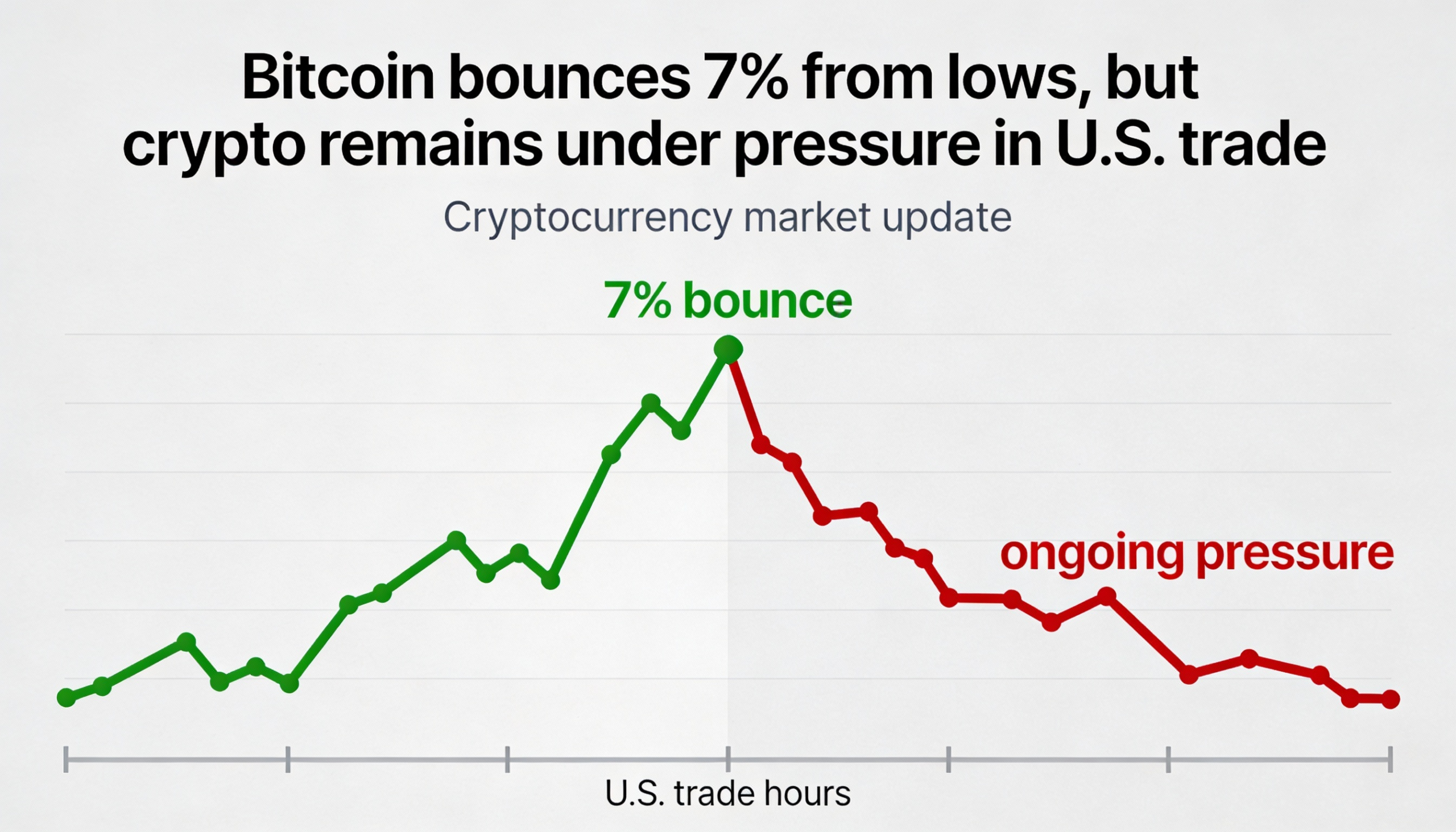
Crypto-related stocks remained under pressure on Monday, even as bitcoin and other major tokens recovered modestly from sharp weekend losses.
Bitcoin was trading just below $79,000 in midday U.S. trading after rebounding from weekend lows under $75,000. At around $78,700, the cryptocurrency was up about 2% over the past 24 hours and roughly 7% above its weakest level of the weekend, though it was still more than 10% lower than a week earlier.
Ether also gained around 2% on the day but remained down about 19% week over week, underscoring the depth of the recent selloff across digital assets.
The weekend decline “broke key short-term support and stood out for its speed and depth, even by typical weekend standards,” said Adrian Fritz, chief investment strategist at 21Shares. He said the move was driven by another round of forced deleveraging, with more than $2 billion in crypto derivatives liquidated in a short period. “Liquidations in perpetual futures accelerated the downside momentum rather than discretionary spot selling,” Fritz said.
U.S. equities traded higher, highlighting a divergence between crypto markets and traditional assets. The Nasdaq and S&P 500 each rose about 0.6%, while the Dow Jones Industrial Average gained 0.9%. While bitcoin logged its fourth straight monthly decline in January, market analyst Ryan Detrick noted that the Dow advanced for a ninth consecutive month, ranking among its longest winning streaks. Historically, he added, equity returns have tended to be strong following such runs.
Gold and silver were volatile but traded modestly lower after suffering their worst one-day selloff since 1980 on Friday.
The rebound in crypto prices did little to lift digital asset-related equities, which remained broadly weaker. Robinhood shares fell 9%, Circle declined 5%, while Coinbase and Strategy were each down around 3%.
On the macro front, U.S. data released at the start of February showed unexpected strength in manufacturing. The ISM manufacturing PMI rose to 52.6 in January, well above expectations of 48.5, marking the first expansion in factory activity in 12 months and the strongest reading since 2022.
January is typically a reorder-heavy month following the holiday period, a seasonal pattern that also boosted PMI readings in January 2024 and January 2025.
Investors are now looking ahead to Friday’s U.S. January jobs report for further clues on the Federal Reserve’s policy path, after the central bank paused rate cuts at its January meeting.