Deutsche Bank: Bitcoin’s $1 Trillion Sell-Off Highlights Market Fragility
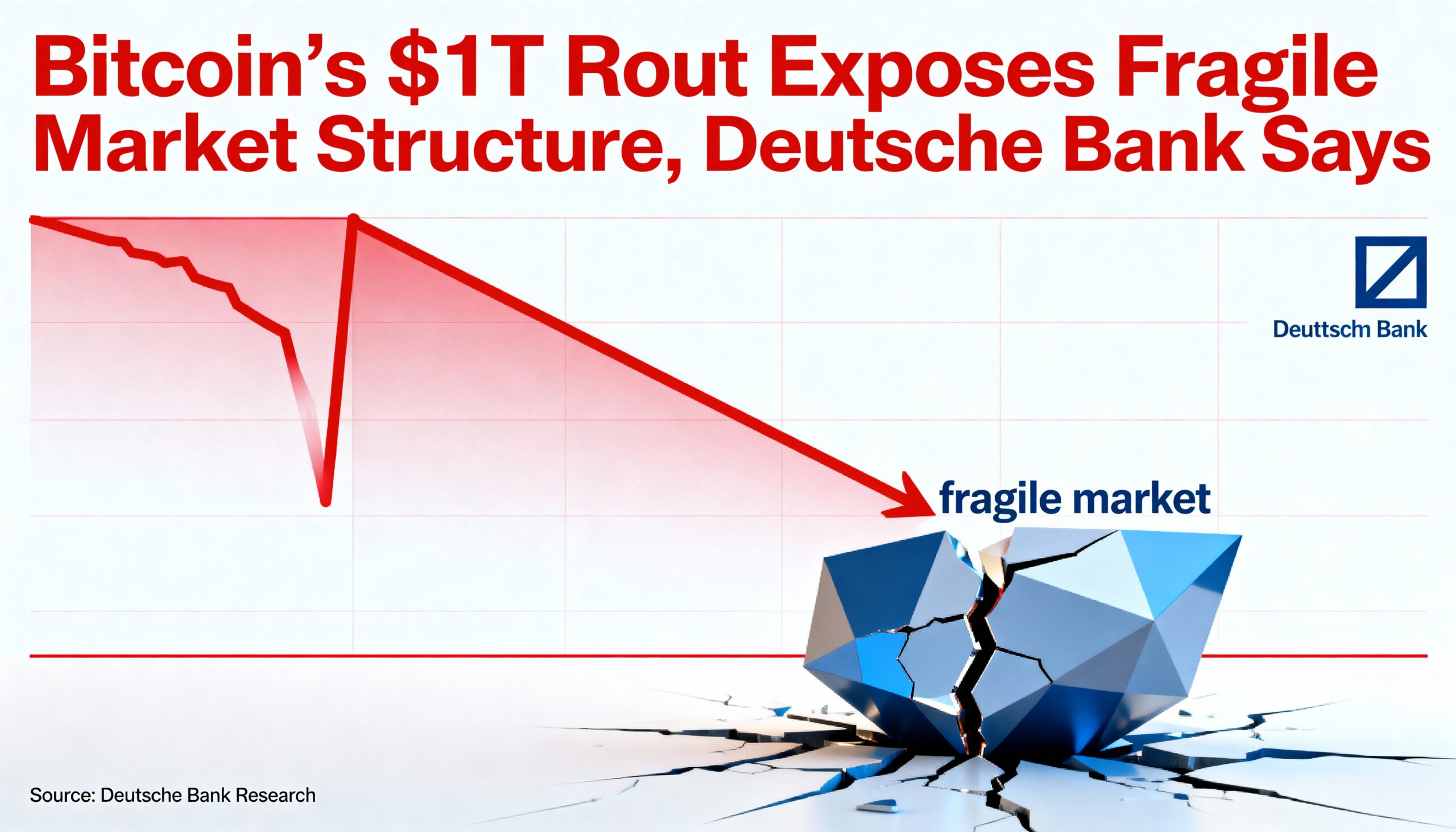
Bitcoin’s drop to around $80,000 last week underscored its sensitivity to macroeconomic pressures, regulatory uncertainty, and thin liquidity. Deutsche Bank noted the slide, roughly 35% below October’s peak, erased nearly $1 trillion in value before a rebound toward $87,000. At publication, bitcoin traded near $86,000.
The bank cited risk-off sentiment, higher-for-longer interest-rate expectations, fading regulatory momentum, weakening institutional flows, and profit-taking by long-term holders as key drivers. Analysts Marion Laboure and Camilla Siazon described the decline as a revival of bitcoin’s “Tinkerbell effect,” where sentiment heavily influences valuation.
Amid U.S. fiscal concerns, renewed U.S.–China tensions, and stretched AI valuations, bitcoin acted more like a high-beta tech stock than a hedge, with correlations to major equity indexes spiking. Hawkish Fed messaging, despite a rate cut, reinforced this sensitivity.
Regulatory delays, ETF outflows, thin order books, and selling by long-term holders amplified the decline. Deutsche Bank stressed that while bitcoin’s long-term maturation remains intact, uncertainty and policy ambiguity continue to magnify drawdowns.