Bitcoin miners are under mounting financial pressure as production costs continue to exceed market prices, with rising energy costs and geopolitical tensions worsening the outlook.
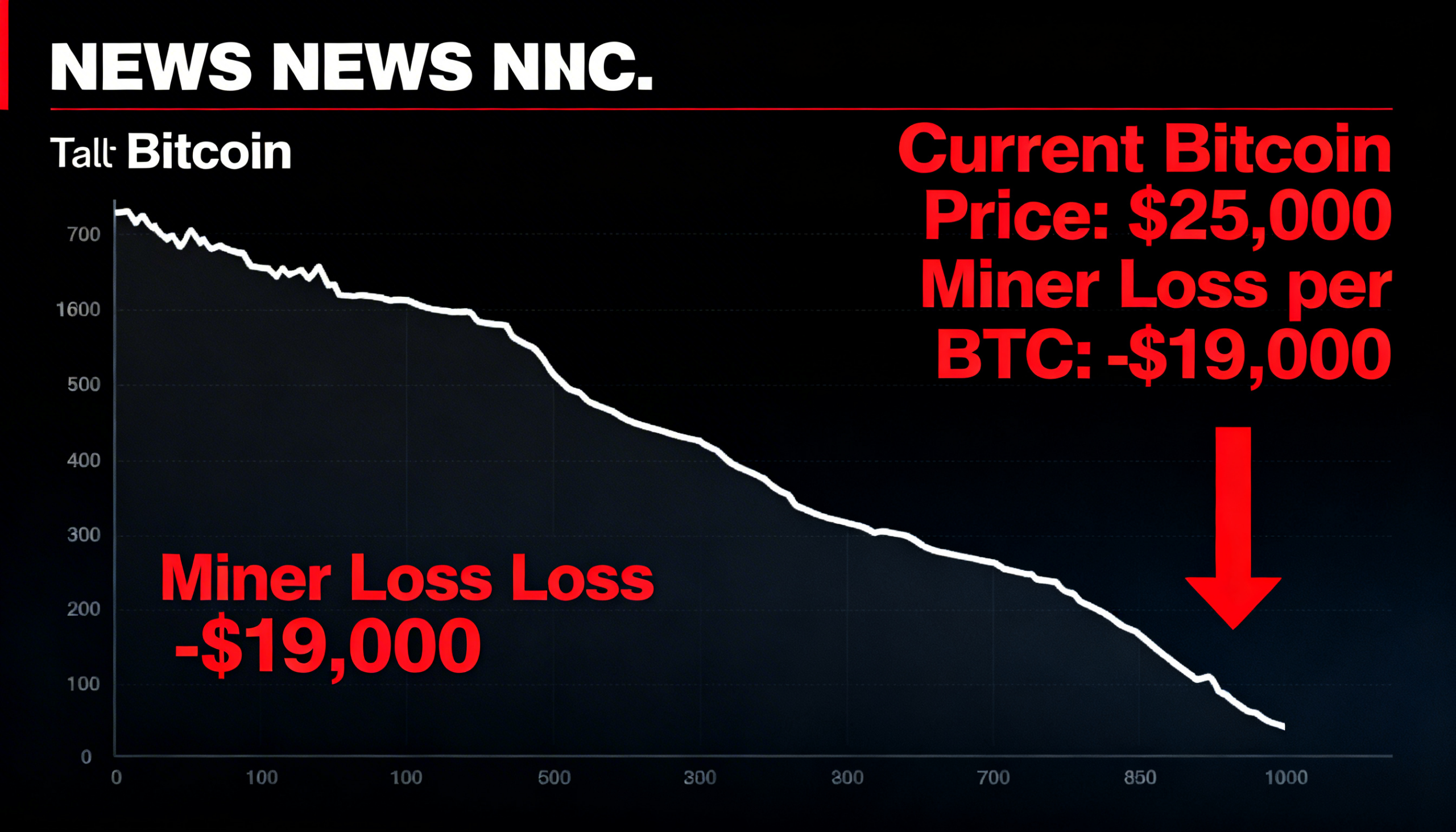
According to Checkonchain, the average cost of mining one bitcoin was დაახლოებით $88,000 in mid-March. With BTC trading near $69,200, miners are losing roughly $19,000 per coin, leaving average margins deep in negative territory at around 21%.
This cost squeeze has been building since bitcoin’s drop from its October peak of $126,000 to below $70,000, but recent developments have accelerated the strain. Oil prices above $100 are pushing electricity costs higher, particularly for mining operations exposed to energy markets linked to the Middle East.
Disruptions in the Strait of Hormuz—a key route for about 20% of global oil and gas flows—have further tightened supply conditions. Adding to the uncertainty, U.S. President Donald Trump has issued a 48-hour ultimatum threatening strikes on Iran’s power infrastructure, raising additional risks for miners reliant on stable energy access.
The network is already showing clear signs of stress. Mining difficulty fell 7.76% to 133.79 trillion, one of the largest downward adjustments of the year following February’s drop during Winter Storm Fern. Difficulty is now nearly 10% below its level at the start of 2026 and well under its late-2025 peak near 155 trillion.
Hashrate has declined to around 920 EH/s, down from the 1 zetahash milestone reached in 2025, while average block times have stretched to 12 minutes and 36 seconds—well above the network’s 10-minute target.
Profitability metrics reinforce the pressure. Hashprice—an indicator of expected miner revenue—stands at roughly $33.30 per petahash per second per day, according to Luxor Hashrate Index, hovering close to breakeven and not far from February’s all-time low.
As margins compress, miners are increasingly forced to sell bitcoin to fund operations, adding supply pressure to a market already facing weak conditions. Around 43% of circulating supply is currently at a loss, while large holders continue distributing into rallies and leveraged trading dominates price action.
To navigate the downturn, publicly traded miners are diversifying beyond bitcoin production. Companies like Marathon Digital and Cipher Mining are expanding into AI and high-performance computing to secure more stable revenue streams.
Looking ahead, the next difficulty adjustment—expected in early April based on CoinWarz data—is projected to decline further. If bitcoin remains below the $88,000 cost threshold, miner capitulation is likely to continue, driving difficulty lower.
While the network is designed to self-correct as miners exit, the lag between rising costs and falling difficulty creates a challenging adjustment period—impacting both mining operations and the broader market as forced selling persists.